


Previo en Origen (PEO) Inspection for Furniture Imports to Mexico: Packaging, Labeling and Product Verification

A furniture shipment can look perfectly acceptable when it leaves the factory and still create serious problems when it reaches Mexico. A dining table may have the correct design but arrive with damaged corners. A furniture set may contain all the cartons listed on the packing list but have missing assembly hardware. Even more frustrating, product labels and carton markings may not match the information prepared for Mexican customs clearance.
These problems are particularly common in cross-border furniture sourcing, where buyers often work with manufacturers remotely and have limited visibility into final production and packing conditions.
Previo en Origen (PEO) inspection provides an opportunity to identify shipment discrepancies before goods leave the country of origin. By checking product specifications, packaging, labeling, quantities and shipment information, buyers can make better-informed shipping decisions.
For importers sourcing furniture from China and other manufacturing markets, working with an experienced third-party inspection service such as TESTCOO adds an independent layer of quality control before goods enter the Mexican supply chain.
Why Is Previo en Origen Inspection Important for Furniture Imports to Mexico?
Furniture presents a different set of inspection challenges compared with small consumer products. Its size, weight, multiple components, surface finishes and packaging requirements make it particularly vulnerable to transportation damage and shipment discrepancies.
A sofa, for example, may consist of a frame, cushions, removable covers, legs and installation accessories. Checking only the appearance of the finished sofa does not establish whether the complete set is ready for shipment.
From our experience in global supplier quality management, furniture buyers should pay particular attention to three areas.
Product consistency
Furniture production involves multiple materials and components. Differences in wood species, board thickness, upholstery fabric, color, dimensions or hardware can occur between approved samples and mass production.
An inspection should compare finished products against the buyer's approved specifications, reference samples, drawings and purchase order.
Shipment completeness
Furniture products frequently contain multiple cartons belonging to one complete set. Missing screws, brackets, connecting pieces, installation instructions or individual furniture panels can prevent the customer from assembling the product after delivery.
Inspectors should verify the number of cartons and critical accessories against the packing list and approved product configuration.
Packaging suitability
Furniture is often bulky and difficult to handle. Even when the product passes a factory quality inspection, inadequate packaging can result in crushed corners, scratched surfaces, broken panels or damaged upholstery during international transportation.
PEO inspection helps identify these problems before the shipment leaves the supplier's facility.
It is important to understand that PEO is a pre-shipment quality and shipment verification activity, not a replacement for Mexican customs clearance, statutory product certification or an official customs examination.

Read more: A Guide for Mexican Previo en Origen (PEO) | TESTCOO
What Packaging and Product Defects Should Buyers Check Before Shipping Furniture to Mexico?
Packaging inspection should not be treated as a simple carton-counting exercise. The inspection needs to consider how furniture will be handled, stacked, transported, unloaded and eventually delivered to the end customer.
Furniture packaging inspection
A professional inspection should cover:
- Outer carton condition: Check for holes, compression, moisture damage, weak seams and deformation.
- Internal protection: Verify that foam, corner protectors, cardboard dividers and protective films are positioned correctly.
- Edge and corner protection: Pay particular attention to table edges, cabinet corners, glass panels and upholstered furniture surfaces.
- Carton identification: Check product names, model numbers, SKU references, carton numbers and shipping marks against approved documentation.
- Palletization: Verify pallet stability, carton arrangement, wrapping and suitability for the planned transportation method.
For flat-pack furniture, special attention should be given to the protection of board edges and the separation of hardware from larger panels.
A carton can pass a visual inspection while still containing inadequate internal protection. Inspectors should therefore open selected packages rather than relying exclusively on external carton checks.
Product verification: What should be checked?
Furniture category | Key inspection points |
Wooden furniture | Dimensions, surface finish, cracks, joints, scratches and structural stability |
Upholstered furniture | Fabric condition, stitching, color consistency, cushion filling and frame construction |
Metal furniture | Welding quality, coating adhesion, corrosion, sharp edges and structural stability |
Flat-pack furniture | Panel quantity, drilling positions, fittings, assembly accessories and instructions |
Glass furniture | Glass dimensions, visible defects, edge protection and packaging security |
For structural and functional checks, inspectors should follow the buyer's agreed testing requirements. These may include stability checks, assembly verification, functional operation and other applicable tests.
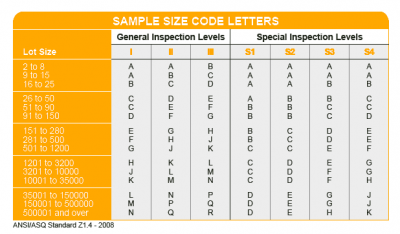
AQL sampling can be used for suitable visual and workmanship checks. The sampling plan should be agreed upon before inspection, including the inspection level, sample size and acceptance criteria.
However, AQL sampling does not guarantee that every unit is defect-free. Critical safety-related requirements may require separate testing or additional inspection procedures.
Read more: AQL Calculator and Quality Checks for Better Inspection | TESTCOO
An illustrative sourcing scenario
Consider a buyer importing flat-pack cabinets from an overseas furniture manufacturer.
During a Final Random Inspection (FRI), the inspector discovers that several cartons contain the correct cabinet panels but are missing a set of installation brackets.
The outer packaging looks normal and the supplier's packing list indicates that all cartons are complete.
Without opening selected cartons and verifying the accessory configuration, the discrepancy could remain undetected until the goods reach the buyer's warehouse in Mexico.
The practical lesson is straightforward: carton appearance and shipment quantity alone are not enough to establish furniture shipment readiness.

Read more: Ultimate Furniture Inspection Guide | Testcoo
How Can Importers Verify Furniture Labeling and NOM Compliance Before Shipping to Mexico?
Labeling is one of the areas where international furniture buyers should coordinate closely with their Mexican customs broker and compliance specialists.
Mexico has specific commercial information and labeling requirements for products sold in its domestic market. However, the applicable standard depends on the product's tariff classification, characteristics and regulatory scope.
What should buyers check on furniture labels?
For products falling within the scope of NOM-050-SCFI-2004, the general commercial labeling requirements include applicable information such as:
- Generic product name or denomination, where required.
- Quantity information, where applicable.
- Manufacturer or responsible party information.
- Country-of-origin identification.
- Relevant risk warnings and usage information, where applicable.
The standard also addresses the presentation and accuracy of commercial information.
For example, country-of-origin statements should accurately identify where the product originates. A product manufactured in China should not be identified as being manufactured in Mexico simply because the importer or distributor is Mexican.
The official Mexican standard should be reviewed together with the applicable product-specific requirements.
Why should labeling be checked before shipment?
Consider a shipment containing several furniture models.
The product itself may be correct, but the carton labels could contain an outdated model number, incorrect product description or country-of-origin information that does not match the approved documentation.
Such inconsistencies can create problems for inventory identification, customs documentation review and downstream distribution.
A PEO inspection can help verify the physical labels and compare them with the information provided by the buyer.
However, physical label verification does not constitute a legal determination that a product complies with every applicable Mexican NOM requirement.
Before shipping, importers should:
- Confirm the Mexican tariff classification with their customs broker.
- Identify the applicable NOM and other non-tariff requirements.
- Confirm the exact Spanish-language labeling requirements.
- Approve the final label artwork before mass production.
- Verify the actual product and packaging labels during inspection.
Mexico's Secretariat of Economy provides guidance through its SNICE labeling information portal.
Importers should also confirm whether any applicable labeling requirements can legally be completed after importation under an authorized procedure. This should never be assumed without checking the specific product and applicable rules.
Read more: 5 Mistakes During Previo en Origen | TESTCOO
How Should Buyers Organize a PEO Inspection Before Shipping Furniture to Mexico?
An effective inspection begins before the inspector arrives at the factory.
Buyers should provide enough information for the inspection team to understand the approved product condition, shipment configuration and destination-market requirements.
A practical inspection workflow includes the following steps.
Step 1: Confirm inspection requirements
Provide the purchase order, product specifications, approved samples, packaging requirements and applicable acceptance criteria.
Step 2: Confirm production readiness
Coordinate with the supplier to ensure that production is sufficiently complete and the required inspection quantity is available.
Step 3: Prepare the inspection checklist
Define the product models, quantities, critical inspection points, packaging requirements, labeling information and functional tests.
Step 4: Conduct on-site inspection
The inspector checks product appearance, workmanship, dimensions, accessories, carton condition, shipping marks and other agreed requirements.
Step 5: Record discrepancies
Defects should be documented with clear descriptions, photographs, product references and severity classifications based on the agreed inspection criteria.
Step 6: Review the inspection report
The buyer evaluates the findings and decides whether the shipment can proceed, requires correction or needs reinspection.
Step 7: Coordinate shipment release
The importer, supplier, freight forwarder and customs broker coordinate the remaining export and import documentation and shipping arrangements.

For furniture shipments, the timing of inspection matters.
A final inspection should generally take place when production is complete and a sufficient quantity of finished goods is available. If cartons are already sealed, the inspection plan should specify which packages must be opened for internal verification.
There is no universal inspection lead time or fixed global inspection fee for every furniture shipment. Scheduling and pricing depend on factors such as factory location, travel requirements, inspection duration, product complexity, SKU count and testing scope.
Buyers should request a written quotation that clearly identifies the service scope, reporting deliverables, additional testing charges and reinspection arrangements.
Read more: A 8-Step Checklist for Previo en Origen (PEO) | TESTCOO
How Can Global Third-Party Inspection Companies Help Reduce Furniture Import Risks?
Furniture sourcing often involves manufacturers, suppliers, trading companies, freight forwarders and customs brokers operating in different countries.
The challenge for international buyers is not simply finding someone to inspect a shipment. It is establishing a consistent quality control process across suppliers and sourcing locations.
When evaluating global third-party inspection companies, buyers should consider several practical factors:
- Local inspection coverage: Can the provider arrange qualified inspectors near the manufacturing facility?
- Inspection expertise: Does the team understand furniture materials, workmanship, packaging and shipment verification?
- Reporting transparency: Are original inspection photographs, defect descriptions and inspection results available?
- Response time: Can the provider accommodate production schedules and urgent vessel deadlines?
- Quality management: Does the company maintain documented inspection procedures and consistent reporting standards?
- Digital capabilities: Can inspection records be retained and used for supplier performance evaluation?
International inspection companies can offer broader geographic coordination, while local inspection providers may have advantages in regional scheduling and familiarity with nearby manufacturing clusters.
The right choice depends on the buyer's sourcing footprint, product requirements and expected service coverage.
How TESTCOO Supports Global Furniture Sourcing?
TESTCOO provides third-party quality control services for international buyers, including Final Random Inspection (FRI), During Production Check (DUPRO), Supplier Audit Services and Loading Supervision (LS).
For furniture importers sourcing from multiple manufacturing regions, a coordinated inspection program can help standardize product verification, packaging checks and supplier quality records.
TESTCOO's service approach emphasizes:
- Localized inspection resources across major sourcing regions.
- Digital inspection reporting with original on-site photographs.
- Remote visibility into inspection progress and findings.
- Supplier quality records to support long-term performance evaluation.
- Flexible inspection arrangements to accommodate shipment schedules.
The objective is not to replace the importer's customs broker or regulatory consultant. It is to give buyers better visibility into the physical condition and shipment readiness of their products before international transportation begins.
Read more: How to Choose a Previo en Origen Partner | TESTCOO
Frequently Asked Questions
Q1: Is PEO inspection mandatory for furniture imports to Mexico?
PEO should not automatically be considered a universal statutory requirement for all furniture imports. Importers should confirm whether their particular shipment, customs arrangement or applicable program requires it. Separate Mexican import and product compliance requirements still apply.
Q2: Can PEO inspection prevent furniture damage during international shipping?
PEO cannot eliminate all transportation risks, but it can identify inadequate packaging, weak carton protection, incorrect palletization and visible product defects before shipment. This gives buyers an opportunity to request corrective action before goods leave the factory.
Q3: What documents should buyers prepare before a PEO inspection?
Useful documents include the purchase order, product specifications, approved samples, packing list, carton markings, label artwork, inspection checklist and applicable destination-market compliance requirements. The customs broker should separately confirm the documents required for Mexican import clearance.
Q4: What is the difference between PEO inspection and FRI (Final Random Inspection) for furniture shipments to Mexico?
FRI is a general final random pre-shipment inspection focusing on product quality, workmanship and quantity sampling. Previo en Origen (PEO) for Mexico is tailored for Mexican import needs: it adds extra verification on carton shipping marks, Spanish labels, NOM-related label information, origin marking and document matching for Mexican customs clearance. A PEO can be structured as a FRI plus Mexico compliance verification, but not all standard FRI covers labeling and customs marking checks required by Mexico.
Q5: What is the sampling standard used for PEO furniture inspection to Mexico? Can we customize AQL limits?
TESTCOO commonly uses standard AQL sampling for visual and workmanship defects during PEO. Buyers can negotiate and set custom AQL levels before inspection, including separate limits for critical, major and minor defects. Safety and structural critical items are not fully covered by regular AQL sampling and may need 100% check or separate functional testing as agreed.
Verify Furniture Shipments Before They Leave the Factory
Furniture imports involve more than checking whether finished products look acceptable. Packaging protection, accessory completeness, accurate product identification and destination-market labeling all contribute to a successful shipment.
Previo en Origen inspection gives importers an opportunity to identify discrepancies before goods leave the country of origin. Combined with appropriate Mexican regulatory review and a clear supplier quality management process, it can help reduce avoidable shipment risks.
For international buyers managing furniture suppliers across different manufacturing regions, choosing experienced global third-party inspection companies is an important part of maintaining consistent quality standards.
TESTCOO supports global buyers with localized inspection resources, digital reporting and coordinated quality control services throughout the sourcing process.
Planning a furniture shipment to Mexico?
Contact TESTCOO to discuss your pre-shipment inspection requirements and build a quality control plan that fits your products, suppliers and shipping schedule.

Related Articles
Read More



Free Sample Report Performance Quality Control
Download a sample report to keep control of your supply chain!

Featured Articles
 AQL Table | How to Read It
 TOP 10 Common Defects in Garments Quality Inspection
 Product Packaging and Shipment Label requirements for Amazon FBA
 What Is ASTM-F2413-18? Protective Footwear Standard
 How to Conduct Third-Party Quality Control Inspections for Electric Scooters
 SMETA Audit-What is SMETA Audit?
 TESTCOO Supplier Verification/Certification Service SLCP, Higg FEM, GRS, GOTS
 Quality Control Inspection Company in China
 What is Quality Inspection? A Complete Guide
 Guidelines for Product Inspection in India
Category
- Production Inspection Service
- Factory Audit
- Softline Inspection
- Hardline Inspection
- Electrics Inspection
- Certification
- Checklist
- Manufacturers
- Quality Assurance Basics
- Products Recall
- AQL
- Guidence and Standard
- News
- Supplier Management
- Amazon
- Protective Equipment
- e-commerce quality control
- Indian Manufacturing
- Soft Goods Quality Control
- Supply Chain Management
- Supply Chain Resilience
- E-Commerce Quality Control
- ISO 2859
- Supply Chain Optimization
- Garment Industry
- Higg Index