


5 Critical Mistakes Importers Make During Previo en Origen (PEO)

↵
A single documentation discrepancy or incorrect Official Mexican Standard (NOM) label can trigger destination port holds, daily demurrage fees averaging $150 to $350 per container, or complete customs seizure. To secure supply chains and ensure instant port clearance, partnering with a proven global third-party inspection service is a core operational strategy. TESTCOO delivers end-to-end, localized quality control solutions across key global manufacturing hubs to eliminate these trade risks before cargo leaves the factory floor.
↵
What Are the 5 Common Mistakes Importers Make During Previo en Origen?
1.Treating Previo en Origen Like a Standard Quality Inspection
From our decade of hands-on field experience conducting factory audits and loading supervisions across Asia and Europe, one of the costliest mistakes buyers make is confusing a standard Final Random Inspection (FRI) with a true Previo en Origen (PEO) protocol. A traditional FRI evaluates product aesthetics, basic functionality and standard Acceptable Quality Limit (AQL) defect rates based on sample sizes. In contrast, a PEO inspection serves as a pre-customs audit tailored directly to destination customs regulations.
Feature | Final Random Inspection (FRI) | Previo en Origen (PEO) |
Core Focus | Product Workmanship, Functionality & Defects | Customs Compliance, Tariff Codes & NOMs |
Quantity Check | AQL Sample Count Estimates | 100% Physical Box and SKU Count |
Regulatory Alignment | Buyer Internal Spec Sheet | Article 42 Ley Aduanera & Import Laws |
Customs Broker Role | Not Involved | Direct Protocol Integration & Pre-Validation |
Reporting Scope | Quality Defects & Visuals | Serial Numbers, Weight, Labels & Custom Seals |
To prevent these disruptions, top-performing procurement teams coordinate directly with their Agente Aduanal (customs broker) and their third-party quality control inspection companies prior to production completion.
Read more: Previo en Origen (PEO) vs. Final Random Inspection (FRI): What's the Difference | TESTCOO
2.Skipping 100% Physical Quantity Counts and Container Loading Supervision
Relying solely on supplier-provided packing lists without independent on-site verification is another frequent point of failure in cross-border trade. Overseas vendors often consolidate cargo under tight factory production deadlines, leading to accidental mix-ups, short-shipments, or unauthorized SKU overages. Under Mexican customs law, any discrepancy between the physical piece count inside a container and the declared customs manifest (pedimento) can trigger immediate red-channel audits, administrative fines, or total cargo confiscation.
Comprehensive PEO verification mandates a 100% physical count of exterior master cartons by SKU, combined with uninterrupted Container Loading Supervision. Independent inspectors check empty container interiors for structural integrity, moisture, odors and pests before supervising the loading process, applying high-security bolt seals and cross-checking seal numbers against shipping documentation.

3.Ignoring Spanish NOM Labeling and Regulatory Compliance Requirements
One of the most technical aspects of importing into Latin American markets is ensuring full compliance with Official Mexican Standards, known as NOMs (Normas Oficiales Mexicanas). NOM regulations cover a vast range of consumer and industrial goods, dictating mandatory labeling information such as product descriptions, electrical specifications, country of origin, importer tax IDs (RFC), operating instructions and safety warnings in Spanish.
A common pitfall occurs when buyers assume that the factory will accurately print and apply these labels. Factories in non-Spanish speaking countries frequently make typographical errors, use incorrect font sizes, place labels over essential product warnings, or omit required symbols. If non-compliant labels arrive at the port of entry, the customs authorities will reject the declaration. Correcting this on-site in an origin factory costs pennies per unit; correcting it in a port warehouse requires specialized bonded personnel, delays distribution by weeks and incurs thousands of dollars in fees.
A dedicated global third-party inspection service acts as the last line of defense on the factory floor. Inspectors verify label dimensions, text readability, Spanish translation accuracy, placement consistency across every master carton and retail box and cross-reference the label details directly against the pre-approved proofs provided by the buyer's customs broker.
4.Misalignment Between the Buyer, Factory and Destination Customs Broker
A successful Previo en Origen inspection requires seamless communication between three key entities: the buyer, the manufacturing factory and the destination customs broker (Agente Aduanal). A frequent operational breakdown happens when the buyer treats the inspection as an isolated quality event, failing to loop in the customs broker during the pre-inspection planning phase.
Every customs broker has specific criteria for what they require in a PEO report to feel confident pre-clearing cargo while it is still in transit. If the inspection agency uses a generic quality checklist that omits specific photographs (such as serial number plates, internal component markings, or exact carton side-markings), the customs broker may refuse to pre-clear the shipment. This defeats the entire purpose of performing Previo en Origen, forcing the importer to pay for a second physical inspection upon port arrival.
Establishing a tri-party alignment workflow before production ends solves this issue completely. The customs broker submits their precise requirements to the inspection agency, which builds a customized PEO execution protocol. The factory is then briefed on how goods must be arranged in the warehouse to facilitate an efficient, 100% physical count without slowing down container loading.
5.Mismanaging Timeline Dependencies and Vessel Cut-Off Dates
Timing in international ocean freight is unforgiving. Container shipping lines enforce strict Cargo Cut-Off and Shipping Instruction (SI) deadlines. A major error by importers is booking a Previo en Origen inspection too late in the production cycle, leaving zero buffer time to resolve discrepancies found during the audit.
If an inspection occurs on the same day the container is scheduled to be loaded and transported to the port, any discovered issue (such as incorrect labeling, short-shipments, or damaged master cartons) presents a difficult choice: ship non-compliant goods and risk destination fines, or miss the vessel cut-off date and pay rollover fees, extra storage and chassis detention costs.
To maintain operational integrity, importers should schedule PEO inspections when production reaches 100% completion and at least 24 to 48 hours prior to final container loading. This buffer window provides sufficient time for the factory to rectify labeling mistakes or carton damage under the inspector's supervision before the goods are packed into the sea container.
What Are the Quality Risks in Major Sourcing Regions?
1.Electronics Sourcing in Shenzhen: NOM-001/024 Compliance Failure
A medium-sized consumer electronics distributor based in North America was importing 15,000 units of smart home lighting hubs from a supplier in Shenzhen, China. The buyer relied on a standard AQL Level II inspection to verify product assembly and functionality. However, they failed to request a dedicated Previo en Origen check tailored to Mexican customs requirements.
When the container arrived at the Port of Manzanillo, customs inspectors performed a physical inspection and discovered that while the master cartons had Spanish text, the individual internal power adapters lacked mandatory NOM-001-SCFI safety markings and listed an incorrect voltage range. The customs broker refused to clear the entry, resulting in a mandatory administrative proceeding (PAMA). The importer was forced to pay $18,500 in accumulated demurrage and warehouse handling fees, along with a $5,000 regulatory penalty.
Had the importer engaged a global third-party inspection service with local coverage in Shenzhen, the inspector would have caught the unapproved power adapter markings during the origin PEO check, allowing the factory to swap out the non-compliant adapters for less than $300 before export.
Read more: Consumer Electronics Inspection | TESTCOO

2.Industrial Fastener Sourcing in Gujarat: Quantity and Weight Discrepancies
A global hardware brand sourced 28 metric tons of stainless-steel industrial bolts and fasteners from a manufacturing plant in Gujarat, India. Due to complex tariff classifications that depend on exact dimensions, thread pitch and net weight per box, the importer required a rigorous Previo en Origen inspection prior to container loading.
During the on-site verification, the local TESTCOO quality auditor performed a 100% box count and noticed a variance between the gross weight listed on the packing list and the actual scale measurements taken on-site. Further investigation revealed that the factory had mixed two different bolt lengths within the same master cartons to meet the total order weight, creating a severe SKU mismatch.
Because the discrepancy was identified on the factory floor in Gujarat, the supplier was compelled to unpack, re-sort and re-label the affected batches under the direct supervision of the auditor. The corrected packing list and origin inspection report were transmitted to the buyer's customs broker, enabling seamless customs entry upon arrival without spending money on port penalties.
3.Footwear Sourcing in Ho Chi Minh City: Material Content and Origin Misdeclaration
An outdoor footwear importer placed a high-value order for leather safety boots with a primary vendor in Vietnam. Under regional trade agreements and destination customs classifications, footwear containing genuine leather uppers is subject to distinct tariff rates and strict origin labeling rules compared to synthetic materials.
The importer scheduled a Previo en Origen inspection 48 hours before container loading. The inspector audited the physical tongue tags, box labeling and material composition certificates. During visual and tactile checking, the inspector identified that the factory had substituted synthetic leather on 30% of the production run due to raw material shortages, without notifying the buyer.
Had this shipment departed Vietnam, the destination customs authority would have flagged the shipment for misdeclaration of origin and material composition, risking seizure and severe tariff penalties. The origin PEO report allowed the buyer to halt the non-compliant portion of the shipment, re-negotiate commercial invoice values and adjust customs declarations accurately before loading.
Read more: Vietnam: A Booming Hub for Quality Inspections and Audits in Global Supply Chains
4.How Do Service Benchmarks and Workflows Compare Globally?
To keep service benchmarking transparent and easy to navigate without overwhelming readers with complex charts, the table below consolidates pricing, turnaround expectations and core execution steps across essential QC services.
QC Service Type | Global Price Range | Lead Time & Turnaround | Operational Workflow & Core Deliverables |
Previo en Origen (PEO) | $280 to $450 / Man-Day | Dispatch: 24 to 48 Hours Report: Within 24 Hours | 1. Align checklist with Agente Aduanal 2. 100% SKU and carton physical count 3. NOM label and document verification 4. Supervised container loading and ISO sealing |
Final Random Inspection (FRI) | $250 to $380 / Man-Day | Dispatch: 24 to 48 Hours Report: Within 24 Hours | 1. Random AQL sampling based on ISO 2859-1 2. Workmanship, cosmetic and functional testing 3. Packaging, barcode and artwork checks 4. Pass or Fail reporting according to buyer specs |
Factory Audit Service | $400 to $650 / Audit | Dispatch: 3 to 5 Days Report: Within 48 Hours | 1. Verification of factory business license and capacity 2. Quality management system assessment (ISO 9001) 3. Machinery maintenance and raw material audit 4. Social compliance and environmental risk check |
Container Loading Supervision | $220 to $320 / Load | Dispatch: 24 Hours Report: Same Day Delivery | 1. Structural inspection of container condition 2. Verification of total carton count loaded 3. Supervision of weight distribution and handling 4. Application of high-security bolt seal |
What Is the Future Trend of Global Manufacturing Quality Control?
The global manufacturing landscape is undergoing a structural shift. Supply chain diversification strategies like "China Plus One," nearshoring and multi-country sourcing have expanded production networks across Southeast Asia, South Asia, Latin America and Eastern Europe. While this diversification mitigates geopolitical risks and reduces labor costs, it introduces new quality control and regulatory compliance challenges.
Factories in emerging manufacturing regions often lack deep familiarity with destination-market regulatory frameworks such as Mexican NOMs, European CE markings, or North American UL standards. Furthermore, communication barriers and differing business practices increase the risk of compliance errors. At the same time, customs authorities globally are deploying advanced digital auditing tools, automated risk-assessment algorithms and stricter origin-tracing rules to enforce trade compliance. In this environment, relying on manual quality control methods or supplier self-certifications is no longer viable.
The future of quality control lies in digitized, data-driven supply chain management. Advanced quality control platforms integrate real-time inspection reporting, geographic tracking, machine-assisted document validation and historical vendor performance analytics. By aggregating inspection data across multiple production sites, importers can identify recurring defect patterns, evaluate supplier reliability and optimize their quality assurance spend.
Digitalization also enables permanent supplier quality archives. Every inspection report, product photograph, lab test result and factory audit score is stored in a centralized cloud repository. This structural visibility allows enterprise sourcing teams to track quality trends over time, onboard new vendors faster and demonstrate regulatory compliance to customs authorities and regulatory bodies worldwide.

FAQs on Global Third-Party Inspection Services (FAQs)
Q1: How does Previo en Origen differ from an Amazon FBA inspection?
An Amazon FBA inspection focuses primarily on marketplace fulfillment requirements, such as FNSKU barcode scannability, polybag suffocation warnings, carton dimension and weight limits and transit drop testing. In contrast, Previo en Origen focuses on national customs compliance, verifying legal importer records, Spanish NOM labeling, accurate tariff classifications and complete documentation under destination customs laws.
Q2: Which global third-party inspection service is best for multi-country sourcing?
The optimal global third-party inspection service provides broad localized coverage, internationally recognized certifications (ISO 9001, ISO 27001, CNAS 17020), digital portal management and rapid scheduling capabilities. Providers with full-time localized inspectors across Asia, Europe and South America eliminate travel surcharges and ensure uniform quality standards across diverse global supply chains.
Q3: Can remote video inspection replace on-site Previo en Origen visits?
While remote video inspections work well for basic production status updates or preliminary factory walk-throughs, they are insufficient for Previo en Origen compliance. Customs pre-clearance requires physical box counts, manual container condition checks, precise label verification and physical application of high-security container seals that must be verified in person by a certified auditor.
Q4: What happens if cargo fails a Previo en Origen inspection at the factory?
When cargo fails a PEO inspection, the auditor generates a Pending or Non-Conforming report detailing the exact discrepancies (such as label errors, missing documentation, or quantity mismatches). The importer can then direct the factory to correct the issues on-site before issuing a formal re-inspection or approving container loading. Resolving issues at the origin factory prevents costly port holds and penalties at destination.
Q5: How far in advance should an importer book a Previo en Origen service?
Importers should book a Previo en Origen inspection 3 to 5 days before the scheduled completion of production. This gives the inspection agency enough time to assign a certified local auditor, review custom checklists with the buyer's customs broker and coordinate seamless access with the supplier's warehouse management team.
Elevate Your Global Quality Control Strategy
Preventable origin errors remain one of the biggest drivers of supply chain friction, unexpected port fines and customs clearance delays in international trade. By shifting compliance verification to the point of origin, global buyers preserve profit margins, build permanent supplier quality records and protect their brand reputation. TESTCOO's fully digitized, certified global third-party inspection service connects procurement teams directly to on-site inspectors across global manufacturing centers, turning cross-border quality control into a durable competitive advantage.


Free Sample Report Performance Quality Control
Download a sample report to keep control of your supply chain!

Featured Articles
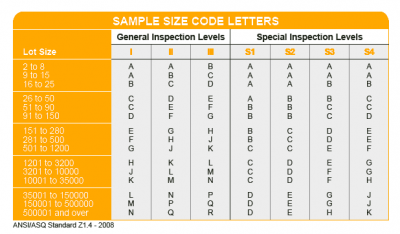 AQL Table | How to Read It
 TOP 10 Common Defects in Garments Quality Inspection
 Product Packaging and Shipment Label requirements for Amazon FBA
 What Is ASTM-F2413-18? Protective Footwear Standard
 How to Conduct Third-Party Quality Control Inspections for Electric Scooters
 SMETA Audit-What is SMETA Audit?
 TESTCOO Supplier Verification/Certification Service SLCP, Higg FEM, GRS, GOTS
 Quality Control Inspection Company in China
 What is Quality Inspection? A Complete Guide
 Guidelines for Product Inspection in India
Category
- Production Inspection Service
- Factory Audit
- Softline Inspection
- Hardline Inspection
- Electrics Inspection
- Certification
- Checklist
- Manufacturers
- Quality Assurance Basics
- Products Recall
- AQL
- Guidence and Standard
- News
- Supplier Management
- Amazon
- Protective Equipment
- e-commerce quality control
- Indian Manufacturing
- Soft Goods Quality Control
- Supply Chain Management
- Supply Chain Resilience
- E-Commerce Quality Control
- ISO 2859
- Supply Chain Optimization
- Garment Industry
- Higg Index