


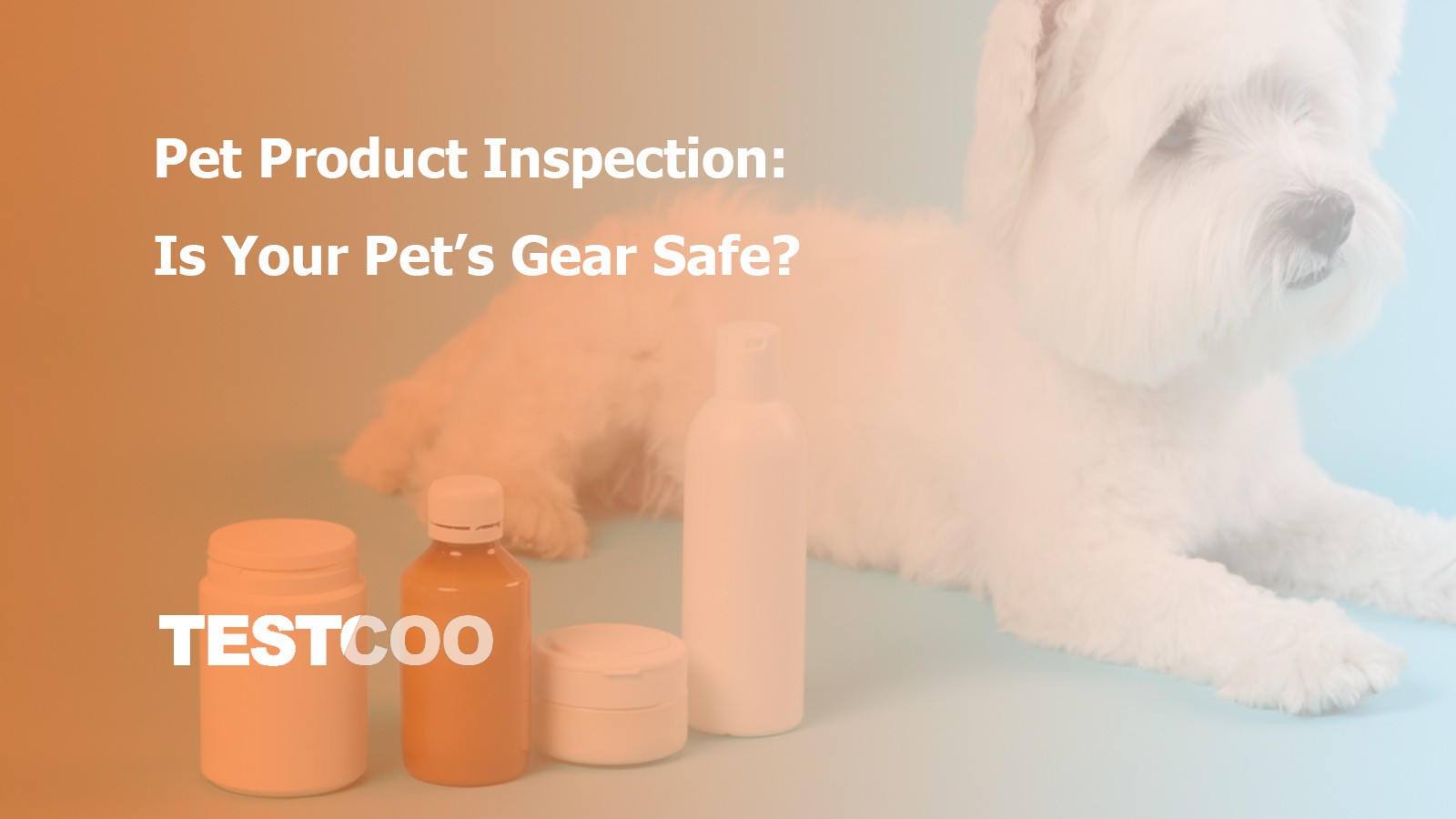
Pet Product Inspection: Is Your Pet’s Gear Safe?
We live in a golden age of pet parenthood. Walk into any pet supply store or scroll through an online marketplace and you are greeted with an overwhelming array of products designed to make our furry friends happier, healthier and more comfortable. From high-tech GPS collars to organic chew toys and orthopaedic memory foam beds, the options are endless.
But here is a question that often gets lost in the excitement of a new purchase: Who is making sure this stuff is actually safe?
Unlike baby products or medical devices, the pet industry operates in a regulatory gray area. While organizations like the Consumer Product Safety Commission (CPSC) rigorously monitor products for human children, there is no equivalent federal body that pre-approves pet products in the United States before they hit the shelves.
This gap makes pet product inspection not just a good idea, but a critical necessity for both pet businesses and pet owners. In this article, we will dissect the safety of our pets’ favourite items by asking the tough questions.
What Exactly Is Pet Product Inspection?
Before we dive into the dangers, let’s define our terms. Pet product inspection is the systematic examination of pet goods from raw materials to finished packaging to ensure they meet specific safety, quality and durability standards.
For manufacturers and importers, this is a formal process often conducted by third-party Quality Assurance (QA) companies. These inspections occur at various stages:
- Initial Production Check (IPC): Checking raw materials (e.g., is that fabric non-toxic?).
- During Production (DUPRO): Ensuring assembly lines are following specifications.
- Final Random Inspection (FRI): Random sampling of finished goods to catch defects before they leave the factory.
For the average pet owner, however, inspection looks different. It is a DIY safety audit performed at home before you hand that squeaky toy to your dog or strap that harness onto your cat.
Whether you are a business owner importing 10,000 units or a consumer buying one leash, the goal is the same: to prevent harm.
Why Are There So Many Pet Product Recalls?
If you follow pet news, you have likely seen the headlines: “Company X recalls 100,000 chew toys due to choking hazard” or “Major brand pulls jerky treats linked to liver disease.”
The frequency of recalls highlights a systemic issue: the supply chain is complex and corners are often cut. The primary reasons for recalls usually fall into three categories:
- Chemical Contamination: This is the scariest category for pet parents. It involves the presence of heavy metals (lead, mercury), phthalates, BPA, or mold toxins (mycotoxins) in food, treats, or even chew toys. Because pets put things in their mouths and often swallow them; chemical exposure is a high risk.
- Physical Hazards: This includes sharp edges, pinch points, or the dreaded detachable parts. A squeaker that can be pulled out of a stuffed toy is essentially a small piece of plastic that becomes a foreign body obstruction if swallowed.
- Design Flaws: A collar that doesn’t break away when snagged can strangle a cat. A dog bed with a zipper that can be chewed off leads to ingestion of metal and foam.
Without rigorous inspection protocols at the factory level, these defects often go unnoticed until a pet gets hurt and a recall is issued.
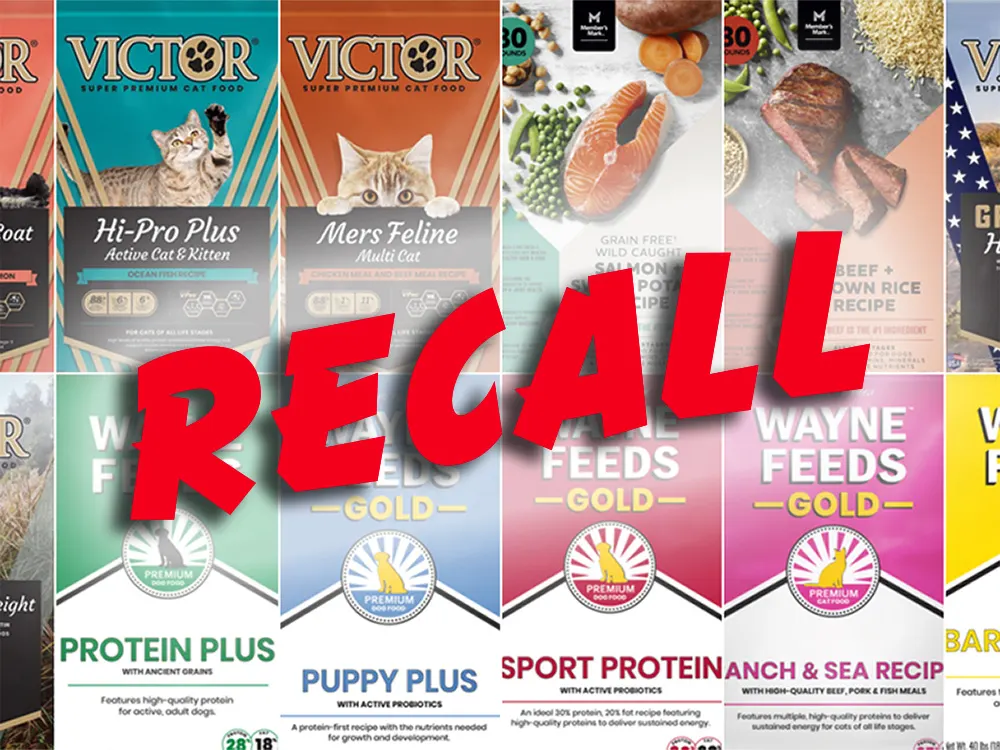
Photo Courtesy of NBC 5 Dallas-Fort Worth.
Source: Pet Food Recalled After Cases of Salmonella Were Reported in 7 States
Is It Really Necessary to Inspect a Dog Chew Toy?
Let’s look at the most common category of pet product: the chew toy. To a dog, a toy is prey. They will gnaw, tear, shred and attempt to swallow it. If you manufacture or purchase a chew toy without rigorous inspection, you are essentially handing your dog a potential surgical emergency.
When inspecting a chew toy, the critical factors are durability and non-toxicity.
- The "Tear Test": A proper inspection involves attempting to tear the toy with your hands. If a toy labelled for "aggressive chewers" can be ripped apart by an adult human’s bare hands, it will not last five minutes with a 50-pound pit bull. Businesses use specialized testing equipment, like a tensile strength machine, to measure the force required to puncture or tear the material.
- The "Squeaker" Inspection: This is a major failure point. During inspection, QA professionals check if the squeaker is encased in a secondary pouch or if it is simply loose inside the stuffing. If a pet bites through the fabric, a loose squeaker is the first thing that falls out.
- Material Safety: Are the dyes food-grade? Is the plastic BPA-free? Advanced inspection includes laboratory testing to ensure that if the toy is ingested (or licked constantly), it isn’t leaching endocrine disruptors into the pet’s system.
How Can You Spot Manufacturing Defects in Pet Gear?
Not all defects are obvious. A torn seam is easy to spot, but a misaligned buckle or a poorly attached D-ring can be invisible to the untrained eye until the moment of failure often when a dog lunges at a squirrel and the leash snaps.
Here is a checklist for inspecting pet gear (collars, leashes, harnesses):
- Stitching: Look for "tack-offs" (backstitching) at the start and end of every seam. If the stitching ends with a knot that isn’t backstitched, it will unravel under stress.
- Hardware: Inspect buckles and clips. Are they made of solid metal or cheap zinc alloy that will snap under pressure? Does the spring in the clip retract fully? If there is any hesitation in the mechanism, it is a defect.
- Edges: Run your finger along the edges of nylon webbing. Are they burned/sealed to prevent fraying, or are they raw cut? Raw edges will fray within weeks.
- Size Markings: This is a crucial inspection point for manufacturers. Are the size labels (S, M, L) correct? A mislabelled harness that is too big can allow a pet to slip out and run into traffic.
Read more: How to Improve Quality Control in Your Pet Products Manufacturing?
What Are the Hidden Dangers in Plush Pet Toys?
Plush toys are the teddy bears of the pet world. They are comforting, soft and universally loved. However, from an inspection standpoint, they are often the most dangerous category of product due to the "stuffing factor."
When inspecting a plush toy:
- Check the Eyes and Nose: Are they embroidered or plastic? Plastic eyes or noses attached with cheap glue are a choking hazard waiting to happen. Embroidered features are significantly safer. A thorough inspection will involve a "pull test" where a gauge attempts to pull the eye off. If it comes off with less than a certain amount of force (usually 10-15 lbs for children’s toys), it fails.
- Internal Structure: Many high-quality plush toys have a "skeleton" of rope or a second layer of fabric inside. This acts as a safety barrier. If the outer fabric is shredded, the inner liner prevents the stuffing from spilling out immediately, giving the owner time to retrieve the toy.
- Stuffing Material: Is the stuffing polyester fibrefill, or is it chopped foam? Chopped foam is dangerous if ingested as it expands in the stomach. Inspection should verify that the stuffing is made of digestible or inert materials that are less likely to cause blockages if consumed in small amounts.
Can a Pet Bed Really Be Hazardous?
It seems absurd to think a bed could be dangerous, but pet beds are one of the most frequently overlooked items in terms of safety inspections.
The primary hazard in pet beds is ingestion of foreign materials. Dogs, particularly puppies and anxious breeds will scratch at a bed, pull at loose threads and attempt to eat the filling.
During a proper bed inspection, QA specialists look for:
- Zipper Quality: Is the zipper covered by a flap? Can the zipper pull be easily bitten off? In high-quality pet beds, zippers are often tucked away or made of heavy-duty plastic that is harder to detach.
- Non-Skid Backing: For orthopaedic beds placed on hardwood or tile floors, is there a non-skid bottom? If not, the bed can slide when the pet jumps on it, causing anxiety or injury, especially in elderly dogs with hip dysplasia.
- Washing Durability: Inspection must consider the care label. If a bed is labelled "machine washable," it must be inspected after a simulated wash cycle. Cheap beds often fall apart, seams burst, or waterproof liners peel after a single wash, exposing foam that pets will then chew.
How Do Safety Standards (Like ASTM F963) Apply to Pets?
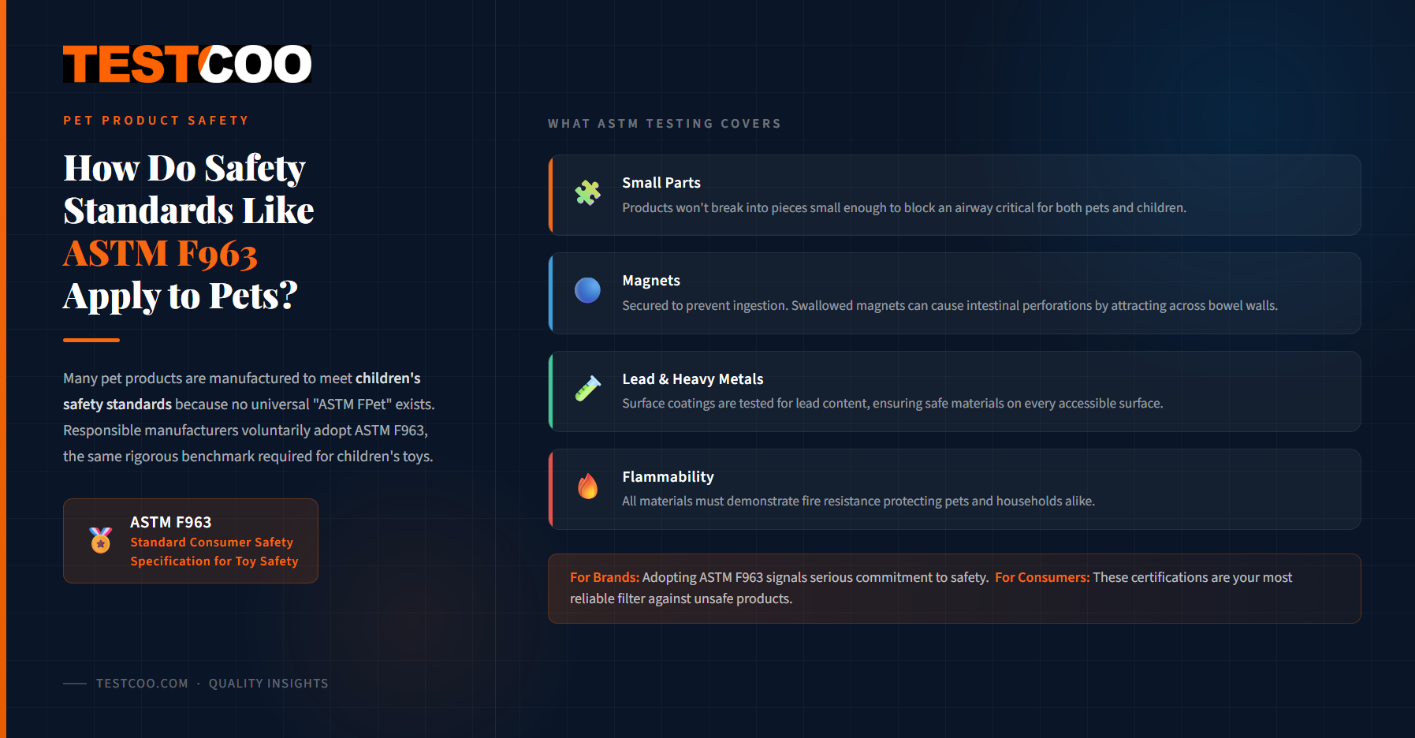
Here is a confusing aspect of the industry: many pet products are manufactured to meet children’s safety standards, specifically ASTM F963 (Standard Consumer Safety Specification for Toy Safety).
Why? Because there is no universal "ASTM FPet" standard that covers all categories. So, responsible manufacturers voluntarily choose to manufacture their pet toys to the same standards required for children’s toys.
When you see a pet product claiming to be "child-safe" or "tested to ASTM standards," it means the product has undergone rigorous lab tests for:
- Small Parts: The product won’t break into pieces smaller than a certain size that could block an airway.
- Magnets: If the product contains magnets, they are secured so they cannot be swallowed. (Ingested magnets can cause intestinal perforations if they attract each other across bowel walls.)
- Lead and Heavy Metals: Surface coatings are tested for lead content.
- Flammability: The materials resist burning.
If you are a pet product business, adopting ASTM F963 as your manufacturing benchmark is a way to signal to consumers that you take safety seriously. If you are a consumer, looking for these certifications is a reliable way to filter out unsafe junk.
Read more: ASTM F963-Standard - Toy Safety Standard
What Role Does Supply Chain Transparency Play?
You cannot inspect what you cannot see. One of the biggest challenges in pet product safety is the opacity of the supply chain.
Many brands act as "marketing companies, they design a product in the US, send a sketch to a sourcing agent and the product is manufactured in a factory that they have never visited. Without physical inspections, the brand relies on the factory’s word that they used the correct materials.
Full transparency involves:
- Factory Audits: Visits to manufacturing facilities to check working conditions, sanitation (critical for soft goods) and quality control processes.
- Material Traceability: Knowing exactly where the cotton, foam, or plastic came from.
- Batch Testing: Testing specific production batches, not just the "golden sample" that was approved months ago.
For consumers, brands that openly discuss their supply chain and inspection protocols (often via QR codes on packaging or detailed "About Us" pages) are usually the ones investing the most in safety.
Is It Expensive to Implement Proper Inspection Protocols?
For businesses, the answer is yes, it costs money. But the question should be rephrased: Is it more expensive to implement inspection, or to manage a recall?
The cost of a recall is often business-ending. It includes:
- Logistics: Retrieving products from warehouses and stores.
- Legal Fees: Settling lawsuits from injured pets.
- Brand Damage: Loss of consumer trust, which takes years to rebuild.
- Insurance Spikes: Liability insurance premiums skyrocket after a claim.
A typical final random inspection (FRI) for a container of pet products costs between $300 and $800, depending on the complexity and location. When you consider that this cost is spread across thousands of units, it adds pennies to the cost of goods sold, a negligible price for the peace of mind that you aren’t shipping a product that will hurt a family pet.
What Should You Do If You Suspect a Product Is Unsafe?
Whether you are a retailer who received a defective shipment or a consumer who bought a dangerous toy, the protocol is similar.
Step 1: Remove from Circulation
Do not try to fix it. Do not donate it. If a product has a manufacturing defect that poses a safety risk, destroy it or dispose of it in a way that no other animal can access it.
Step 2: Report It
- For Consumers: Report the product to the manufacturer (check their website for a safety contact) and the Consumer Product Safety Commission (CPSC). While the CPSC primarily regulates human products, they track pet product injuries as well. You can also report to the FDA if it is a food or treat issue.
- For Businesses: Immediately quarantine the inventory. Contact your third-party inspection agency to conduct a failure analysis. Determine if the defect is isolated to a specific batch (e.g., Lot XYZ) or systemic.
Step 3: Veterinary Intervention
If your pet ingested part of a product, do not wait for symptoms. Inducing vomiting or performing an X-ray is far cheaper and less traumatic than surgery to remove an intestinal blockage.
Frequently Asked Questions (FAQ)
1. How often should I inspect my pet’s existing toys?
You should perform a quick "safety check" on your pet’s toys at least once a week. Look for loose threads, torn fabric, exposed stuffing, or any parts that have become loose. If a toy is showing significant wear, it is safer to throw it away than to risk your pet ingesting a piece of it.
2. Are there specific materials I should avoid when buying pet products?
Yes. Avoid products containing PVC (polyvinyl chloride) or phthalates, which are often found in cheap plastic toys and can disrupt endocrine function. For chew toys, avoid those with BPA. For textiles, avoid loose zinc-alloy hardware, as it is brittle and can break into sharp shards.
3. What is the difference between a "Final Random Inspection" and a "factory audit"?
A Final Random Inspection (FRI) focuses on the quality of the finished goods, checking for defects, measurements and functionality before the product leaves the factory. A factory audit is a broader evaluation of the manufacturing facility itself, looking at social compliance (worker safety), quality management systems and overall capability to produce consistent goods.
4. My pet’s new harness smells strongly of chemicals. Is this normal?
No, a strong chemical odour (often described as smelling like gasoline or rubber) is a red flag. This usually indicates the presence of volatile organic compounds (VOCs) or that the materials were not properly cured or washed during manufacturing. It is best to return the product and look for a brand that uses non-toxic, OEKO-TEX certified materials.
5. If a product is made in the USA, does that mean it doesn’t need inspection?
Not necessarily. While "Made in the USA" often implies stricter labour and environmental regulations, it does not automatically guarantee superior quality control or safety design. Even domestic manufacturers can have production errors. Inspection is about verifying the specific product against safety standards, regardless of where it was assembled.
Conclusion: The Future of Pet Safety
The pet industry is projected to continue its explosive growth. With that growth comes a flood of cheap, low-quality goods designed to capitalize on trends. As we move forward, the distinction between a "pet product" and a "family product" is blurring.
We are seeing a rise in third-party certifications specifically for pet products, such as the Pet Sustainability Coalition (PSC) verification and specific OEKO-TEX standards for pet textiles. These certifications rely on rigorous inspection and testing protocols.
Ultimately, safety is not an accident. It is the result of deliberate inspection, whether that is a QA technician in a Guangdong factory performing a pull test on a squeaker, or a pet parent in their living room squeezing a toy to check for loose parts. By asking the hard questions and demanding answers, we can ensure that the products we bring into our homes bring joy, not emergencies.
At Testcoo, we are committed to providing top-notch quality inspection services for pet products. Our professional team consists of highly trained inspectors who have in-depth knowledge of pet product quality standards and regulations.

Free Sample Report Performance Quality Control
Download a sample report to keep control of your supply chain!

Featured Articles
 AQL Table | How to Read It
 TOP 10 Common Defects in Garments Quality Inspection
 Product Packaging and Shipment Label requirements for Amazon FBA
 What Is ASTM-F2413-18? Protective Footwear Standard
 How to Conduct Third-Party Quality Control Inspections for Electric Scooters
 SMETA Audit-What is SMETA Audit?
 TESTCOO Supplier Verification/Certification Service SLCP, Higg FEM, GRS, GOTS
 Quality Control Inspection Company in China
 What is Quality Inspection? A Complete Guide
 Guidelines for Product Inspection in India
Category
- Production Inspection Service
- Factory Audit
- Softline Inspection
- Hardline Inspection
- Electrics Inspection
- Certification
- Checklist
- Manufacturers
- Quality Assurance Basics
- Products Recall
- AQL
- Guidence and Standard
- News
- Supplier Management
- Amazon
- Protective Equipment
- e-commerce quality control
- Indian Manufacturing
- Soft Goods Quality Control
- Supply Chain Management
- Supply Chain Resilience
- E-Commerce Quality Control
- ISO 2859
- Supply Chain Optimization
- Garment Industry
- Higg Index