


Thailand Burn-Free Maize Regulation 2026: What Exporters Must Know
↵
This article addresses the core regulatory details, documentation standards, compliance risks and practical mitigation strategies exporters need to navigate Thailand’s new trade landscape successfully.
What Is Thailand’s 2026 Burn-Free Maize Regulation?
Thailand’s 2026 burn-free maize regulation is a mandatory environmental import rule that prohibits the entry of animal feed maize produced using field burning, stubble burning, or slash-and-burn agricultural practices into the country. Issued under the DFT’s 2026 regulatory package approved by the Thai Cabinet, it forms the cornerstone of Thailand’s Clean Air Act agenda to reduce particulate matter pollution and align agricultural trade with global sustainability standards. The regulation applies to all feed maize exporters worldwide, including key suppliers from Myanmar, Laos, Cambodia, the United States and Brazil and operates in two phases: a transitional period allowing flexible certification and a stricter enforcement phase linked to the full implementation of the Clean Air Act. By embedding environmental criteria into trade rules, Thailand aims to balance public health priorities with the needs of its over $10 billion animal feed industry.
What Are the Core Compliance Requirements for Exporters?
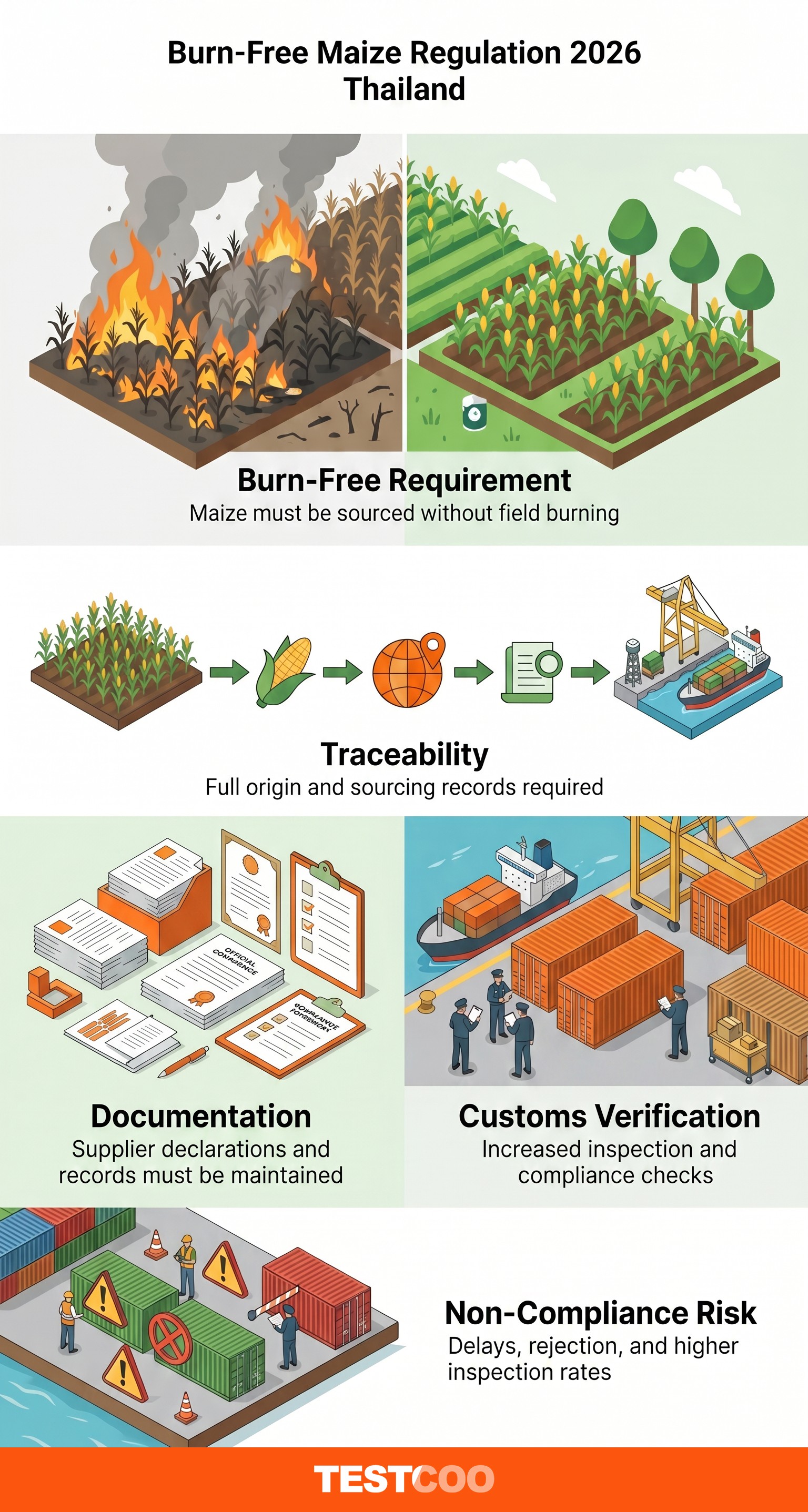
Exporters must meet four non-negotiable requirements to comply with Thailand’s 2026 burn-free maize regulations, each designed to ensure traceability and verify burn-free sourcing. First, they must provide official proof that maize originates from production areas without agricultural burning, supported by government-issued certificates, third-party verification, or satellite monitoring data. Second, full farm-to-ship traceability is mandatory, including detailed records of farm locations (GPS coordinates), planting and harvesting dates, batch numbers and chain-of-custody documentation. Third, compliance with Thailand’s agricultural standards, including TAS 4405-2012 (Good Postharvest Practices for Maize), is required to ensure that post-harvest processes align with no-burn practices. Fourth, exporters must adhere to the “import” (import-linked domestic purchase) policy, where Thai importers must buy three parts of local maize for every one part of imported maize, a measure to protect domestic farmers’ interests. These requirements apply uniformly to all exporters, regardless of their origin and are enforced through customs inspections and post-import audits.
How Does the Two-Phase Enforcement Work?
Thailand’s burn-free maize regulation operates in two distinct phases to ease industry transition while simultaneously strengthening compliance over time. The transitional phase (until the Clean Air Act’s full implementation) allows exporters to use self-certification alongside supporting evidence such as export country government documents or internationally recognized third-party verification. This phase prioritizes education and adjustment, with penalties focused on corrective actions rather than severe sanctions. The stricter enforcement phase (launching in late 2026) will require mandatory official certification from exporting country authorities or accredited bodies, with additional documentation, including geolocated farm maps and satellite hotspot clearance reports for the production season. This phase aligns with Thailand’s broader policy of penalizing domestic farmers who engage in burning, including a two-year ban from government support programs and reflects the country’s commitment to long-term environmental sustainability. Exporters should prepare for the second phase by securing accredited certifications well in advance to avoid shipment disruptions.
What Documentation Is Mandatory for 2026 Exports?
Exporters must submit a complete documentation dossier for each shipment to clear Thai customs, with records retained for at least five years to facilitate traceability and to conduct audits. The required documents are structured to verify burn-free sourcing, traceability and compliance with local standards and any inconsistencies or missing information trigger delays or rejection.
Essential Documents for Customs Clearance
The mandatory documentation package includes six key components: a burn-free cultivation certificate (either self-certified during the transition or official post-2026), a certificate of origin (to qualify for ASEAN preferential tariffs under ATIGA), a detailed farm traceability report with GPS coordinates and parcel IDs, a satellite hotspot monitoring report confirming no burning in the production area, batch/lot tracking records with chain-of-custody proof and a Thai importer’s import registration certificate (renewed annually with the DFT).
For ASEAN exporters, additional documentation may be required to maintain duty-free access, although the preferential tariff period has been shortened to protect domestic production during peak harvest seasons. All documents must be in English or Thai, contain unique reference numbers and include contact details for verification, which is critical for avoiding customs disputes.
Record-Keeping and Traceability Standards
Thailand’s regulations mandate rigorous record-keeping and traceability to ensure accountability across the supply chain. Exporters must maintain digital records of all production and shipping activities for at least five years, including farm input usage, harvest logs, processing records and transportation information. These records must be accessible for inspection by Thai DFT officials or customs authorities upon request, either in physical or electronic formats. To meet traceability requirements, many exporters are adopting digital tools, such as blockchain ledgers and GPS-based tracking systems, which provide immutable records and real-time visibility from farm to port. Compliance with TAS 4002-2009 (Good Postharvest Practices for Maize) is also required, as this Thai Agricultural Standard outlines the best practices for handling, storing and transporting maize to maintain quality and prevent contamination during post-harvest processes. Failure to maintain adequate records can result in penalties, even if the maize itself meets the burn-free requirements.
Read More: Southeast Asia's Growing Need for Inspection Services
What Are the Penalties for Non-Compliance?
Thailand enforces a strict three-strike penalty system for violations of the burn-free maize regulation, with consequences ranging from warnings to permanent market exclusion. These penalties are designed to deter non-compliance while ensuring fairness and apply to both exporters and their Thai importer partners.
The Three-Strike Penalty Framework
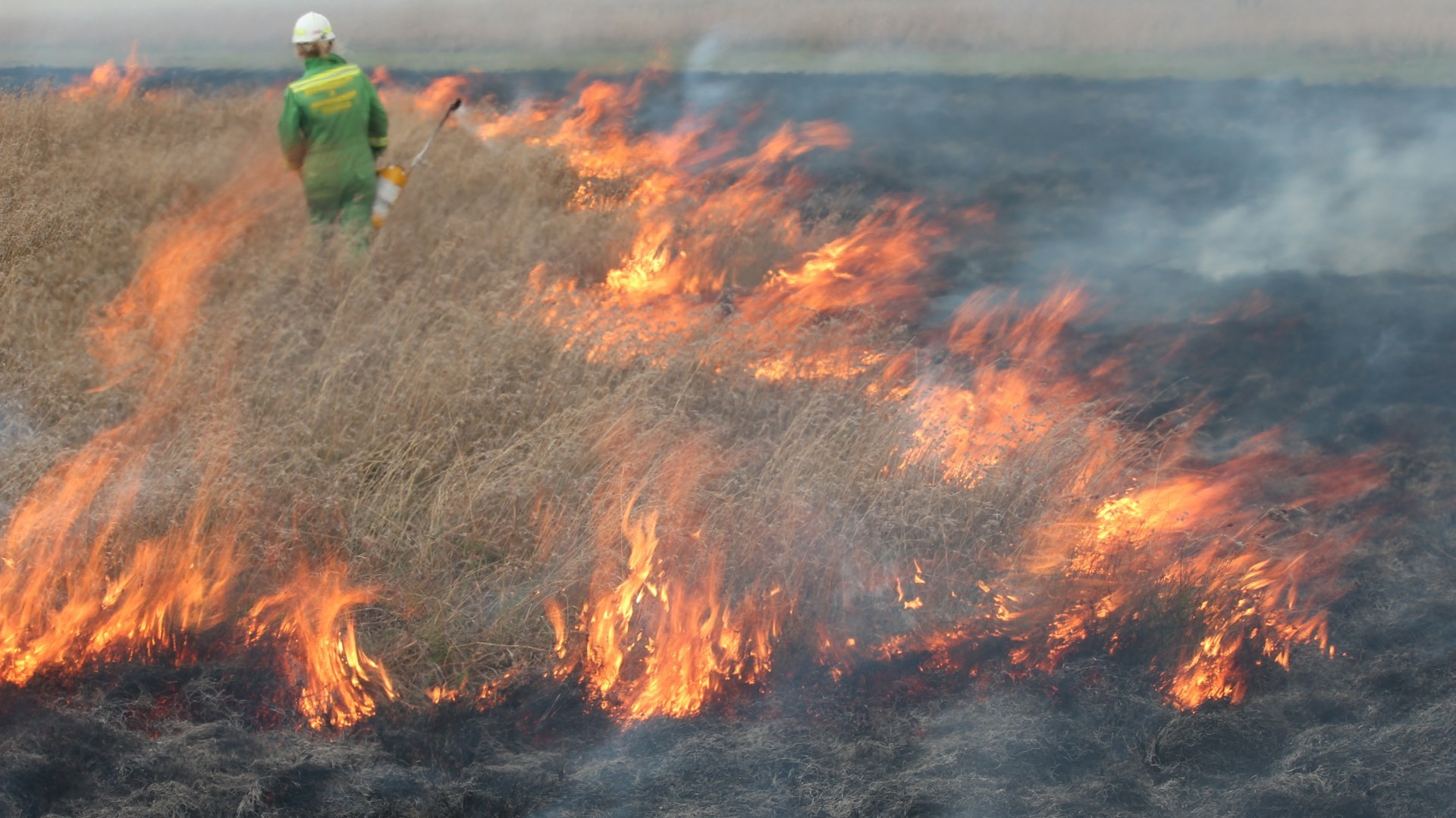
The penalty system progresses from corrective to severe measures based on the number of violations: the first offense results in an official warning, shipment detention for additional inspection and a requirement to submit a corrective action plan within 30 days. The second offense triggers a fine of THB 10,000–50,000 (approximately 280–1,400) and a mandatory third-party audit of the exporter’s supply chain. The third offense leads to the permanent suspension of the Thai importer’s import registration, effectively banning the exporter from the Thai market unless they partner with a new, compliant importer. Additional penalties include shipment seizure and destruction for falsified documentation, product blacklisting and legal liability for fraudulent claims, risks that can irreparably damage an exporter’s reputation in Southeast Asia. These penalties are enforced uniformly, with no exemptions for volume or origin, emphasizing Thailand’s commitment to a level playing field in the seafood industry.
↵
How Can Exporters Mitigate Compliance and Supply Chain Risks?
Exporters can proactively reduce risks by adopting targeted strategies to address the regulation’s core requirements, from sourcing to documentation to transportation. These measures ensure compliance and enhance supply chain resilience and market competitiveness in Thailand’s growing feed sector.
1. Source from Verified Burn-Free Regions and Suppliers
The most effective risk mitigation strategy is to source maize from regions with established zero-burn policies and verified sustainable practices in place. Exporters should avoid high-risk areas with seasonal burning, such as parts of Myanmar, Laos and Cambodia, unless suppliers can provide immediate certification of burn-free production. Partnering with farms that adopt alternative post-harvest practices (e.g., mechanical stubble incorporation or composting) reduces the risk of non-compliance and aligns with Thailand’s environmental objectives. Additionally, exporters should conduct pre-qualification audits of suppliers to verify their burn-free claims, including on-site visits and reviews of historical satellite data to confirm no prior burning activity.
2. Implement Digital Traceability and Certification Systems
Adopting digital traceability tools, such as blockchain, GPS mapping and cloud-based record-keeping, ensures compliance with Thailand’s traceability requirements while streamlining documentation processes. These tools provide immutable records of farm origin, processing and transportation, making audits and customs inspections more efficient than before. Exporters should also secure certification from accredited bodies early, even during the transitional phase, to prepare for stricter enforcement. Internationally recognized certifications (e.g., from ISO-accredited bodies) are preferred because they carry greater credibility with Thai authorities. For ASEAN exporters, aligning with ATIGA traceability standards can simplify compliance and maintain preferential tariff access.
3. Collaborate with Compliant Thai Importers
Exporters must partner with Thai importers who have a valid annual import registration with the DFT and a proven track record of compliance. Importers play a critical role in navigating local regulations, including the import-linked domestic purchase policy and provide valuable insights into customs procedures and documentation requirements. Exporters should include compliance clauses in their contracts with importers, specifying responsibilities for documentation, audits and penalty-sharing in cases of non-compliance. Regular communication with importers regarding regulatory updates, such as changes to certification requirements, ensures that both parties remain aligned and proactive.
4. Conduct Final Random Inspections and Documentation Reviews
Final Random Inspection (FRI) by third-party quality control providers, such as Testcoo, help verify that maize meets burn-free requirements and that documentation is complete and consistent. The FRI includes the physical verification of product quality, cross-checking of batch numbers against traceability records and review of certification documents to ensure alignment with Thai regulations. This step identifies discrepancies early, before shipments reach Thai customs and provides exporters with confidence that their goods will clear inspection. Additionally, pre-shipment documentation reviews ensure that all required forms are correctly filled out, translated (if necessary) and attached, reducing the risk of delays due to administrative errors.
Read More: 9 Important Steps in a Pre-Shipment Inspection Procedure |TESTCOO
Frequently Asked Questions (FAQs)
1. Does the regulation apply to food-grade maize imports?
No, the regulation only applies to animal feed maize import. Food-grade maize is exempt from burn-free requirements but must comply with separate safety and quality standards.
2. Are there any exemptions for small-volume exporters?
No, the regulation applies to all exporters, regardless of shipment volume. However, small exporters may benefit from simplified documentation during the transition phase.
3. How can exporters verify satellite hotspot data for their production areas?
Exporters can obtain satellite monitoring reports from reputable providers, such as Thailand’s GISTDA or international services, which confirm no burning activity during the production season.
4. Will the import-linked domestic purchase policy affect export volumes?
The policy requires Thai importers to buy three parts of local maize for each imported part, but Thailand’s expanded WTO import quota (1 million tonnes for 2026) ensures sufficient market access for exporters.
5. What Are the Key Requirements of Thailand’s Burn-Free Maize Regulation for Exporters in 2026?
Thailand’s 2026 burn-free maize regulation requires exporters to prove that maize used in animal feed is sourced without field burning, supported by full traceability records, supplier declarations and verifiable documentation. Exporters must maintain production and sourcing records for several years, ensure alignment with environmental compliance standards and prepare for stricter customs verification, as failure to meet these requirements can result in shipment delays, rejection, or increased inspection frequency.
How Can Exporters Ensure Long-Term Compliance in Thailand’s Market?
Thailand’s 2026 burn-free maize regulation represents a permanent shift toward environmentally responsible agricultural trade and exporters must integrate compliance into their long-term supply chain strategies to maintain market access. By prioritizing burn-free sourcing, implementing robust traceability systems, securing accredited certifications and partnering with compliant importers, exporters can mitigate risks, avoid penalties and capitalize on Thailand’s growing demand for feed maize. The regulation also presents an opportunity to align with global sustainability trends, as consumers and businesses increasingly prioritize eco-friendly products, creating a competitive advantage for exporters who embrace burn-free practices.
Testcoo supports exporters with end-to-end compliance solutions, including burn-free certification verification, pre-shipment documentation reviews, supply chain traceability audits and on-site inspections to ensure compliance with Thailand’s regulatory requirements. Our team of local experts understands the nuances of Thai customs procedures and environmental regulations, providing actionable insights to streamline the clearance process and reduce disruptions. Whether you are exporting from ASEAN or global markets, Testcoo’s tailored services help you navigate Thailand’s 2026 burn-free maize regulation with confidence, protecting your market share and building trust with Thai importers. Contact Testcoo today to strengthen your compliance strategy and secure your position in Thailand’s vital feed maize market.

Free Sample Report Performance Quality Control
Download a sample report to keep control of your supply chain!

Featured Articles
 AQL Table | How to Read It
 TOP 10 Common Defects in Garments Quality Inspection
 Product Packaging and Shipment Label requirements for Amazon FBA
 What Is ASTM-F2413-18? Protective Footwear Standard
 How to Conduct Third-Party Quality Control Inspections for Electric Scooters
 SMETA Audit-What is SMETA Audit?
 TESTCOO Supplier Verification/Certification Service SLCP, Higg FEM, GRS, GOTS
 Quality Control Inspection Company in China
 What is Quality Inspection? A Complete Guide
 Guidelines for Product Inspection in India
Category
- Production Inspection Service
- Factory Audit
- Softline Inspection
- Hardline Inspection
- Electrics Inspection
- Certification
- Checklist
- Manufacturers
- Quality Assurance Basics
- Products Recall
- AQL
- Guidence and Standard
- News
- Supplier Management
- Amazon
- Protective Equipment
- e-commerce quality control
- Indian Manufacturing
- Soft Goods Quality Control
- Supply Chain Management
- Supply Chain Resilience
- E-Commerce Quality Control
- ISO 2859
- Supply Chain Optimization
- Garment Industry
- Higg Index