


ISO 14001 2026 and the Future of Sustainable Textile Manufacturing
↵
Introduce how global textile sourcing is entering a new phase where sustainability, traceability and compliance are becoming procurement requirements rather than optional initiatives. Explain that recent ISO updates, stricter environmental expectations and growing demand for digital product traceability are changing how buyers evaluate textile suppliers. Mention that manufacturers must now compete on compliance capability, data transparency and supply chain visibility in addition to product quality. End by stating that the article explores the major compliance trends shaping textile exporting in 2026 and how businesses can respond.
What Is Changing in the ISO 14001:2026 Revision?
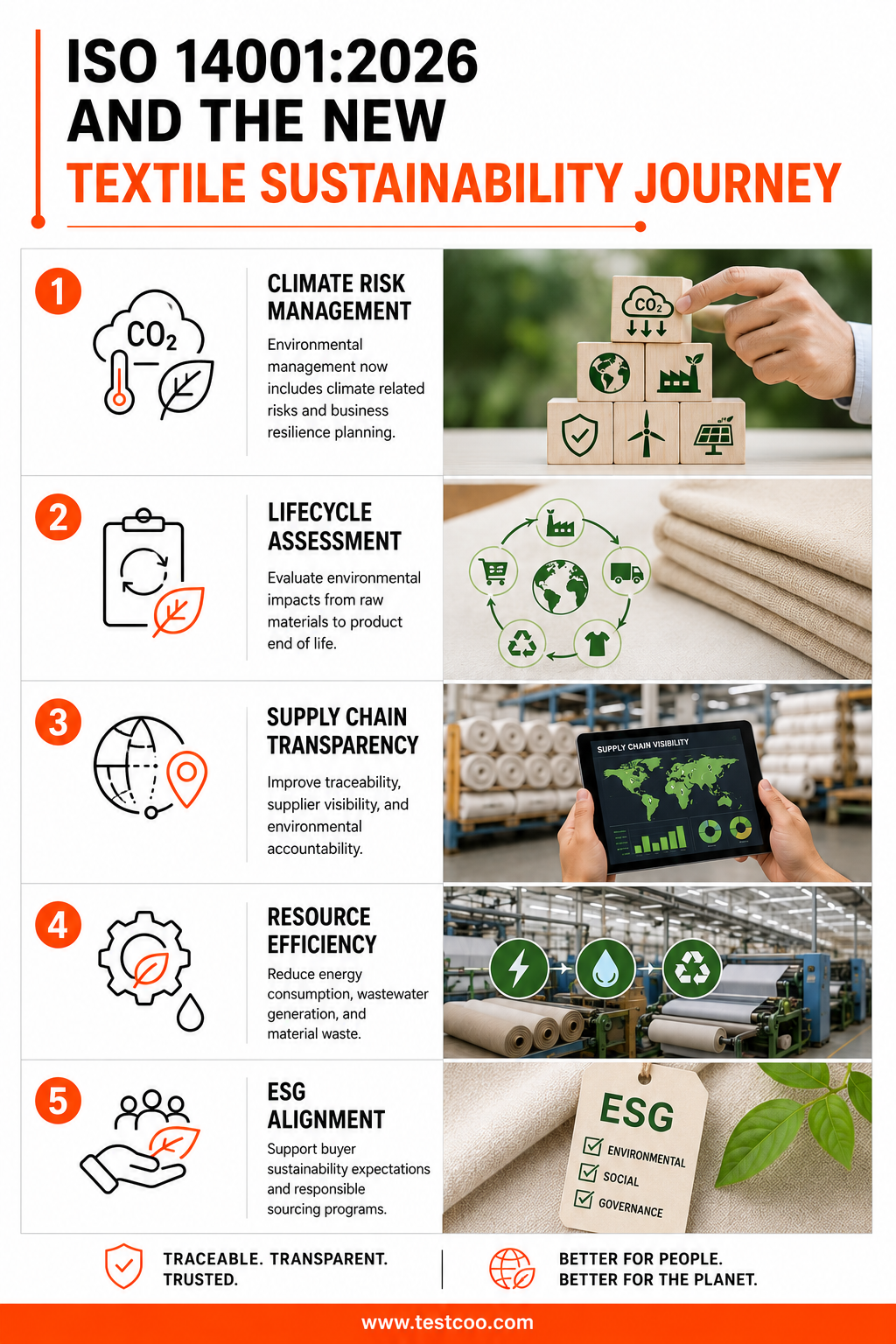
ISO 14001:2026 strengthens environmental management by placing
greater emphasis on climate related risks, lifecycle thinking and supply chain sustainability. For textile manufacturers, environmental performance is no longer measured only by factory operations but by how environmental risks are managed throughout the entire product lifecycle.
Why Climate Change Is Becoming Part of Environmental Management
Climate change is becoming a more prominent consideration in environmental management because organizations are increasingly expected to identify, assess, and respond to climate-related risks that may affect both business operations and the wider supply chain. The ISO 14001:2026 reinforces the integration of climate considerations into environmental planning, encouraging companies to evaluate how changing regulations, resource availability, extreme weather events, and stakeholder expectations may influence their environmental management systems.
For textile manufacturers, these changes extend beyond mere regulatory compliance. Brands and retailers are strengthening ESG commitments and increasingly incorporating environmental performance into supplier qualification and sourcing decisions. Companies that proactively manage environmental risks and demonstrate continuous improvement are more likely to meet buyer expectations and maintain long-term competitiveness in global markets.
Examples of climate-related management priorities include:
- Integrating climate risks into environmental planning
- Improving resource and energy efficiency
- Strengthening environmental objectives and performance monitoring
- Supporting continual improvement through measurable environmental KPIs
How Lifecycle Thinking Extends Beyond Factory Operations
Lifecycle thinking expands environmental management from individual factory activities to the entire journey of a product. Lifecycle Assessment (LCA) principles defined in ISO 14040 encourage organizations to evaluate environmental impacts. Rather than focusing only on emissions, waste generation, or energy consumption during manufacturing, the newly published ISO 14001:2026 standard encourages organizations to consider environmental impacts at every stage of a product's lifecycle. This broader perspective helps companies identify environmental risks earlier and uncover opportunities to improve sustainability performance beyond factory gates.
For textile manufacturers, lifecycle considerations may begin with raw material sourcing and continue through spinning, weaving, dyeing, finishing, garment production, packaging, transportation, consumer use and eventual disposal or recycling. Each stage contributes to the overall environmental footprint of a textile product and may introduce additional risks related to carbon emissions, water consumption, chemical use, or waste generation.
This shift is particularly significant for the textile industry because many environmental impacts occur outside the final manufacturing facility and often involve multiple suppliers operating in different regions. Consequently, environmental responsibility is increasingly becoming a supply chain issue rather than a factory-level issue alone. Therefore, global brands and retailers are placing greater emphasis on supplier transparency, environmental data visibility, and traceable sustainability performance throughout the value chain.
By adopting lifecycle thinking, textile manufacturers can better align with evolving buyer expectations, strengthen supply chain transparency, and build more resilient environmental management systems that support long-term competitiveness in international markets.
Read More:Environmental and Social Audits in Singapore | Testcoo
Why Does ISO 14001 Matter More for Textile Manufacturers?
Environmental management has become a competitive requirement because global buyers increasingly evaluate textile suppliers based on sustainability performance, compliance readiness and supply chain transparency. While product quality remains essential, buyers also expect suppliers to demonstrate responsible environmental practices, reliable documentation and continuous improvement throughout their operations.
How Environmental Compliance Influences Global Sourcing Decisions
Environmental compliance has become an important factor in global sourcing decisions as brands work to reduce environmental risks across their supply chains. Many international buyers have established ESG procurement policies and preferred supplier programs that assess manufacturers on more than production capacity and product quality. Environmental management systems, regulatory compliance and sustainability performance are now considered indicators of a supplier's long term reliability.
For textile manufacturers, implementing an environmental management system aligned with ISO 14001 can help demonstrate a structured approach to managing environmental risks and improving operational performance. Although certification alone does not guarantee supplier approval, it can strengthen credibility during supplier evaluations and support compliance with brand sustainability objectives.
Environmental compliance increasingly influences:
- ESG focused procurement decisions
- Preferred supplier qualification programs
- Brand sustainability commitments
- Supply chain resilience and risk management
As sustainability expectations continue to evolve, manufacturers that integrate environmental management into their business operations are better positioned to maintain customer relationships and compete in international sourcing markets.
Why Traceability Is Becoming Part of Environmental Compliance
Environmental compliance increasingly depends on the ability to demonstrate the origin of materials, how they are processed, and whether production activities meet environmental requirements. As a result, traceability is becoming an important component of environmental management because it provides the transparency required to verify compliance throughout the supply chain.
Although ISO 14001 does not specifically require a Digital Product Passport (DPP), both emphasize greater visibility, documented processes, and continuous improvement. This industry direction is also reflected in emerging regulations and buyer requirements that encourage companies to strengthen material traceability, environmental data management, and supplier transparency.
For textile manufacturers, stronger traceability supports the following:
- Material origin verification
- Chemical management and restricted substance control
- Wastewater and environmental monitoring
- Supplier transparency and accountability
- More reliable compliance documentation
By combining environmental management with traceable supply chain information, textile companies can improve audit readiness, strengthen buyer confidence, and respond more effectively to evolving sustainability and compliance requirements.
Read More: How Third-Party Inspections Ensure Sustainable Footwear
How Can Textile Manufacturers Prepare for ISO 14001 Requirements?
Meeting future environmental expectations requires textile manufacturers to integrate sustainability into daily operations rather than treating compliance as a standalone certification activity. Building a structured environmental management system helps companies identify risks earlier, improve operational consistency and
demonstrate ongoing compliance to customers and other stakeholders.
Strengthen Environmental Risk Management Across Suppliers
Effective environmental management extends beyond individual factories and should cover the entire supplier network. Since textile production often involves multiple suppliers and processing stages, manufacturers need consistent environmental controls to identify risks, monitor performance and support continuous improvement throughout the supply chain.
Key environmental management practices include:
- Conducting supplier environmental audits to verify compliance with environmental policies and regulatory requirements
- Monitoring wastewater treatment and discharge management, particularly in dyeing and finishing operations
- Improving energy efficiency and reducing resource consumption across production processes
- Establishing environmental KPIs to measure performance and support continual improvement
By proactively managing environmental risks across suppliers, textile companies can strengthen supply chain resilience, improve compliance consistency and better meet the sustainability expectations of global buyers.
Build Better Environmental Documentation and Operational Visibility
A well documented environmental management system is essential for demonstrating compliance and supporting continual improvement. Digital documentation enables companies to maintain accurate environmental records, streamline internal audits and respond more efficiently to customer assessments and regulatory reviews.
An effective management system should support:
- Centralized environmental documentation and records
- Digital management of internal audits and corrective actions
- Standardized monitoring of environmental performance
- Better visibility into supplier compliance activities
This is where digital management platforms such as Testcoo can provide additional value. Testcoo helps textile manufacturers centralize supplier information, inspection records, audit documentation and workflow management within a single platform. By improving operational visibility and maintaining organized, traceable records, Testcoo supports companies in implementing structured management processes that align with the objectives of ISO 14001 while strengthening compliance readiness and overall supply chain efficiency.
How Does Testcoo Support Environmental Compliance Management?
Implementing an environmental management system requires more than documented pro
cedures. Textile manufacturers also need consistent execution, centralized data and end to end visibility across suppliers, inspections and compliance activities. Testcoo supports these operational needs by digitalizing quality and environmental management processes, helping companies build structured workflows aligned with their environmental and quality management objectives.
How Testcoo Centralizes Environmental and Quality Management Workflows
Managing environmental and quality activities across multiple factories and suppliers can quickly become complex when information is scattered across emails, spreadsheets and standalone documents. Testcoo centralizes critical operational data into a single platform, enabling teams to coordinate inspections, audits, supplier performance and compliance records more efficiently.
Through a unified management system, Testcoo supports:
- Supplier and customer management
- Inspection planning and execution
- Audit scheduling and follow up
- Workflow and task management
- Centralized documentation and record control
- Traceable quality and compliance information
By replacing fragmented management processes with standardized digital workflows, Testcoo improves collaboration between sourcing, quality and compliance teams while increasing operational visibility across the supply chain.
How Testcoo Improves Compliance Readiness Through Digital Quality Management
Maintaining compliance requires accurate records, standardized processes and continuous monitoring rather than periodic inspections alone. Testcoo helps textile manufacturers establish structured quality management processes that improve consistency, strengthen traceability and support ongoing operational improvement.
Using centralized digital workflows, Testcoo helps companies:
- Standardize inspection execution and reporting
- Improve supplier performance visibility
- Maintain audit ready quality and compliance documentation
- Track corrective and preventive actions
- Centralize inspection records and historical quality data
- Monitor KPIs to support continuous improvement
Rather than functioning as a certification tool, Testcoo supports companies in implementing structured management processes that align with the objectives of environmental and quality management systems. By improving data visibility, documentation control and supplier collaboration, Testcoo helps textile manufacturers strengthen compliance readiness while building more efficient and resilient supply chain operations.
Read More: Textile Appearance Inspection Standards Guide | Testcoo
Frequently Asked Questions
1.Is ISO 14001:2026 mandatory for textile manufacturers?
No. ISO 14001 remains a voluntary environmental management standard. However, many global brands and retailers increasingly use environmental certifications and management systems as part of supplier qualification and sourcing evaluations.
2.What is the biggest change expected in the published ISO 14001:2026 standard?
The most significant change is the stronger emphasis on climate related risks and lifecycle thinking, encouraging companies to integrate environmental considerations throughout business operations and supply chains.
3.Does ISO 14001 require Digital Product Passports or supply chain traceability?
No. ISO 14001 does not mandate Digital Product Passports (DPP). However, both initiatives reflect the industry's broader movement toward greater transparency, traceability and environmental accountability.
4.How does ISO 14001 affect textile exporters?
ISO 14001 can improve supplier credibility, support ESG expectations, strengthen buyer confidence and help companies compete in increasingly sustainability focused sourcing markets.
5.How can textile manufacturers prepare for future ISO 14001 requirements?
Companies should focus on environmental risk management, supplier engagement, digital documentation, internal audits, traceability systems and continuous improvement processes.
How Is the ISO 14001:2026 Revision Different From ISO 14001:2015?
Area | ISO 14001:2015 | ISO 14001:2026 |
Climate Change | Limited | Stronger emphasis |
Lifecycle Thinking | Recommended | Expanded application |
Risk Assessment | Environmental risks | Climate integrated risks |
Supply Chain | Indirect | Greater supply chain focus |
Sustainability | Supporting role | Core management consideration |
The revised standard builds upon ISO 14001:2015 rather than replacing its core framework. Companies with mature environmental management systems can prepare by strengthening climate risk assessment, lifecycle evaluation and supply chain environmental management.
Why Should Textile Manufacturers Prepare Now?
Preparing for the ISO 14001:2026 is not only about adapting to evolving environmental management requirements but also about strengthening long term supply chain competitiveness. As climate related risks, lifecycle thinking and supply chain transparency become increasingly integrated into global sourcing practices, textile manufacturers need to move beyond traditional compliance approaches. Companies that proactively strengthen environmental management, improve traceability and establish standardized management processes will be better positioned to meet ESG expectations, satisfy buyer requirements and build more resilient supply chains.
Testcoo observed that sustainability, environmental responsibility and supply chain transparency were among the most frequently discussed priorities for international buyers and textile manufacturers. These conversations reflect a broader industry shift toward data driven compliance and integrated supply chain management. Supporting this transition, Testcoo helps textile manufacturers centralize inspections, supplier management, documentation and quality data within a unified digital platform. By improving operational visibility, maintaining traceable records and supporting structured management processes aligned with environmental and quality objectives, Testcoo enables companies to strengthen compliance readiness while building more efficient, transparent and resilient textile supply chains.

Free Sample Report Performance Quality Control
Download a sample report to keep control of your supply chain!

Featured Articles
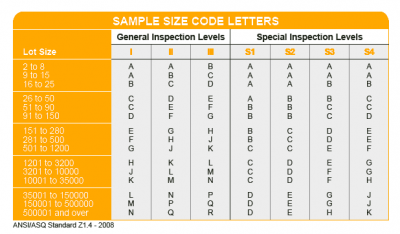 AQL Table | How to Read It
 TOP 10 Common Defects in Garments Quality Inspection
 Product Packaging and Shipment Label requirements for Amazon FBA
 What Is ASTM-F2413-18? Protective Footwear Standard
 How to Conduct Third-Party Quality Control Inspections for Electric Scooters
 SMETA Audit-What is SMETA Audit?
 TESTCOO Supplier Verification/Certification Service SLCP, Higg FEM, GRS, GOTS
 Quality Control Inspection Company in China
 What is Quality Inspection? A Complete Guide
 Guidelines for Product Inspection in India
Category
- Production Inspection Service
- Factory Audit
- Softline Inspection
- Hardline Inspection
- Electrics Inspection
- Certification
- Checklist
- Manufacturers
- Quality Assurance Basics
- Products Recall
- AQL
- Guidence and Standard
- News
- Supplier Management
- Amazon
- Protective Equipment
- e-commerce quality control
- Indian Manufacturing
- Soft Goods Quality Control
- Supply Chain Management
- Supply Chain Resilience
- E-Commerce Quality Control
- ISO 2859
- Supply Chain Optimization
- Garment Industry
- Higg Index