


OCS Certification Explained: Requirements, Process and Compliance Guide
The Organic Content Standard (OCS) is widely used in the textile industry to verify the presence and amount of organically grown material in a product while ensuring full traceability throughout the supply chain. As global buyers increasingly demand transparency, sustainability and ESG compliance, OCS certification has become a critical requirement for textile exporters, manufacturers and brands.
This article explains what OCS certification is, how it works, what requirements apply and how businesses can ensure compliance through effective supply chain control and third-party verification.
What Is OCS Certification and What Does It Verify in Textile Supply Chains?
OCS certification verifies the presence and amount of organically grown material in textile products while ensuring chain of custody traceability throughout the supply chain. As a globally recognized standard for non-food organic materials, OCS helps brands, manufacturers and exporters support credible organic claims and strengthen supply chain transparency.
Definition of OCS
Developed by Textile Exchange, the Organic Content Standard (OCS) is an international voluntary standard used to verify organically grown materials in non-food products. The standard is commonly applied to organic cotton and other organic textile materials, with a primary focus on verifying organic content and maintaining traceability throughout processing, manufacturing, trading and handling stages in the textile supply chain. Unlike broader sustainability standards, OCS does not evaluate social compliance or chemical management practices. Recent updates to the standard have placed greater emphasis on traceability, documentation consistency and supply chain transparency.
What OCS Verifies
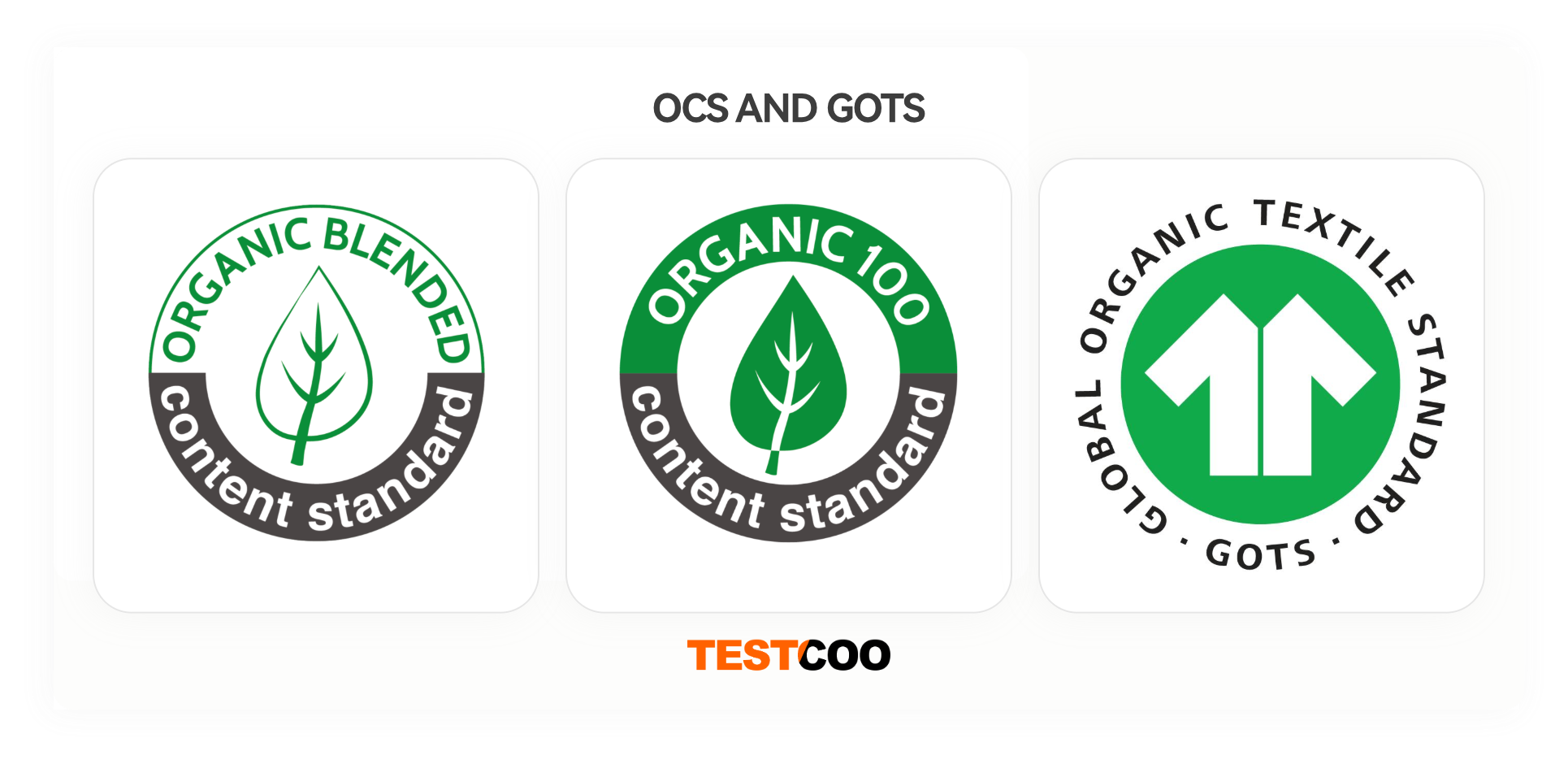
OCS certification focuses on two primary areas: organic content verification and chain of custody traceability. The standard recognizes two certification categories: OCS 100, which applies to products containing 95% to 100% certified organic material and OCS Blended, which applies to products containing at least 5% certified organic material. These categories allow businesses to verify organic claims while supporting varying levels of certified material usage. In addition, OCS requires certified materials to remain identifiable and traceable throughout processing and production stages. Unlike standards such as Global Organic Textile Standard (GOTS), OCS does not include requirements related to chemical restrictions or social compliance, making it a more accessible certification option for companies implementing traceable organic sourcing programs.
What Are the Key Requirements for OCS Certification?
To obtain OCS certification, companies must comply with requirements related to certified organic inputs, chain of custody traceability, supplier certification verification and documentation management. These requirements are designed to support the integrity of organic content claims and ensure that certified materials can be traced throughout the textile supply chain, in accordance with the Textile Exchange Organic Content Standard (OCS) and its associated user guidelines.
The core requirements for OCS certification include:
- Certified organic input materials: Only organically grown materials certified under standards recognized by Textile Exchange or the IFOAM Family of Standards are eligible for OCS certification.
- Transaction certificates (TC): Transaction certificates are required to verify the transfer of certified materials throughout the supply chain, beginning with the first processor.
- Supplier certification verification: Certified organizations must ensure that suppliers handling OCS materials maintain valid scope certificates issued by accredited certification bodies.
- Chain of custody documentation: Businesses must maintain chain of custody records to track certified materials through processing, storage, transportation and trading activities.
- Record management and traceability: Companies should maintain accurate documentation, such as transaction certificates, invoices and production records, to support audits and traceability verification.
Read More: Textile Exchange Supply Chain Supervision Certification | Testcoo
How Does the OCS Certification Process Work Step by Step?
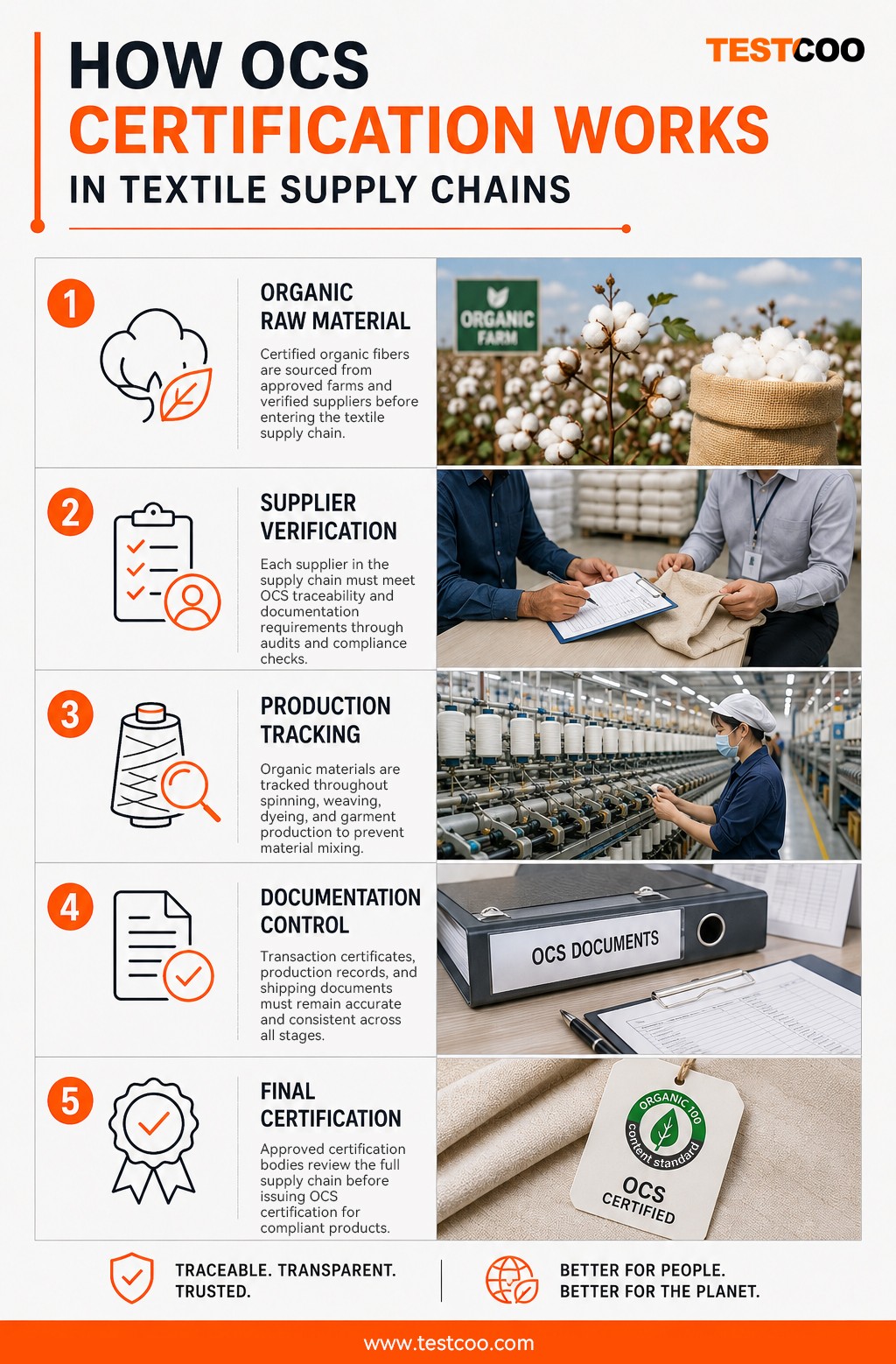
OCS certification follows a structured chain of custody audit and verification process designed to ensure the traceability of certified organic materials throughout the textile supply chain. Certification timelines may vary depending on supply chain complexity, operational readiness and documentation accuracy.
Raw Material Sourcing
The certification process begins with sourcing organically grown raw materials from suppliers holding valid organic certifications recognized by Textile Exchange or accepted under approved organic standards. Companies must ensure that certified material inputs are properly documented and supported by transaction certificates, which serve as the foundation for traceability verification throughout the supply chain. Many businesses also conduct internal supplier assessments before certification audits to evaluate documentation readiness and traceability capabilities.
Supplier Certification and Chain of Custody Verification
Organizations handling certified materials within the supply chain are generally required to operate within a certified chain of custody system. This may include ginners, spinners, fabric mills, manufacturers, traders and other processing facilities involved in handling OCS-certified materials. Businesses must verify that suppliers maintain valid scope certificates issued by accredited certification bodies and that transaction records remain consistent across all production and trading stages.
On-site Audit
An accredited certification body conducts an on-site audit to assess whether the company’s operations comply with OCS requirements. The audit typically includes reviews of production workflows, material segregation procedures, storage controls, labeling systems and documentation management practices. Auditors also evaluate whether certified materials remain identifiable and traceable throughout production processes.
Documentation Review
During the audit process, certification bodies review transaction certificates, invoices, production records, inventory data and supplier documentation to verify chain of custody compliance. The documentation must demonstrate that certified materials can be consistently traced from material input through processing and shipment activities. Any inconsistencies, missing records, or traceability gaps may require corrective actions before certification approval.
Certification Issuance
Once compliance is confirmed, the certification body issues an OCS scope certificate for the approved operations and product categories. OCS certification is generally valid for one year and requires annual renewal audits to maintain certification status. Certified organizations can also be verified through Textile Exchange’s public certification tracking systems used by brands, retailers and supply chain partners.
Read More: Environmental and Social Audits in Singapore | Testcoo

↵
What Is the Difference Between OCS and GOTS Certification?
OCS and GOTS differ significantly in certification scope, with OCS focusing primarily on organic content verification and chain of custody traceability, while GOTS covers broader environmental and social compliance requirements across textile production. Although both standards support sustainable textile sourcing, they are developed by different organizations and are designed for different certification objectives.
Category | OCS Certification | GOTS Certification |
Developed By | Textile Exchange | Organic Trade Association (OTA, USA), Internationaler Verband der Naturtextilwirtschaft (IVN, Germany), The Soil Association (UK) and Japan Organic Cotton Association (JOCA, Japan) |
Primary Focus | Organic content verification and traceability | Full environmental and social compliance |
Organic Content Requirement | Minimum 5% certified organic material | 70% or 95% certified organic material |
Chain of Custody | Required | Required |
Chemical Restrictions | Not included | Strict chemical management requirements |
Social Compliance | Not included | Based on ILO core principles |
Environmental Criteria | Limited | Comprehensive environmental requirements |
Suitable For | Blended products and entry-level organic claims | Full sustainable textile production |
Processing Scope | Traceability-focused | Covers full textile processing |
ESG Depth | Basic | Advanced |
Market Positioning | Flexible and accessible | Premium sustainability certification |
Scope
The Organic Content Standard (OCS), developed by Textile Exchange, focuses on verifying organically grown material content and maintaining chain of custody traceability throughout the supply chain. OCS can be applied to a wide range of non-food organic materials, including cotton, wool and linen and supports blended products containing at least 5% certified organic material.
By comparison, the Global Organic Textile Standard (GOTS) covers both organic material verification and broader sustainability requirements across textile processing and manufacturing. GOTS certification applies to products containing a minimum of 70% certified organic fibers under the “Made with Organic Materials” label and at least 95% certified organic fibers under the “Organic” label category.
Chemical Management Requirements
One of the main differences between OCS and GOTS is the level of chemical control required during processing. OCS does not establish chemical input restrictions and focuses primarily on verifying organic material content and traceability. This allows certified products to use conventional processing chemicals while maintaining verified organic claims.
GOTS, however, includes strict chemical management criteria designed to reduce environmental and human health risks in textile processing. The standard restricts or prohibits a range of hazardous substances, including certain toxic dyes, heavy metals, formaldehyde and harmful auxiliaries. GOTS chemical requirements are aligned with internationally recognized principles for safer chemical management in textile production.
Environmental and Social Compliance Depth
GOTS incorporates comprehensive environmental and social responsibility requirements throughout textile manufacturing operations. In addition to traceability verification, the standard addresses wastewater treatment, environmental management, restricted chemical inputs and workplace practices aligned with International Labour Organization (ILO) core principles. These requirements make GOTS a more comprehensive sustainability certification for textile businesses.
OCS, by contrast, does not include broader environmental performance or social compliance requirements beyond organic content verification and chain of custody traceability. As a result, OCS is often considered a more focused and accessible certification option for businesses seeking to validate organic material claims without implementing full sustainability management systems.
Applicable Business Scenarios
OCS certification is commonly used by businesses that want to verify organic material claims while maintaining flexibility in sourcing and production processes. It is particularly suitable for blended textile products and companies beginning to implement traceable organic sourcing strategies.
GOTS certification is generally more suitable for brands pursuing comprehensive sustainability positioning, particularly those targeting premium retail markets and environmentally conscious consumers. Because GOTS covers environmental and social criteria in addition to organic content verification, it is often preferred by brands seeking stronger ESG and sustainable sourcing credentials.
Read More: Global Organic Textile Standard- GOTS Certification |TESTCOO
Why Is OCS Certification Important for ESG and Sustainable Textile Compliance?
OCS certification supports ESG goals by ensuring transparency and responsible sourcing in textile supply chains. In an era where investors, consumers and regulators increasingly prioritize sustainability, OCS certification has become a valuable tool for textile businesses looking to enhance their ESG performance and meet market demands.
Global Brand Sourcing Requirements for OCS-Certified Products
Many global brands require their suppliers to hold OCS certification for products claiming organic content. This requirement is part of brands’ broader sustainability strategies, which aim to reduce environmental impact and improve supply chain transparency. By obtaining OCS certification, exporters can access these premium markets and build long-term partnerships with leading brands.
How OCS Certification Supports ESG Reporting and Disclosure
OCS certification provides verifiable data on organic content and supply chain traceability, which is critical for ESG reporting. Investors and stakeholders increasingly demand transparent ESG disclosures and OCS certification helps businesses demonstrate their commitment to responsible sourcing. According to a 2023 report by McKinsey, 70% of investors consider ESG factors when making investment decisions, making OCS certification a valuable asset for attracting capital.
Using the OCS Label to Communicate Sustainability to Consumers
OCS certification allows businesses to use the OCS logo on their products, providing consumers with a recognizable symbol of organic content and traceability. Research by Nielsen shows that 66% of consumers are willing to pay more for sustainable products and the OCS logo helps brands communicate their sustainability credentials effectively.
How OCS Certification Enables Market Access and Regulatory Compliance
In many regions, including the European Union and the United States, organic claims are regulated by law and businesses must provide evidence of organic content to avoid legal penalties. OCS certification provides independent verification of organic claims, ensuring compliance with these regulations and facilitating market access. Additionally, OCS certification is recognized by major retail associations, such as the Sustainable Apparel Coalition, further enhancing marketability.
Read More: TESTCOO Supplier Verification/Certification Service SLCP, GOTS
How Can Exporters Ensure OCS Compliance Across Complex Supply Chains?
Exporters must implement strong supplier management, traceability systems and verification processes to maintain OCS compliance. Complex supply chains, which often involve multiple tiers of suppliers across different countries, present unique challenges for maintaining traceability and consistency.
Managing Multi-Tier Supply Chain Risks in OCS-Certified Production
Multi-tier textile supply chains create significant compliance challenges for OCS-certified exporters because organic materials often pass through multiple suppliers, processors and subcontractors before final production. This increases the risk of material substitution, incomplete traceability records, fraudulent transaction certificates and non-compliant processing practices. To reduce these risks, exporters should establish full supply chain mapping procedures, conduct regular audits of tier 2 and tier 3 suppliers and implement supplier compliance programs aligned with OCS requirements. Strong upstream visibility is essential for maintaining traceability integrity and preventing certification failures.
Ensuring Documentation Consistency Across the Supply Chain
Consistent and accurate documentation is a core requirement of OCS compliance because certification bodies rely heavily on transaction records to verify traceability. Exporters must ensure that transaction certificates, purchase orders, invoices and production records remain aligned throughout every stage of production and shipment. Any mismatch in quantity, supplier information, or organic content may trigger non-compliance findings during audits. To improve accuracy and reduce administrative risks, many exporters are adopting digital traceability systems, including cloud-based documentation platforms and blockchain-enabled tracking tools, to standardize record management across suppliers and production facilities.
Why Batch Traceability Is Critical for OCS Compliance
Batch traceability plays a critical role in maintaining the integrity of organic textile production because it allows exporters to track certified materials from raw material intake to final shipment. Effective batch management systems typically include batch identification labels, segregated storage areas for organic and non-organic materials, inventory reconciliation procedures and real-time production tracking. These controls help prevent material mixing while also enabling businesses to isolate affected products quickly if a traceability or quality issue is identified during inspection or audit processes.
How Exporters Can Prevent Material Mixing and Cross-Contamination Risks
Material mixing between organic and non-organic inputs is one of the most common compliance risks in OCS-certified manufacturing environments. To prevent cross-contamination, exporters should establish strict production segregation controls, including dedicated storage areas, equipment cleaning procedures and clearly separated production workflows for certified materials. Employee training is equally important because operational mistakes during handling or labeling can compromise traceability compliance. In addition, many exporters conduct periodic laboratory testing through ISO/IEC 17025 accredited laboratories to verify organic material claims and strengthen audit readiness.
Frequently Asked Questions (FAQs)
1. What does OCS certification guarantee?
OCS certification guarantees that a product contains verified organic material and that its supply chain is traceable.
2. Is OCS certification mandatory for textile exports?
OCS certification is not legally mandatory but is often required by international buyers and brands.
3. Is OCS certification recognized globally?
Yes, OCS is recognized in major markets including the EU, US, Japan and Australia and is accepted by leading brands worldwide.
4. What is the minimum organic content for OCS?
Products must contain at least 5 percent certified organic material to qualify for OCS certification.
5. How does OCS certification work in the supply chain?
OCS certification works by verifying organic materials, tracking them through each production stage and ensuring documentation consistency across the supply chain.
What Are the Key Benefits of OCS Certification and How Can Third-Party Inspection Services Support Compliance?
OCS certification offers numerous benefits for textile businesses, including enhanced market access, improved ESG performance and increased consumer trust. By verifying organic content and traceability, OCS certification helps businesses meet brand requirements, comply with regulations and differentiate themselves in a competitive market. For exporters operating in complex supply chains, maintaining OCS compliance can be challenging, but third-party inspection services provide valuable support to ensure ongoing compliance and mitigate risks.
Our third-party inspection and certification services are designed to help textile businesses navigate the OCS certification process and maintain compliance across their supply chains. We offer end-to-end support, including pre-audit assessments, supplier verification, on-site audits and documentation review. Our team of accredited auditors has extensive experience in the textile industry and a deep understanding of OCS requirements, ensuring that businesses receive accurate and reliable certification services.
We help businesses reduce the risk of non-compliance by identifying gaps in their processes and providing actionable recommendations for improvement. Our traceability solutions, including digital documentation systems and batch management tools, streamline compliance and improve supply chain transparency. Additionally, our ongoing support ensures that businesses stay up-to-date with the latest OCS updates and industry best practices.
By partnering with us for OCS certification and compliance support, textile businesses can enhance their sustainability credentials, access premium markets and build trust with stakeholders. Our services are tailored to meet the unique needs of each business, whether they are just starting their sustainability journey or looking to optimize their existing compliance processes. With our expertise and support, businesses can achieve OCS certification efficiently and maintain compliance over the long term, driving sustainable growth and success.
How Can Third-Party Inspection and Verification Support OCS Certification Compliance?
Third-party inspection and verification services help ensure that OCS-certified supply chains remain compliant by validating supplier practices, checking documentation consistency and verifying traceability at each production stage. By conducting on-site audits, during production inspections and document reviews, service providers can identify risks such as material mixing, incomplete records, or non-compliant suppliers before shipment. This not only reduces certification risks but also helps exporters meet buyer requirements, strengthen ESG credibility and ensure smooth global trade operations.

Free Sample Report Performance Quality Control
Download a sample report to keep control of your supply chain!

Featured Articles
 AQL Table | How to Read It
 TOP 10 Common Defects in Garments Quality Inspection
 Product Packaging and Shipment Label requirements for Amazon FBA
 What Is ASTM-F2413-18? Protective Footwear Standard
 How to Conduct Third-Party Quality Control Inspections for Electric Scooters
 SMETA Audit-What is SMETA Audit?
 TESTCOO Supplier Verification/Certification Service SLCP, Higg FEM, GRS, GOTS
 Quality Control Inspection Company in China
 What is Quality Inspection? A Complete Guide
 Guidelines for Product Inspection in India
Category
- Production Inspection Service
- Factory Audit
- Softline Inspection
- Hardline Inspection
- Electrics Inspection
- Certification
- Checklist
- Manufacturers
- Quality Assurance Basics
- Products Recall
- AQL
- Guidence and Standard
- News
- Supplier Management
- Amazon
- Protective Equipment
- e-commerce quality control
- Indian Manufacturing
- Soft Goods Quality Control
- Supply Chain Management
- Supply Chain Resilience
- E-Commerce Quality Control
- ISO 2859
- Supply Chain Optimization
- Garment Industry
- Higg Index