


RCS vs GRS Certification: Key Differences for Textile Manufacturers
↵
Global demand for recycled textiles continues to grow as brands, retailers and regulators place greater emphasis on sustainability, supply chain transparency and responsible sourcing. Certification standards have become essential tools for verifying recycled material claims and demonstrating compliance with increasingly stringent buyer expectations. Among the most widely recognized standards developed by Textile Exchange, the Recycled Claim Standard (RCS) and the Global Recycled Standard (GRS) help companies establish credible chain of custody systems while supporting sustainable manufacturing practices. Although the two standards share a common objective, they differ significantly in scope, certification requirements and business applications.
Understanding these differences is essential for manufacturers, suppliers and exporters seeking to strengthen supply chain credibility and meet global sourcing requirements. This article explains how RCS and GRS certification work, compares their key requirements and explores how businesses can choose the most appropriate certification to support long term supply chain compliance and sustainability goals.
What Are RCS and GRS Certification?
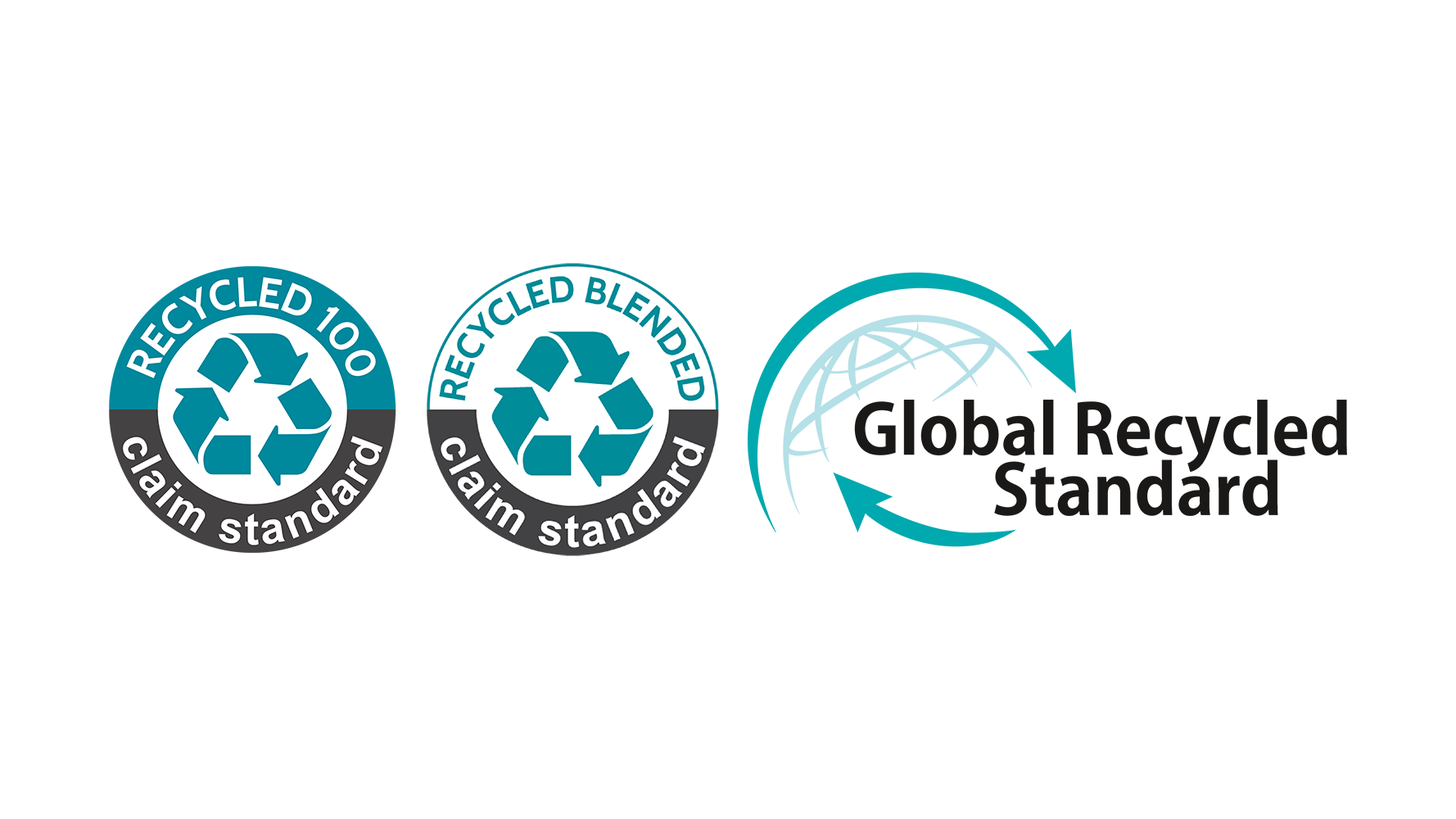
RCS and GRS are internationally recognized certification standards developed by Textile Exchange to verify recycled material claims and improve traceability throughout the supply chain. Both standards require certified organizations to maintain a documented chain of custody that tracks recycled materials from their source to the finished product, helping brands and buyers verify sustainability claims with greater confidence. While the two certifications share similar traceability principles, they differ in their certification scope and sustainability requirements, making each suitable for different business objectives.
What Is the Recycled Claim Standard (RCS)?
The Recycled Claim Standard (RCS) is a chain of custody standard designed to verify the presence and quantity of recycled materials within a product. Developed by Textile Exchange, the standard focuses on ensuring that recycled inputs remain identifiable and traceable as they move through each stage of the supply chain, from raw material processing to final product manufacturing.
Unlike broader sustainability certifications, RCS does not evaluate environmental management systems, chemical usage, or social responsibility practices. Its primary objective is to provide credible verification that recycled content claims are accurate and supported by documented supply chain records.
To achieve RCS certification, organizations are generally required to:
- Verify the recycled content of materials using accepted sourcing practices.
- Maintain documented chain of custody records throughout production.
- Separate certified and non certified materials where required.
- Complete third party certification audits conducted by approved Certification Bodies.
Because of its focused scope, RCS is often selected by companies that want to validate recycled material claims without implementing the broader environmental and social requirements associated with more comprehensive sustainability standards.
What Is the Global Recycled Standard (GRS)?
The Global Recycled Standard (GRS) builds upon the traceability principles of RCS while introducing additional requirements for environmental management, chemical control and social responsibility. In addition to verifying recycled content, GRS evaluates whether certified organizations operate according to internationally recognized sustainability practices throughout their manufacturing processes.
GRS requires companies to demonstrate effective management of environmental impacts, responsible chemical use and compliance with social criteria alongside maintaining a fully documented chain of custody. As a result, the certification is widely adopted by global brands that seek stronger assurance over both recycled material integrity and sustainable production practices.
A typical GRS certification program covers several key areas, including:
- Verification of recycled material content.
- Chain of custody management across the supply chain.
- Environmental management and resource conservation.
- Chemical management and restricted substance controls.
- Social responsibility requirements for manufacturing facilities.
Because GRS addresses both product traceability and operational sustainability, it has become one of the most widely recognized certifications for textile manufacturers supplying international brands with ambitious ESG and sustainable sourcing commitments. Companies pursuing GRS certification not only demonstrate the authenticity of recycled materials but also strengthen their ability to meet evolving buyer expectations for transparency, responsible production and long term supply chain resilience.
What Are the Key Differences Between RCS and GRS?
Although RCS and GRS are both developed by Textile Exchange to verify recycled materials, they serve different business purposes. RCS focuses on verifying recycled content through a traceable chain of custody, while GRS extends certification to include environmental practices, chemical management and social responsibility. Choosing the appropriate standard depends on a company's sustainability objectives, customer requirements and supply chain maturity.
How Do Certification Scopes Differ?
One of the biggest misconceptions is that RCS and GRS are simply different levels of the same certification. In reality, they are designed for different objectives.
RCS answers a single question: Can the recycled content in this product be verified? The certification concentrates on material traceability, ensuring recycled inputs are documented and maintained throughout the supply chain. For companies whose customers only require verified recycled content, RCS often provides sufficient assurance.
GRS takes a much broader approach. In addition to verifying recycled materials, it evaluates how those materials are managed during production. Certified facilities are expected to implement environmental management practices, control chemical use and comply with social responsibility requirements alongside maintaining full chain of custody documentation.
The practical difference is that RCS verifies what a product contains, while GRS also evaluates how the product is manufactured. This broader scope makes GRS particularly relevant for brands with comprehensive sustainability strategies and ESG commitments.
Area | RCS | GRS |
Recycled content verification | ✓ | ✓ |
Chain of custody | ✓ | ✓ |
Environmental management | — | ✓ |
Chemical management | — | ✓ |
Social requirements | — | ✓ |
Which Businesses Should Choose RCS or GRS?
The right certification often depends on where a company is in its sustainability journey rather than which standard is considered "better."
Manufacturers that are beginning to source recycled materials or need to verify recycled content for a limited number of products often choose RCS. The standard allows them to establish traceability without introducing the broader operational requirements associated with environmental and social management.
By contrast, companies supplying international brands are increasingly expected to demonstrate a more comprehensive sustainability program. Many apparel retailers now evaluate suppliers on factors beyond product quality, including responsible manufacturing, environmental performance and supply chain transparency. For these businesses, GRS provides stronger evidence that sustainability practices are integrated throughout production rather than limited to material sourcing.
As buyer expectations continue to evolve, some manufacturers begin with RCS to establish traceability and later transition to GRS as they expand their sustainability initiatives and serve more demanding global markets.
Read More: TESTCOO Supplier Verification/Certification Service SLCP, Higg FEM, GRS
Why Do RCS and GRS Matter for Textile Supply Chains?
RCS and GRS have become more than certification labels. They help companies strengthen traceability, improve supplier management and demonstrate responsible sourcing practices that increasingly influence purchasing decisions across the global textile industry.
How Do These Certifications Improve Material Traceability?
Modern textile production rarely takes place within a single factory. A finished garment may involve recycled fiber producers, spinning mills, fabric manufacturers, dyeing facilities, garment factories, printers, embroidery suppliers and packaging vendors operating in different regions. Without a structured traceability system, verifying the origin of recycled materials becomes increasingly difficult as products move through multiple production stages.
Both RCS and GRS address this challenge by requiring certified organizations to maintain documented chain of custody records throughout the supply chain. Each certified transaction creates a traceable link between suppliers, manufacturers and buyers, reducing the risk of material substitution, inaccurate recycled content claims, or documentation inconsistencies.
For buyers, stronger traceability provides greater confidence that sustainability claims can be verified. For manufacturers, it improves internal control over supplier documentation while making certification audits more efficient and transparent.
Why Are Buyers Increasingly Requiring Certified Suppliers?
A decade ago, recycled certification was often viewed as an optional marketing advantage. Today, it is increasingly becoming part of supplier qualification.
Global brands are under growing pressure to meet sustainability commitments, respond to investor expectations and prepare for emerging regulations related to product transparency and responsible sourcing. As a result, procurement teams are looking beyond price and production capacity when evaluating suppliers. They also want evidence that environmental claims can be independently verified.
Certified suppliers are often better positioned to participate in preferred supplier programs because they can demonstrate structured management of recycled materials and stronger supply chain transparency. While certification alone does not guarantee business opportunities, it helps reduce buyer concerns about traceability, supports ESG reporting and provides a more credible foundation for long term sourcing relationships.
For many textile manufacturers, RCS or GRS certification is no longer simply about meeting an individual customer's request. It has become part of building a more resilient, transparent and competitive supply chain that can adapt to changing sustainability expectations.
What Challenges Do Companies Face During Certification?
Achieving RCS or GRS certification involves more than verifying recycled materials. Companies must establish reliable management processes across suppliers, production sites and documentation systems to ensure traceability and maintain compliance throughout the supply chain.
Why Is Supplier Documentation Often the Biggest Challenge?
For many manufacturers, the most time consuming part of certification is not the audit itself but collecting complete and consistent documentation from every supplier involved in production. A recycled textile product may pass through fiber producers, yarn spinners, fabric mills, dyeing facilities, garment factories and packaging suppliers, each responsible for maintaining accurate records.
If supplier information is incomplete or inconsistent, traceability can quickly break down. Missing transaction certificates, outdated material declarations, or inaccurate production records may create gaps that delay certification or require additional verification before products can be approved.
Companies can reduce these risks by establishing standardized documentation procedures, defining supplier responsibilities and regularly reviewing certification records throughout the production cycle rather than only before an audit.
How Can Companies Verify Recycled Material Claims?
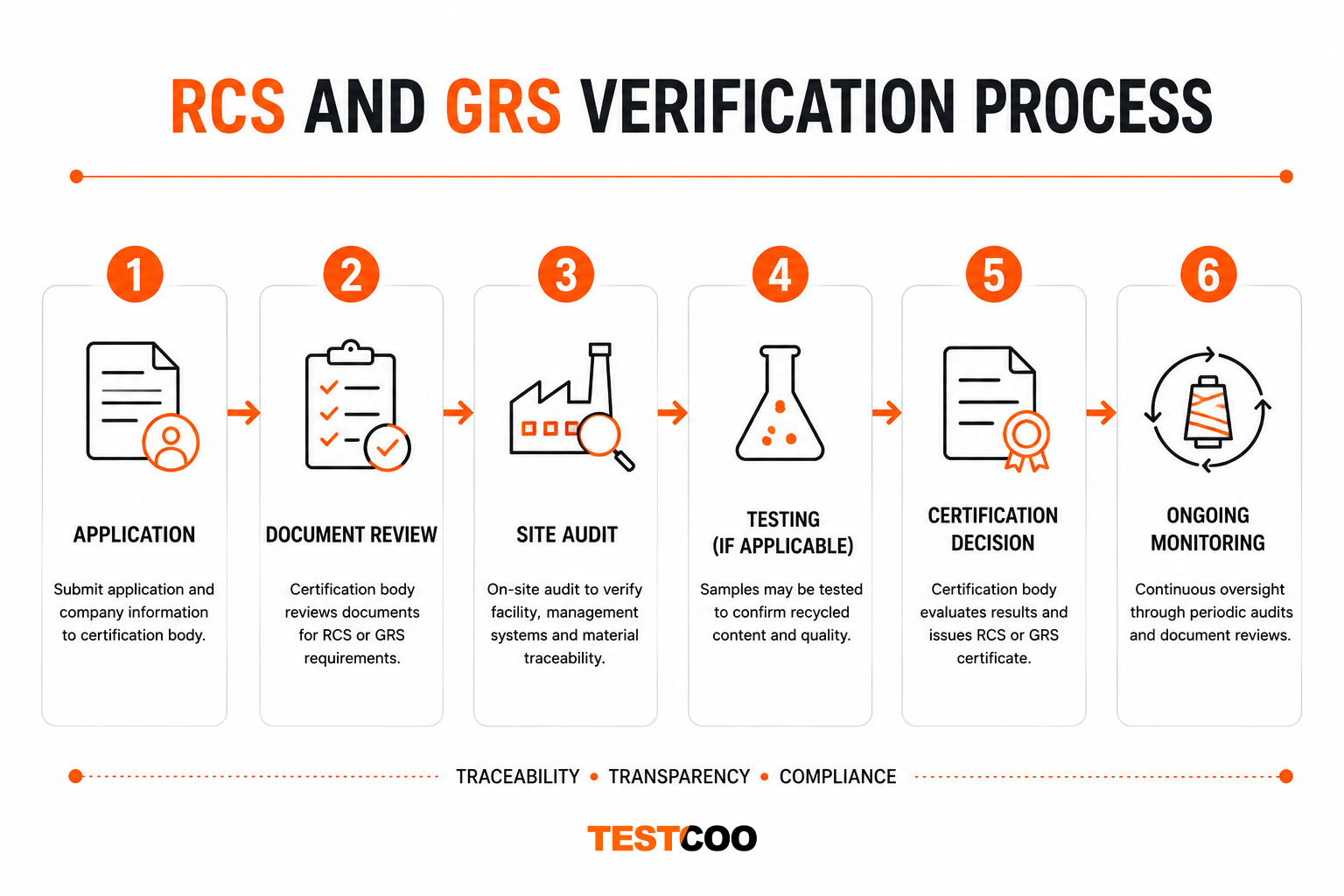
Verifying recycled content requires more than trusting supplier declarations. Certification bodies expect companies to demonstrate that recycled materials can be traced through documented chain of custody records from the original source to the finished product.
This often requires businesses to coordinate information across multiple departments and suppliers while ensuring production records remain consistent. Effective verification generally includes:
- Confirming the certification status of upstream suppliers.
- Maintaining transaction certificates and purchasing records.
- Matching production quantities with certified material inputs.
- Keeping traceable records for each production stage.
Without a structured verification process, companies may struggle to demonstrate the authenticity of recycled content during certification audits.
Why Does Supply Chain Complexity Affect Traceability?
As textile supply chains become more global, maintaining traceability becomes increasingly difficult. Production may be distributed across several countries, with different suppliers responsible for spinning, weaving, dyeing, printing, sewing and finishing. Every transfer of materials introduces another point where documentation errors or communication gaps can occur.
A missing record at just one stage can interrupt the chain of custody and make it difficult to verify recycled material claims. This is why companies pursuing RCS or GRS certification increasingly focus on improving supplier coordination and document management rather than treating certification as a one time audit exercise.
Why Are Certification Audits Easier With Standardized Processes?
Certification audits evaluate whether management practices are consistently implemented rather than simply reviewing individual documents. Companies with standardized procedures are typically able to demonstrate compliance more efficiently because records are organized, responsibilities are clearly assigned and supporting evidence can be retrieved quickly.
By integrating documentation management, internal reviews, corrective actions and supplier communication into routine operations, businesses can reduce audit preparation time while strengthening long term compliance performance.
How Can Digital Quality Management Support RCS and GRS Compliance?
Successfully implementing RCS or GRS requires companies to manage supplier information, quality records and traceability data in a consistent and transparent manner. Digital quality management systems help transform these activities into standardized workflows, improving operational visibility while supporting long term compliance objectives.
How Does Testcoo Centralize Supplier and Certification Management?
Managing certification across multiple suppliers often involves coordinating inspections, audits, production schedules, quality records and compliance documentation. When these activities are handled through separate spreadsheets and email threads, maintaining visibility becomes increasingly difficult as supplier networks expand.
Testcoo centralizes supplier management, inspection planning, audit scheduling, workflow coordination and documentation within a single platform, enabling quality and compliance teams to access the information they need throughout the certification process. With standardized workflows and centralized records, companies can improve cross functional collaboration while reducing administrative effort and document duplication.
Rather than treating certification as an isolated project, Testcoo supports businesses in building structured management processes that align with recycled material traceability and quality management objectives.
How Does Testcoo Strengthen Traceability and Compliance Visibility?
Maintaining certification requires continuous visibility into supplier performance, inspection results, corrective actions and quality documentation. Testcoo converts these activities into centralized digital records that are easier to monitor, review and retrieve during internal assessments or third party audits.
The platform supports companies by helping them:
- Centralize supplier and quality records.
- Track corrective actions and audit findings.
- Improve visibility across production and sourcing activities.
- Maintain organized documentation for compliance reviews.
- Strengthen continuous improvement through data driven quality management.
Instead of positioning certification as the final objective, Testcoo supports companies in implementing structured management practices that improve traceability, operational transparency and long term supply chain resilience.
Read More: How Third-Party Inspections Ensure Sustainable Footwear
Frequently Asked Questions (FAQs)
1.Is RCS the same as GRS?
No. Both standards verify recycled materials and require chain of custody certification, but GRS also includes environmental management, chemical restrictions and social responsibility requirements that are not covered by RCS.
2.Can a company hold both RCS and GRS certification?
Yes. Some manufacturers maintain both certifications to meet different customer requirements. The appropriate certification depends on product type, buyer expectations and sustainability objectives.
3.Does RCS include environmental or chemical requirements?
No. RCS focuses on verifying recycled content and maintaining chain of custody. Environmental management, chemical control and social compliance are requirements specific to GRS.
4.Who issues RCS and GRS certificates?
RCS and GRS certificates are issued by Certification Bodies that have been approved to conduct Textile Exchange certification audits. Companies must successfully complete independent third party assessments before certification is granted.
5.How do RCS and GRS support ESG and supply chain transparency?
Both certifications strengthen traceability by verifying recycled material claims throughout the supply chain. GRS further supports ESG objectives by incorporating environmental management, responsible chemical use and social responsibility requirements, helping companies demonstrate greater transparency and sustainability performance to buyers and stakeholders.
How Can Textile Manufacturers Choose the Right Recycled Certification?
Choosing between RCS and GRS depends on a company's sustainability objectives, customer requirements and supply chain maturity. While RCS provides reliable verification of recycled material claims through chain of custody certification, GRS extends beyond traceability by incorporating environmental management, chemical control and social responsibility requirements. As global buyers continue to strengthen their ESG commitments and sourcing standards, both certifications have become valuable tools for improving supply chain transparency, supporting responsible manufacturing and building long term business competitiveness rather than simply meeting individual customer requests.
Implementing either certification requires consistent supplier management, traceable documentation and standardized quality processes across the supply chain. Testcoo supports textile manufacturers by centralizing supplier management, inspections, audit workflows, documentation and quality records within a single digital platform. By improving operational visibility, strengthening traceability and supporting structured quality management, Testcoo helps companies establish management processes that align with recycled material verification and long term sustainability objectives while enhancing overall supply chain resilience.


Free Sample Report Performance Quality Control
Download a sample report to keep control of your supply chain!

Featured Articles
 AQL Table | How to Read It
 TOP 10 Common Defects in Garments Quality Inspection
 Product Packaging and Shipment Label requirements for Amazon FBA
 What Is ASTM-F2413-18? Protective Footwear Standard
 How to Conduct Third-Party Quality Control Inspections for Electric Scooters
 SMETA Audit-What is SMETA Audit?
 TESTCOO Supplier Verification/Certification Service SLCP, Higg FEM, GRS, GOTS
 Quality Control Inspection Company in China
 What is Quality Inspection? A Complete Guide
 Guidelines for Product Inspection in India
Category
- Production Inspection Service
- Factory Audit
- Softline Inspection
- Hardline Inspection
- Electrics Inspection
- Certification
- Checklist
- Manufacturers
- Quality Assurance Basics
- Products Recall
- AQL
- Guidence and Standard
- News
- Supplier Management
- Amazon
- Protective Equipment
- e-commerce quality control
- Indian Manufacturing
- Soft Goods Quality Control
- Supply Chain Management
- Supply Chain Resilience
- E-Commerce Quality Control
- ISO 2859
- Supply Chain Optimization
- Garment Industry
- Higg Index