


Thailand’s New TISI Standards Taking Effect in 2026: What Exporters Need to Know

Thailand is enhancing its product quality and safety framework through several updated standards issued by the Thai Industrial Standards Institute (TISI). Starting in 2026, multiple regulations concerning energy efficiency and food-contact materials will become mandatory for manufacturers and exporters entering the Thai market.
These updates impact various industries, including air conditioning equipment, electric motors and packaging materials used in food applications. Companies supplying these products to Thailand must ensure their products comply with the relevant technical requirements before the enforcement dates.
For exporters and suppliers, understanding the scope of these standards and preparing early for testing and certification are critical to avoiding shipment delays and compliance risks.
What Energy Efficiency Requirements Will Apply to Room Air Conditioners in Thailand in 2026?
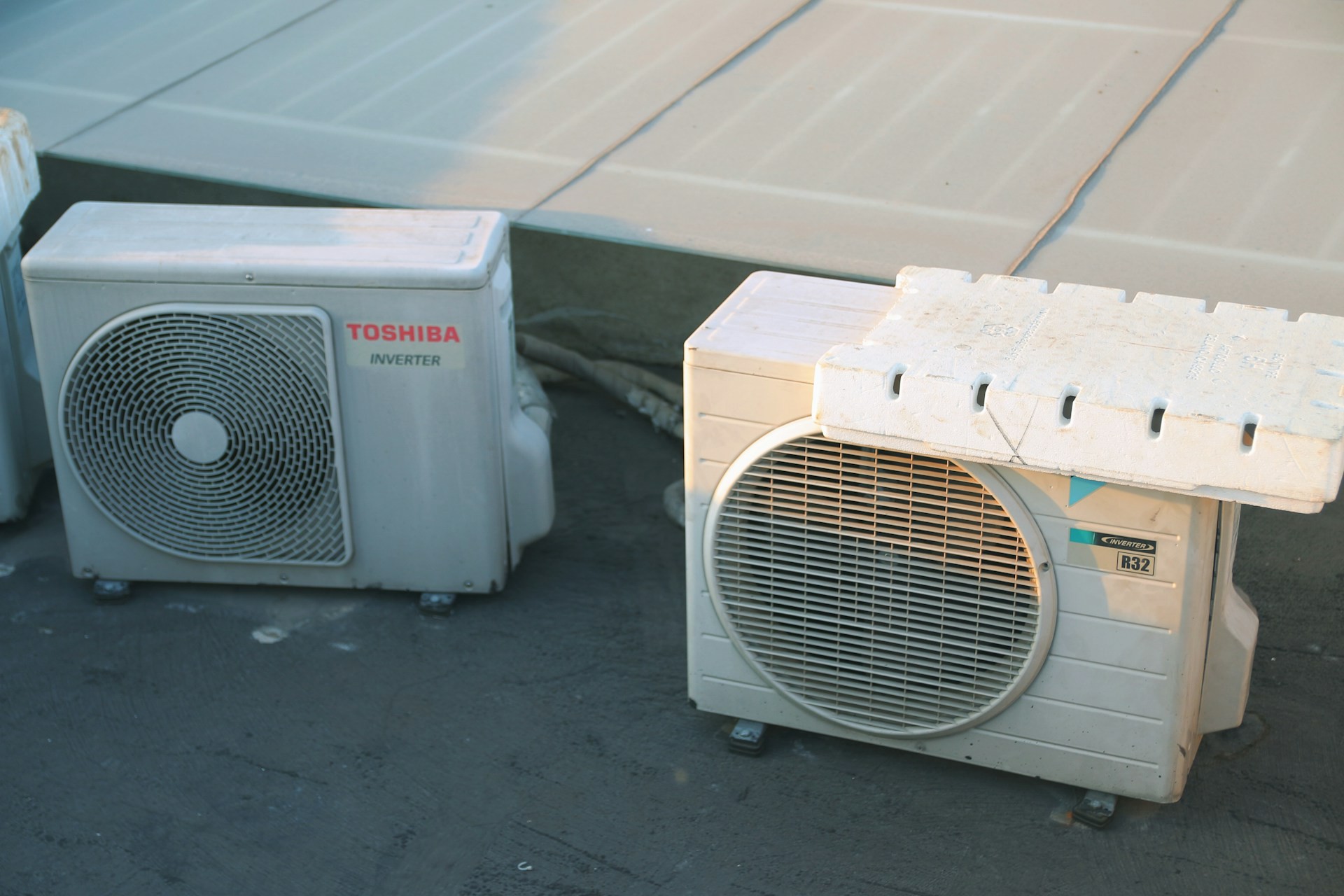
The updated standard TIS 2134-2565 establishes energy efficiency requirements for room air conditioners distributed in the Thai market. Issued by the Thai Industrial Standards Institute, the regulation aims to improve energy performance and reduce electricity consumption across residential cooling systems.
Effective date: April 4, 2026
1. Labeling Requirements for Room Air Conditioners (TIS 2134)
| ||||||||||||||||||||
Source: Thai Industrial Standards Institute (TISI) | Ministry of Industry, Thailand
Under this standard, manufacturers must ensure that room air conditioners meet specified efficiency thresholds before the products can be sold or imported into Thailand. These requirements are designed to promote higher energy efficiency and support national energy conservation policies.
To demonstrate compliance, exporters and manufacturers may need to complete several technical verification steps, including:
- Laboratory testing of energy consumption and cooling performance
- Verification of energy efficiency ratings
- Documentation demonstrating conformity with the TISI standard
Products that do not meet the required efficiency performance may face restrictions during market entry or product registration. As a result, early testing and verification are critical for manufacturers planning to supply air conditioning equipment to Thailand.
↵
How Will the New Motor Efficiency Standard Affect Electric Motor Manufacturers?
Electric motor efficiency is another key focus of Thailand’s 2026 regulatory update. The standard TIS 866 Part 30-1-2561 specifies efficiency classes for AC three-phase induction motors used in industrial applications.
Effective date: April 18, 2026
1. Thailand TIS 866 Part 30-1 Compliance Overview
TIS 866 Part 30-1 Standard | |
Scope Element | Requirement |
Rated Output Power (PN) | 0.12 kW to 375 kW |
Rated Voltage (UN) | Above 50 V up to 1 kV |
Number of Poles | 2, 4, 6, or 8 poles |
Power Supply | Designed for sinusoidal voltage supply |
Duty Type | Continuous operation at rated power |
Insulation Requirement | Temperature rise must remain within the insulation temperature class limits |
Altitude Limit | Up to 4,000 m above sea level |
Reference Efficiency Condition | Efficiency values are referenced at 25°C ambient temperature |
Reference Altitude | Efficiency classes referenced at 1,000 m above sea level |
Special Testing Considerations | |
Condition | Explanation |
TEAO motors | Efficiency testing may require removing the fan and using external airflow simulation |
Motors with removable frequency converters | Covered if the motor can be tested separately from the converter |
Brake motors | Covered if brake losses can be excluded during efficiency testing |
Source: Thai Industrial Standards Institute (TISI) | Ministry of Industry, Thailand
Under TIS 866 Part 30-1, three-phase induction motors with power ratings from 0.12 kW to 375 kW must comply with specified efficiency classes when operating under standardized voltage, temperature and altitude conditions.
Electric motors account for a significant portion of industrial energy consumption and improving motor efficiency is an effective strategy for reducing overall electricity demand. This standard establishes clear efficiency classifications that manufacturers must meet to distribute motors in Thailand.
To comply with the regulation, manufacturers and exporters typically need to:
- Test motor performance under standardized load conditions
- Verify efficiency classification according to defined efficiency levels
- Provide supporting technical documentation for certification or regulatory review
Manufacturers supplying industrial equipment, machinery components, or electrical systems should carefully determine whether their motors fall within the scope of this standard and arrange for appropriate testing before the enforcement date.
What Are the New Requirements for Food Contact Paper and Cooking Paper in Thailand?
Thailand is also implementing updated standards for paper products intended for food contact applications. These regulations aim to ensure that packaging materials used with food products do not pose any chemical contamination risks.
Two standards will become mandatory:
- TIS 2948-2562 – Paper for Food Contact
- TIS 3438-2565 – Cooking Paper
Effective date: June 22, 2026
1. Labeling Requirements for Food Contact Paper (TIS 2948-2562)
Labeling for Paper Sheets Used for Food Processing | |
Required Label Information | Details |
Product Name | Name according to the standard or another name clearly indicating compliance with this standard |
Product Type and Form | Type and format of food contact paper |
Size Specification | Roll: width in millimeters or centimeters; Sheet: width and length in millimeters or centimeters |
Quantity | Roll: net or gross weight in kilograms; Sheet: number of sheets |
Food Compatibility | Types of food suitable or unsuitable for use and maximum food filling temperature |
Food Contact Safety Mark | Approved food-contact symbol or the statement “Suitable for food contact” |
Manufacturing Date | Month and year of manufacture and production batch code |
Manufacturer Information | Name of manufacturer or factory with address or registered trademark |
Country of Origin | Country where the product is manufactured |
Labeling for Paper Food Containers | |
Required Label Information | Details |
Product Name | Name according to the standard or equivalent indicating compliance |
Product Type | Type, model and classification |
Dimensions | Size in millimeters or centimeters; capacity (if applicable) in milliliters or liters |
Quantity | Number of pieces, sheets, or units |
Single-Use Statement | Label must indicate single-use only or not reusable |
Warning Statements | Must include warnings such as “Do not place near flame” and “Not for heating or cooking food” |
Food Compatibility | Types of food suitable or prohibited and maximum filling temperature |
Food Contact Safety Mark | Food contact symbol or statement “Suitable for food contact” |
Manufacturing Date | Month and year of production with batch code |
Manufacturer Information | Manufacturer or factory name with location or registered trademark |
Country of Origin | Country where the product is manufactured |
2. Labeling Requirements for Cooking Paper (TIS 3438-2565)
Labeling for Cooking Paper Sheets for Processing | |
Required Label Information | Details |
Product Name | Product name according to this standard or another name indicating compliance |
Product Type | Type and format |
Size Specification | Roll: width in millimeters or centimeters; Sheet: width and length in millimeters or centimeters |
Quantity | Roll: net or gross weight in kilograms; Sheet: number of sheets |
Operating Temperature | Maximum operating temperature in degrees Celsius or statement indicating suitability for reheating or cooking food |
Usage Instructions / Warnings | Must include warnings such as “Do not place near flame.” For microwave or oven use, power level, temperature and duration must be clearly specified |
Food Compatibility | Types of food suitable or prohibited (e.g., not suitable for high-fat foods) |
Food Contact Safety Mark | Food-contact symbol according to Appendix B or the statement “Suitable for food contact” |
Manufacturing Date | Month and year of manufacture and production batch code |
Manufacturer Information | Name of manufacturer or factory, or registered trademark |
Country of Origin | Country where the product is manufactured |
Labeling for Cooking Paper Containers | |
Required Label Information | Details |
Product Name | Product name according to this standard or equivalent |
Product Type | Type, model and classification |
Dimensions | Size in millimeters or centimeters; capacity (if applicable) in milliliters or liters |
Quantity | Number of pieces or units |
Operating Temperature | Maximum temperature in degrees Celsius or statement indicating suitability for reheating or cooking food |
Usage Instructions / Warnings | Must include warnings such as “Do not place near flame.” Microwave or oven instructions must specify power, temperature and duration |
Food Compatibility | Types of food suitable or prohibited |
Food Contact Safety Mark | Approved food contact symbol or statement “Suitable for food contact” |
Manufacturing Date | Month and year of manufacture and batch code |
Manufacturer Information | Manufacturer or factory name or registered trademark |
Country of Origin | Country where the product is manufactured |
Source: Thai Industrial Standards Institute (TISI) | Ministry of Industry, Thailand
These regulations are designed to ensure that paper materials used in food packaging and cooking processes do not release harmful substances that could contaminate food.
Manufacturers of packaging materials must demonstrate that their products comply with the safety and performance requirements defined in the relevant standards. Compliance verification may involve various types of testing, such as:
- Chemical Migration Testing
- Verification raw material safety
- Evaluation heat Heat Resistance structural Structural Stability of Cooking Paper
Suppliers exporting food packaging materials or disposable paper products to Thailand should carefully review their material composition and production processes to ensure compliance before the regulation takes effect.

What Should Exporters Do to Prepare for the 2026 TISI Compliance Deadlines?
For exporters targeting the Thai market, preparation for the 2026 TISI standards should begin well in advance of the enforcement dates. Regulatory compliance typically requires both product testing and supporting documentation and delays in preparation can impact shipment schedules or market entry approvals.
Companies can reduce compliance risks by implementing several practical measures:
- Reviewing specifications against the relevant TISI standards standards
- Arranging testing to verify compliance compliance
- Preparing documentation for certification certification
- Ensuring processes meet comply with requirements
Early preparation enables manufacturers to identify potential compliance gaps and implement necessary improvements before shipments are scheduled.
By proactively addressing regulatory requirements, exporters can avoid disruptions and ensure consistent access to the Thai market.
How Can Third-Party Inspection and Testing Help Ensure TISI Compliance?
Meeting regulatory standards often requires independent verification to ensure that products comply with the applicable technical requirements. Third-party inspection and testing organizations play a crucial role in supporting manufacturers throughout this process.
Independent verification ensures that testing procedures adhere to recognized methodologies and that compliance documentation satisfies regulatory requirements.
Third-party service providers can assist exporters by offering services such as:
- Product for energy efficiency and material safety
- Factory to verify manufacturing processes processes
- Documentation for regulatory submissions
- Pre-shipment to confirm product conformity conformity
These services assist manufacturers in identifying potential compliance issues before products enter the market, thereby reducing the risk of shipment delays or regulatory rejection.
Frequently Asked Questions (FAQs)
What is TISI in Thailand?
The Thai Industrial Standards Institute is the national authority responsible for developing and enforcing product standards in Thailand. It oversees product certification and ensures that goods sold in the Thai market meet safety and quality requirements.
When do the new TISI standards take effect?
Several updated standards will take effect in 2026. For example, energy efficiency requirements for room air conditioners will become mandatory on April 4, 2026, while standards for food-contact paper will be enforced starting June 22, 2026.
Which industries are affected by the 2026 TISI updates?
The new regulations primarily impact manufacturers of room air conditioners, electric motors and paper materials used in food contact and cooking applications.
Do exporters need product testing for TISI compliance?
In most cases, exporters are required to conduct product testing and provide technical documentation to demonstrate compliance with the relevant TISI standards before selling products in Thailand.
What Are the Four Key TISI Standards Exporters Must Prepare for in Thailand in 2026?
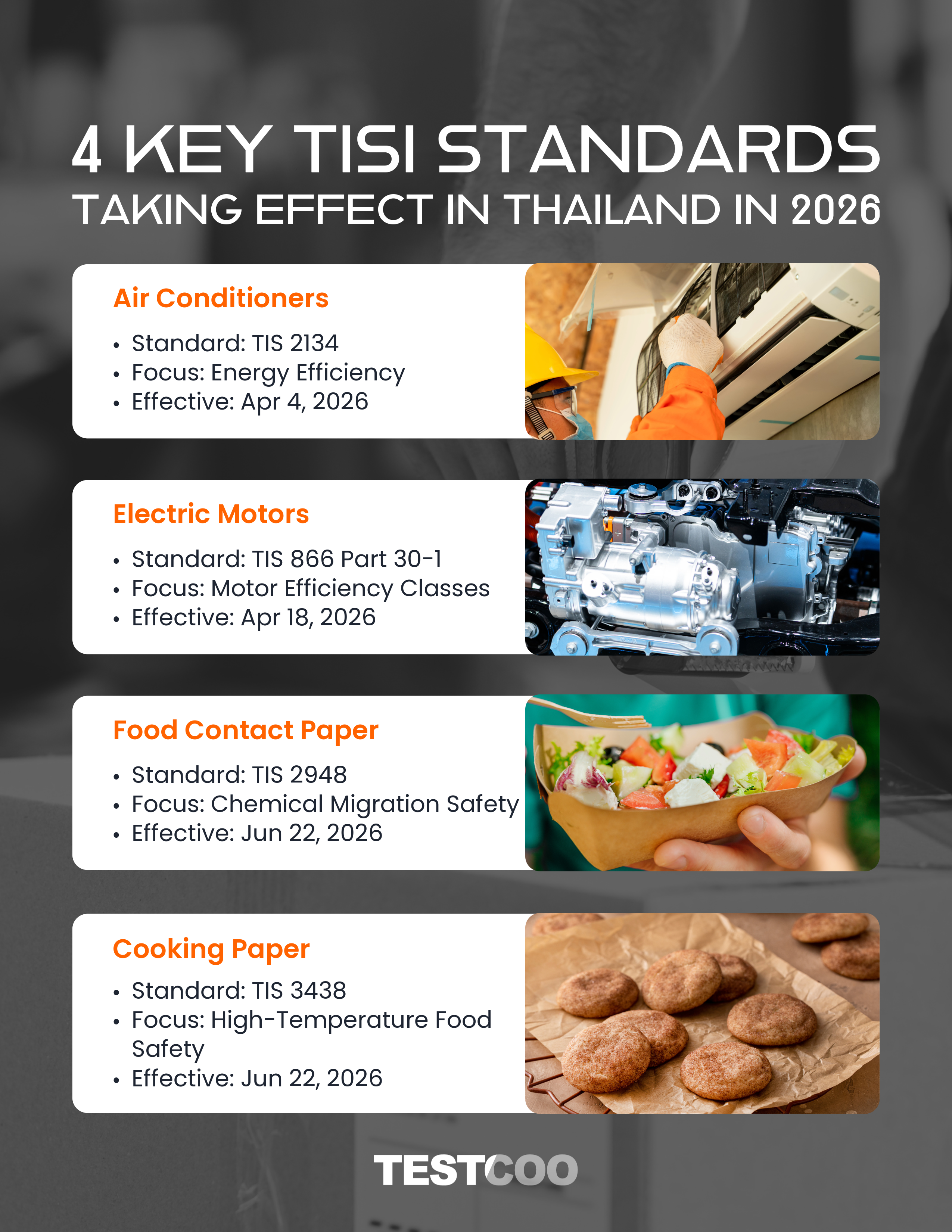
Exporters entering the Thai market in 2026 should prepare for four key standards issued by the Thai Industrial Standards Institute: TIS 2134 for room air conditioner energy efficiency, TIS 866 Part 30-1 for electric motor efficiency classes, TIS 2948 for food contact paper safety and TIS 3438 for cooking paper used in high-temperature food preparation. These standards introduce stricter requirements for energy performance, chemical migration control and product labeling before products can enter the Thai market.
How Can Testcoo Ensure Smooth TISI Compliance for Products Exported to Thailand?
With multiple standards coming into effect in 2026, companies exporting products such as air conditioners, electric motors and food-contact paper materials must carefully prepare for Thailand’s updated regulatory requirements.
Collaborating with experienced third-party inspection and testing providers can greatly simplify the compliance process. Professional verification services assist manufacturers in confirming that their products meet technical standards, ensure documentation is complete and minimize the risk of regulatory issues during product registration or customs clearance.
Testcoo offers a comprehensive range of quality and compliance services to support manufacturers exporting to Thailand, including product testing, factory audits and 100% inspections. By verifying compliance before shipment, companies can identify and resolve potential issues early, maintain product quality and ensure smoother market access under the updated TISI standards.
Early preparation and thorough verification are essential for businesses aiming for a stable and compliant entry into the Thai market in 2026 and beyond.





Free Sample Report Performance Quality Control
Download a sample report to keep control of your supply chain!

Featured Articles
 AQL Table | How to Read It
 TOP 10 Common Defects in Garments Quality Inspection
 Product Packaging and Shipment Label requirements for Amazon FBA
 What Is ASTM-F2413-18? Protective Footwear Standard
 How to Conduct Third-Party Quality Control Inspections for Electric Scooters
 SMETA Audit-What is SMETA Audit?
 TESTCOO Supplier Verification/Certification Service SLCP, Higg FEM, GRS, GOTS
 Quality Control Inspection Company in China
 What is Quality Inspection? A Complete Guide
 Guidelines for Product Inspection in India
Category
- Production Inspection Service
- Factory Audit
- Softline Inspection
- Hardline Inspection
- Electrics Inspection
- Certification
- Checklist
- Manufacturers
- Quality Assurance Basics
- Products Recall
- AQL
- Guidence and Standard
- News
- Supplier Management
- Amazon
- Protective Equipment
- e-commerce quality control
- Indian Manufacturing
- Soft Goods Quality Control
- Supply Chain Management
- Supply Chain Resilience
- E-Commerce Quality Control
- ISO 2859
- Supply Chain Optimization
- Garment Industry
- Higg Index