


Remote Factory Audit: How to Assess Suppliers Without Visiting the Factory
For a sourcing manager, the problem often appears before the first purchase order.
You have found a supplier that looks convincing on a B2B platform. The company has a professional website, a long product catalog and perhaps several certificates. The sales team sends factory photos and offers a video tour. But there is still one question: What is actually happening inside the factory?
When the supplier is hundreds or thousands of miles away, visiting in person may not be practical. A buyer managing suppliers across China, Vietnam, India, Southeast Asia or other sourcing markets cannot realistically fly to every factory every time a new supplier enters the pipeline.
Travel also introduces its own constraints. Factory visits require scheduling, local transportation, interpreters, internal resources and several days of management time. For early-stage supplier screening, that level of investment may not always be justified.
This is where a remote factory audit becomes useful.
The objective is not to pretend that remote assessment is identical to being physically present. It is to collect enough independent, structured evidence to answer the questions that matter before a buyer commits more time, money and order volume to a supplier.
The latest ISO 19011:2026 also recognizes remote auditing methods as a legitimate audit approach, including their use together with on-site methods to achieve an effective audit. The standard's 2026 revision places additional attention on technology, digitization and virtual environments.
What Can You Actually Verify Without Visiting the Factory?
A common mistake is to treat a remote factory audit as a video call. That is too narrow. A properly designed remote supplier assessment can investigate much more than the appearance of the production floor. Depending on the audit scope, buyers can evaluate several important areas.
1. Factory Identity and Basic Information
Before discussing production capability, verify that the company you are dealing with actually matches the manufacturing entity being presented.
Typical checks include:
- Factory name and physical location
- Business registration information
- Main products and production scope
- Factory buildings and operating areas
- Production equipment
- Workforce and organizational structure
- Main manufacturing processes
This matters because supplier identity is one of the first risks in overseas sourcing. A trading company may present itself as a manufacturer, while actual production is outsourced elsewhere.
2. Production Capability
A supplier may claim a monthly capacity of 100,000 units. The more useful question is: What evidence supports that number?
Remote assessment can examine production lines, machinery, warehouse areas, work-in-progress, staffing arrangements and the physical organization of production.
The goal is not to accept a capacity figure simply because it appears in a supplier questionnaire. It is to compare the supplier's stated capability with observable evidence.
3. Quality Management
A factory can have modern equipment and still have weak quality controls. A useful supplier audit therefore looks at the management system behind production.
Typical checkpoints include:
- Incoming material inspection
- In-process quality control
- Final inspection
- Non-conforming product control
- Measuring equipment
- Inspection records
- Product traceability
- Employee training
- Corrective action procedures
TESTCOO's supplier audit framework similarly covers quality management, factory environment, product control, process control and social responsibility as part of supplier assessment.
4. Warehouse and Material Management
This is an area buyers often underestimate.
A production line can look impressive during a scheduled factory tour, while the warehouse reveals a very different picture.
Look for:
- Raw material identification
- Storage conditions
- Material segregation
- Finished-goods organization
- Inventory labeling
- FIFO practices where applicable
- Protection against contamination or damage
- Separation of accepted and rejected materials
A remote audit becomes much more valuable when it moves beyond the showroom and production line into these less frequently presented areas.
5. Factory Layout and Actual Working Conditions
This is where 360° visual technology can provide an advantage over ordinary supplier photos.
A collection of selected photographs can show what the supplier wants you to see. A structured 360° factory view can provide a much broader understanding of how different areas connect, including production floors, warehouses, laboratories, packing areas and other operational spaces.
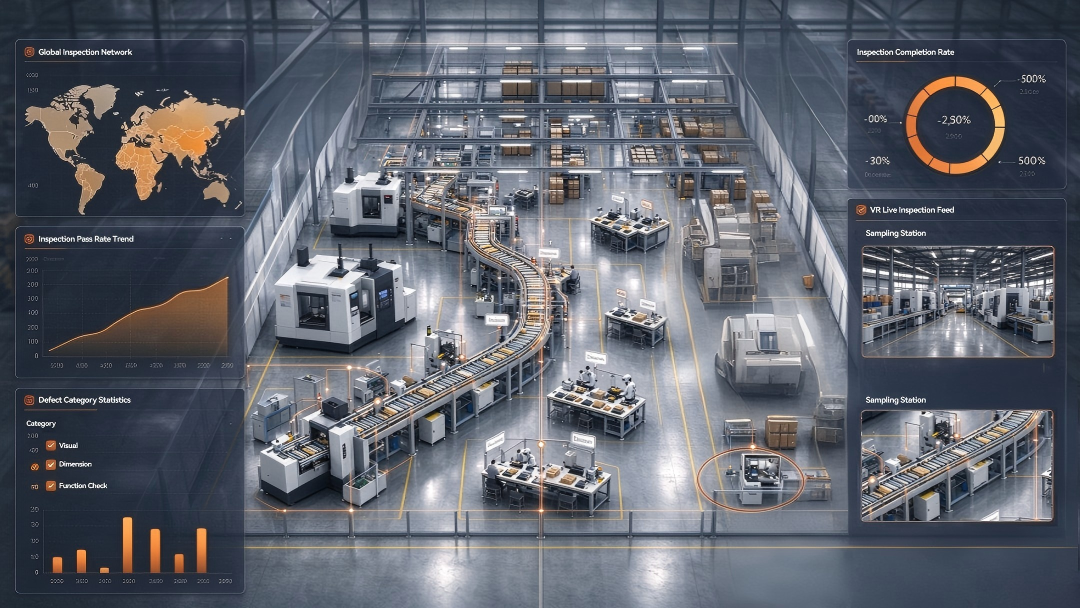
TESTCOO's VR Factory Audit uses panoramic camera technology to provide a 360° view of factory conditions together with professional auditor comments.

How Does a Remote Factory Audit Work?
The quality of a remote audit depends less on the word "remote" and more on how the assessment is designed and executed.
From our experience with supplier assessments, a useful remote audit normally follows a structured sequence rather than starting with an improvised video tour.
Step 1: Define the Audit Scope
Before the audit begins, establish what you actually need to know.
For a new supplier, the scope may include:
- Company legitimacy
- Manufacturing capability
- Production capacity
- Quality management
- Equipment
- Production process
- Warehouse management
- Product control
- Social or environmental requirements
For an existing supplier, the scope may be narrower and focus on specific risks or corrective actions.
This step is important because remote audits can become inefficient when the auditor and supplier simply walk around the factory without a defined checklist.
Step 2: Review Documents Before the Factory Tour
Documents provide the framework for what should later be verified visually.
Depending on the project, this may include:
- Business licenses
- Certifications
- Organization charts
- Process flow charts
- Quality procedures
- Inspection records
- Production records
- Equipment lists
- Calibration records
- Corrective action records
The objective is not simply to collect documents. It is to identify statements that need to be verified against actual factory conditions.
Step 3: Verify the Factory Through Live or Recorded Visual Evidence
This is the core of a remote factory audit.
Instead of relying entirely on supplier-selected photographs, the audit should follow a defined route through the factory.
The auditor may review:
Factory entrance → production area → raw material warehouse → production processes → quality control area → laboratory → packing area → finished goods warehouse
With a 360° audit approach, the buyer can later review the factory environment visually rather than relying only on a limited set of conventional photographs.
TESTCOO's VR Factory Audit process combines factory documentation, quality-system verification, 360° factory imaging, auditor comments and reporting.
Read more: Factory Audit: How to do a VR Factory Audit?
Step 4: Compare Claims With Evidence
This is where professional auditing experience matters.
Suppose a supplier states: "We have a fully automated production line." The audit should not stop at confirming that machines are present. The auditor needs to determine whether the equipment is operational, whether it is actually used for the relevant products and whether the surrounding production process supports the supplier's claim.
The same principle applies to:
- Production capacity
- Quality control
- Warehouse management
- Product traceability
- Testing capability
- Certifications
- Employee numbers
- Manufacturing processes
A remote audit is valuable when it tests claims against evidence, rather than simply documenting what the supplier says.
Step 5: Report Findings and Follow Up
A useful report should distinguish between:
- Compliant conditions
- Observations
- Minor non-conformities
- Major non-conformities
- Areas requiring further verification
Corrective actions should also be tracked when necessary.
A supplier audit is not particularly useful if the buyer receives a 50-page report but still cannot identify which findings could affect the purchase decision.
What Is the Difference Between a Remote Factory Audit and a Video Factory Tour?
This distinction is important. A supplier's video tour can be useful for initial discovery. It may help you understand the general layout of the facility and the products being manufactured.
But a video tour is not automatically a factory audit.
Supplier Video Tour | Remote Factory Audit |
Usually supplier-led | Auditor-led |
Focuses on presentation | Focuses on verification |
May show selected areas | Uses a defined audit scope |
Limited documentation review | Documents can be reviewed against evidence |
Mainly visual | Visual + documentary + professional assessment |
Usually difficult to compare suppliers consistently | Structured findings allow comparison |
May have limited follow-up | Corrective actions can be tracked |
The difference comes down to independence, methodology and evidence.
A remote audit should not simply make the supplier's presentation more convenient. It should give the buyer a more objective basis for supplier qualification.
ISO 19011:2026 emphasizes audit principles, auditor competence, evidence-based auditing and risk-based approaches. Those principles remain relevant whether audit activities are conducted remotely, on site or through a combination of methods.
When Is a Remote Factory Audit a Good Choice?
Remote assessment is particularly useful in several situations.
New Supplier Screening
You have identified a potential supplier but have not yet placed a significant order.
A remote audit can provide additional evidence before committing to a costly on-site visit.
Multi-Country Sourcing
If your supplier network spans several countries, physically visiting every candidate can become inefficient.
A remote assessment can be used as an initial qualification layer before selecting suppliers for deeper on-site audits.
Existing Supplier Monitoring
Factory conditions can change.
Production equipment, warehouse arrangements, quality personnel and manufacturing processes may not remain the same as they were when the supplier was originally approved.
Periodic remote assessment can provide an additional layer of supplier monitoring.
When Travel Is Difficult
Political restrictions, long travel times, visa issues, tight project schedules or internal resource constraints can all make factory visits difficult.
Remote auditing provides another way to gather evidence when physical travel is not practical.
Before a Major Purchase Order
This is one of the most practical applications.
If a supplier has passed document screening but you are preparing to place a significant first order, a remote factory audit can help answer: Does the factory we are about to trust with this order actually have the capability and controls we expect?
When Is a Remote Factory Audit Not Enough?
This is where buyers need to be realistic.
A remote factory audit is not a replacement for every form of quality control. It is primarily a supplier assessment tool. It does not automatically tell you whether the products in your current shipment meet your specifications.
For example, if you are sourcing 20,000 units of consumer electronics, a factory audit may tell you about the supplier's manufacturing capability and quality system. It does not replace a product inspection of the actual shipment.
That is where the broader quality-control process becomes important.
Supply Chain Question | Appropriate Service |
Is this supplier legitimate and capable? | Supplier / Factory Audit |
Can I understand the factory remotely? | Remote / VR Factory Audit |
Is production progressing according to requirements? | During Production Inspection |
Does the finished order meet specifications? | Pre-Shipment Inspection |
Are goods loaded correctly? | Container Loading Supervision |
Does the product meet marketplace requirements? | Amazon FBA Inspection / Compliance Inspection |
For product inspections, sampling methodology also matters. ANSI/ASQ Z1.4, for example, provides acceptance sampling plans for attributes inspection and AQL-based lot acceptance. It is a sampling system, not a substitute for defining the product specification and inspection scope.
The practical lesson is simple: Use a remote factory audit to assess the supplier. Use product inspection to assess the goods.
They answer different questions.
What Are the Common Mistakes Buyers Make With Remote Supplier Audits?
After reviewing supplier assessments, several mistakes appear repeatedly.
Mistake 1: Relying on Supplier Photos
Photos are useful evidence, but they are selected evidence. A supplier can provide excellent photographs without showing warehouse problems, idle equipment, subcontracted production or areas that are less presentable.
Use photos as supporting evidence, not the entire assessment.
Mistake 2: Treating Certificates as Proof of Current Capability
A certificate can tell you that a particular system or certification exists under defined conditions. It does not automatically prove that every production process is well controlled today.
The audit still needs to connect documentation with current factory conditions.
Mistake 3: Looking Only at the Production Line
The production line is visually impressive, so buyers naturally focus on it. But quality problems often originate elsewhere: incoming materials → storage → process control → inspection → rework → packing → finished goods storage
A good audit follows the process, not just the machinery.
Mistake 4: Ignoring Packaging and Finished Goods Areas
For many export products, packaging is part of the customer's quality requirements. Incorrect labels, damaged cartons, poor palletization, mixed SKUs or inadequate protection can create problems even when the product itself is acceptable.
Mistake 5: Confusing "No Problem Found" With "Low Risk"
This is an important distinction. An audit is a snapshot based on defined evidence. The absence of a finding during an audit does not mean that a supplier has zero risk.
The better approach is to identify the evidence collected, the limitations of the assessment and which risks require ongoing monitoring.
↵
How Can Buyers Get More Value From a Remote Factory Audit?
If you are considering a remote factory audit, prepare before the auditor connects to the supplier.
A practical buyer checklist is:
1. Define the critical requirements.
Identify the product, process, certification and capacity requirements that cannot be compromised.
2. Prepare the audit checklist.
Do not allow the assessment to become an unstructured factory tour.
3. Ask for supporting documents in advance.
This gives the auditor specific claims to verify during the factory assessment.
4. Inspect the less visible areas.
Include warehouses, laboratories, quality-control areas, rejected goods and packing areas.
5. Ask "show me" rather than "tell me."
When a supplier claims to have a process, ask for visual or documentary evidence.
6. Record the location of findings.
A visual report is much more useful when buyers can understand exactly where an issue was found.
7. Separate supplier assessment from product inspection.
Do not expect one audit to answer every quality question.
8. Escalate high-risk suppliers to an on-site audit when necessary.
Remote assessment should be part of a risk-based supplier management strategy, not a reason to avoid physical verification in every situation.
Can You Assess a Supplier Without Visiting the Factory?
Yes, but the goal should not be to recreate a factory visit through a webcam. The real value of a remote factory audit is structured visibility.
For a buyer managing an international supplier network, the combination of document review, professional auditing, visual evidence and risk-based assessment can make supplier qualification more efficient without requiring a management team to travel to every factory.
360° technology adds another layer of visibility by allowing buyers to review the factory environment from their own location. TESTCOO's VR Factory Audit combines panoramic factory imaging with professional auditor comments and a structured audit report. Its current service information lists coverage across 30 countries.
But technology is only part of the solution.
The quality of the result still depends on the audit scope, the auditor's competence, the evidence collected and how findings are interpreted.
From a supply chain quality perspective, I would use remote factory assessment as one layer of a broader supplier-control system: Supplier Screening → Remote / VR Factory Audit → Supplier Approval → Production Monitoring → Pre-Shipment Inspection → Loading Supervision → Ongoing Supplier Review
That approach is more practical than asking whether remote auditing can completely replace on-site auditing.
The better question is: Which supplier risks can be verified remotely and which ones justify going further?
That is the decision that determines whether a remote factory audit becomes a useful sourcing tool or simply another supplier presentation.
Frequently Asked Questions
Q1: Is a remote factory audit the same as a VR factory audit?
Not necessarily. Remote factory audit is a broader concept covering methods used to assess a supplier without the buyer physically visiting the factory. A VR factory audit is one specific approach that uses 360° or panoramic imaging to provide a visual view of the factory together with professional audit findings.
Q2: Can a remote factory audit verify production capacity?
It can provide useful evidence about production equipment, factory layout, staffing, production processes and operational conditions. However, capacity claims should be assessed against multiple sources of evidence rather than relying on a single visual observation.
Q3: Can a remote audit replace an on-site factory audit?
Not in every situation. Remote assessment can be effective for supplier screening, monitoring and lower-risk situations. High-risk suppliers, complex manufacturing processes or specific compliance requirements may justify physical on-site verification.
Q4: Does a factory audit replace pre-shipment inspection?
No. A factory audit evaluates the supplier's capabilities, systems and operating conditions. A pre-shipment inspection evaluates the actual goods against defined specifications before shipment. They address different supply chain risks.
Q5: How do I choose a remote factory audit provider?
Look beyond the technology itself. Check the audit methodology, auditor experience, service coverage, reporting quality, evidence provided, corrective-action process and ability to combine factory audits with product inspection and other quality-control services.
How to Make Remote Factory Audits Work for Your Supply Chain
For global buyers, the biggest challenge is not simply distance. It is lack of reliable visibility. A supplier may be thousands of miles away, but distance should not mean making sourcing decisions based only on websites, certificates, factory photos or sales presentations.
A well-designed remote factory audit gives buyers a structured way to investigate supplier identity, production capability, quality management and factory conditions before committing significant order volume.
The most effective approach is not to choose between remote and on-site assessment as if they were competing methods. Use remote assessment where it provides sufficient evidence. Escalate to on-site verification when risk requires it. Then use product inspections and shipment controls to verify the goods themselves.
That is how remote auditing becomes part of a practical global supplier quality strategy.
Ready to Safeguard Your Overseas Sourcing?
Remote factory audits don't just save travel costs, they make global supplier management faster, transparent, and data-driven.
Partner with TESTCOO to get independent, structured 360° visual evidence and professional auditing reports across 30+ countries.


Free Sample Report Performance Quality Control
Download a sample report to keep control of your supply chain!

Featured Articles
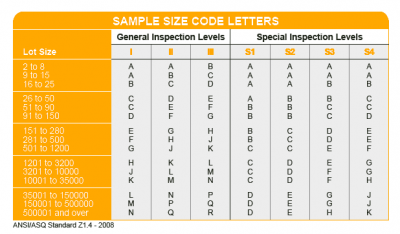 AQL Table | How to Read It
 TOP 10 Common Defects in Garments Quality Inspection
 Product Packaging and Shipment Label requirements for Amazon FBA
 What Is ASTM-F2413-18? Protective Footwear Standard
 How to Conduct Third-Party Quality Control Inspections for Electric Scooters
 SMETA Audit-What is SMETA Audit?
 TESTCOO Supplier Verification/Certification Service SLCP, Higg FEM, GRS, GOTS
 Quality Control Inspection Company in China
 What is Quality Inspection? A Complete Guide
 Guidelines for Product Inspection in India
Category
- Production Inspection Service
- Factory Audit
- Softline Inspection
- Hardline Inspection
- Electrics Inspection
- Certification
- Checklist
- Manufacturers
- Quality Assurance Basics
- Products Recall
- AQL
- Guidence and Standard
- News
- Supplier Management
- Amazon
- Protective Equipment
- e-commerce quality control
- Indian Manufacturing
- Soft Goods Quality Control
- Supply Chain Management
- Supply Chain Resilience
- E-Commerce Quality Control
- ISO 2859
- Supply Chain Optimization
- Garment Industry
- Higg Index