


The Complete Guide to Quality Inspection Standards for Refrigeration Appliances
↵
↵
↵
↵
↵
↵
↵
This guide breaks down practical, actionable inspection standards across six dimensions: AQL sampling, appearance & packaging, performance testing, electrical safety, global compliance, and Amazon FBA requirements. It is designed for buyers, brand owners, sourcing professionals, and quality teams worldwide.
What Is the Core Inspection Framework for Refrigerated Appliances?
A structured inspection framework is essential because refrigeration products combine mechanical, electrical, and sealed-system risks. The AQL (Acceptable Quality Limit) system remains the global standard for objective sampling-based decision-making.
How to select the appropriate inspection level
Inspection levels should be adjusted based on supplier maturity and product risk profile. The goal is to balance efficiency with statistical confidence.
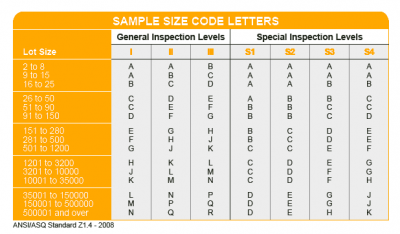
Regular, stable orders adopt General Inspection Level II as the default. For new suppliers, first orders, premium product lines, or suppliers with prior quality issues, inspection is upgraded to General Inspection Level III, where the sample size rises by roughly 40% to substantially boost defect detection capability. Mandatory safety items including grounding resistance, leakage current and refrigerant seal integrity follow Special Inspection Level S-1, which strikes a balance between reliable safety verification and streamlined inspection efficiency..
How defect classification and AQL thresholds are applied
The industry standard three-tier defect classification applies. The following AQL parameters are widely accepted for global supply chains and should not be arbitrarily adjusted:
Critical Defects (CR) – AQL = 0
Critical defects involve immediate risks to personal safety or violations of mandatory regulations. Common examples include insulation breakdown, refrigerant leakage, grounding failure, and voltage withstand failure. Even one critical defect results in full lot rejection with zero tolerance.
Major Defects (MAJ) – Premium: AQL 1.0 / Standard: AQL 2.5
Major defects affect the product’s core functionality or saleable appearance. Examples include insufficient cooling performance, door seal leakage, excessive operating noise, large visible scratches, or loose structural components.
Minor Defects (MI) – AQL = 4.0
Minor defects are small imperfections that do not impact product safety, functionality, or sales performance. Typical examples include slight burrs, light surface marks, or minor dust contamination. A limited and reasonable quantity is generally acceptable.
Why AQL is often misunderstood
AQL is not a fixed defect rate. Acceptance or rejection is determined by looking up the appropriate sample size and accept/reject numbers based on lot size and inspection level.
Example: Lot size = 8,000 units, Inspection Level II, AQL 2.5 → sample size = 200 units. Accept if number of defective units ≤ 10; reject if ≥ 11.
What Should Be Checked in Appearance and Packaging Inspection?
Appearance or packaging flaws that might be considered minor in domestic logistics can cause major problems under the high heat, humidity, temperature variations, and vibration of ocean freight. This is a leading cause of cross-border returns.
What should be evaluated during appearance inspection?
Appearance checks focus on identifying early signs of structural or surface vulnerabilities that may worsen during transportation.
- Glass panels: Check for micro-cracks, chipped edges or deep scratches.
- Casing & coating: Check rust spots, peeling paint or surface bubbles.
- Door frame & hinges: Confirm proper assembly alignment.
Uneven door gaps trigger cooling loss, raise energy use and often lead to after-sales complaints.
What are the key packaging requirements?
Packaging is a critical protection layer and must be validated under real logistics conditions rather than domestic transport assumptions. Verify carton compression strength and internal padding fit to prevent movement and impact during transit. For large appliances shipped to Amazon FBA (weight > 31.75 kg or longest side > 121.9 cm): an ISTA 6A test report is mandatory. Without it, the shipment will likely be rejected. The test includes 48-hour high-temperature/high-humidity preconditioning, random vibration, and sequential drops, simulating real-world global logistics. Amazon data indicates that over 35% of appliance returns are due to packaging damage during shipping.
How Should Performance and Functional Testing Be Conducted?
The core objective of performance testing is to verify that the appliance delivers its rated cooling capacity under the voltage and climate conditions of the destination market.
How is cooling performance verified?
Cooling performance is evaluated under both no-load and loaded conditions to ensure consistency.
- No-load (25°C ambient): Freezer ≤ −18°C; fresh food 0–10°C within tolerance.
- Loaded test: Check pull-down speed and temperature stability with standard loads.
What critical components require verification?
Refrigeration systems rely on sealed components and refrigerants that require strict safety validation.
- EU R290 units: Full leak test + compliance with GWP limits.
- Noise test: Measured 1m away from the appliance.
Loose compressor grommets account for around 35% of noise-related after-sales issues and can be spotted in inspection.
What electrical performance checks are required?
Includes power consumption, current draw, grounding continuity, insulation resistance, and leakage current, strictly following IEC 60335-1 and IEC 60335-2-24:2020 (current valid edition).
Important clarification: There is no 2025 edition of IEC IEC 60335-2-24. The current standard requires pressure testing for all compression-type refrigeration appliances and removes previous special restrictions for flammable refrigerants.

↵
↵
What Are the Electrical Safety and Market Compliance Requirements?
Electrical safety is non-negotiable. Critical defects are uniformly set at AQL = 0 – any major safety issue triggers full lot rejection.
What basic safety tests are required?
Safety verification includes insulation integrity checks, clearance and creepage distance validation, and abnormal condition simulations such as door-open scenarios or frost accumulation. Compressor temperature rise testing is also critical to prevent overheating risks.
What compliance requirements apply to major markets?
Different regions impose distinct regulatory frameworks that must be addressed before market entry.
European Union (EU)
Refrigerated appliances sold in the EU must comply with CE marking requirements, supported by a valid Declaration of Conformity (DoC) and a complete technical documentation file. Additional compliance obligations include RoHS, REACH, and WEEE regulations. Importantly, a standalone test report or certificate is not sufficient for customs clearance.
United States (US)
Products entering the U.S. market typically require UL or ETL safety certification, FCC electromagnetic compatibility compliance, and proper 120V/60Hz electrical ratings. Manufacturers must also ensure compliance with California Proposition 65 requirements regarding hazardous substances.
Australia
Australia requires RCM certification for electrical appliances, as the former SAA terminology is now outdated. The market enforces extremely strict safety standards with zero tolerance for critical safety failures. For certain high-risk safety parameters, an AQL of 0.065 may be applied, while all critical defects still remain at AQL = 0.
What Are the Amazon FBA Requirements for Refrigeration Appliances?
FBA inbound standards are significantly stricter than traditional B2B orders. Non-compliance leads to shipment rejection, listing suspension, and expensive rework or disposal fees.
- Large appliances must be palletized and stretch-wrapped – bare cartons are not accepted.
- Single box weight ≤ 22.7 kg (50 lb), longest side ≤ 63.5 cm (25 in). Oversized items require custom pallet configurations.
- ISTA 6A testing is a hard requirement for large FBA items. It simulates temperature cycles (-29°C to 60°C), marine vibration, and multi-drop impacts to verify packaging and structural integrity.
- Products must bear FNSKU labels, and outer cartons must have official FBA shipment labels.
- Carbon footprint declarations are only required for specific EU marketplace listings – not a global mandate. Avoid unnecessary compliance costs.

↵
Frequently Asked Questions
Q1: How do I set AQL sampling parameters correctly for refrigerated appliances?
AQL configuration should reflect product risk levels. General Inspection Level II is commonly used as a default. Appearance defects are often assessed at AQL 4.0, structural and dimensional issues around 1.5, core functionality at 1.0, and safety-related electrical parameters at extremely strict thresholds. All critical defects must be treated with zero tolerance.
Q2: Should I inspect new suppliers differently from long-term partners?
Yes, inspection depth should be adjusted based on supplier history. New suppliers should be evaluated using stricter sampling levels and tighter defect thresholds, along with comprehensive reviews of design and packaging. Established suppliers may operate under standard inspection levels but should still be subject to periodic verification.
Q3: What are the key changes in the latest IEC 60335-2-24 (Edition 2020)?
The standard expands coverage to include mobile refrigeration equipment and appliances used in vehicles and marine environments. It introduces enhanced protection testing using standardized probes, adds abnormal frost and ice condition testing, and applies pressure testing across all compression-type systems. Restrictions on flammable refrigerants have been updated, and compressor temperature rise evaluation methods have been revised. There is no 2025 edition of this standard.
Q4: How can I verify that a third-party inspection covers all FBA requirements?
A complete inspection report should clearly include packaging validation under ISTA standards, verification of FNSKU and carton labeling, and confirmation of palletization compliance. Timing alignment with shipping schedules is also essential to avoid delays and storage penalties.
Why TESTCOO Is a Reliable Partner for Refrigeration Quality Control?
TESTCOO is a global third-party inspection provider headquartered in China, serving importers, brands, and retailers worldwide. We offer fully digital, end-to-end quality control services for refrigerated appliances – covering appearance, performance, electrical safety, ISTA packaging, and FBA compliance.
- Fast turnaround – compress the traditional 7-day inspection cycle to just 1–3 days
- Real-time data & reporting – synchronized reports available immediately upon completion
- Custom inspection protocols – tailored to your product, market, and supply chain risk profile
Whether you are sourcing from Asia or managing quality across multiple regions, TESTCOO helps you de-risk your supply chain and bring safe, compliant products to market – efficiently.




Free Sample Report Performance Quality Control
Download a sample report to keep control of your supply chain!

Featured Articles
 AQL Table | How to Read It
 TOP 10 Common Defects in Garments Quality Inspection
 Product Packaging and Shipment Label requirements for Amazon FBA
 What Is ASTM-F2413-18? Protective Footwear Standard
 How to Conduct Third-Party Quality Control Inspections for Electric Scooters
 SMETA Audit-What is SMETA Audit?
 TESTCOO Supplier Verification/Certification Service SLCP, Higg FEM, GRS, GOTS
 Quality Control Inspection Company in China
 What is Quality Inspection? A Complete Guide
 Guidelines for Product Inspection in India
Category
- Production Inspection Service
- Factory Audit
- Softline Inspection
- Hardline Inspection
- Electrics Inspection
- Certification
- Checklist
- Manufacturers
- Quality Assurance Basics
- Products Recall
- AQL
- Guidence and Standard
- News
- Supplier Management
- Amazon
- Protective Equipment
- e-commerce quality control
- Indian Manufacturing
- Soft Goods Quality Control
- Supply Chain Management
- Supply Chain Resilience
- E-Commerce Quality Control
- ISO 2859
- Supply Chain Optimization
- Garment Industry
- Higg Index