


Quality Challenges in Thailand’s Manufacturing Industry and How to Overcome Them
 Thailand has rightfully earned its reputation as the "Detroit of Asia" and a global hub for electronics, food processing and textiles. With strategic government initiatives like Thailand 4.0 and robust infrastructure, the country attracts significant foreign direct investment. However, for quality managers and executives overseeing operations in Thailand, a consistent question arises: How do we ensure and maintain world-class product quality in this dynamic environment?
While the opportunities are vast, the path is paved with unique challenges. Understanding these challenges is the first step toward building a resilient, high-quality manufacturing operation. This comprehensive guide delves into the most pressing quality challenges faced by manufacturers in Thailand and provides a practical framework for overcoming them.
The Core Quality Challenges in Thai Manufacturing
1. The Skilled Labor Shortage and Training Gaps
This is arguably the most significant challenge. While Thailand has a large workforce, there is a noticeable gap between the skills taught in vocational and academic institutions and the practical, technical skills required by modern advanced manufacturing.
- The Problem: You may find it difficult to recruit technicians, engineers and quality control inspectors who are proficient in Statistical Process Control (SPC), Lean Six Sigma methodologies and the use of advanced measurement equipment. Furthermore, language barriers can complicate training and the understanding of complex technical specifications.
- The Impact: This leads to higher error rates, difficulty in implementing sophisticated quality systems and increased time and cost for onboarding and training new hires.
2. Supply Chain Complexity and Inconsistent Raw Materials
Thailand’s manufacturing success has created a deep but sometimes inconsistent supply chain. Many factories rely on a network of local SMEs for components and raw materials.
- The Problem: The quality standards of these smaller suppliers can vary dramatically. One batch of raw material might be perfect, while the next fails to meet specifications. Auditing and controlling every single link in the supply chain is a monumental task.
- The Impact: Incoming quality control (IQC) becomes a critical bottleneck. Variations in raw materials directly affect your production line, leading to defects, rework, scrap and production delays.
3. Cultural and Communication Barriers
The Thai workplace culture, which values harmony (kreng jai - the concept of being considerate and avoiding confrontation) and hierarchical respect, can sometimes clash with the direct, data-driven nature of quality management.
- The Problem: A junior operator might notice a minor deviation but hesitate to stop the production line or report it to a senior supervisor for fear of causing trouble or appearing disrespectful. This can allow small issues to snowball into major quality failures.
- The Impact: A lack of proactive problem-reporting undermines a "Quality at the Source" philosophy. It creates a culture where problems are hidden until they become unavoidable, rather than being solved at the root cause.
4. Inconsistent Implementation of Quality Management Systems (QMS)
Many factories in Thailand are certified to international standards like ISO 9001, IATF 16949 (for automotive) or AS9100 (for aerospace). However, certification does not always equal effective implementation.
- The Problem: The QMS can sometimes be seen as a set of documents for auditors rather than a living, breathing framework for daily operations. Procedures might not be followed meticulously and internal audits may be treated as a compliance exercise instead of a genuine opportunity for improvement.
- The Impact: The QMS fails to prevent problems. Companies end up with the cost of maintaining certification without reaping the full benefit of a truly integrated quality system.
5. Environmental and Infrastructural Factors
Thailand's tropical climate and occasional infrastructure strain can pose unique challenges.
- The Problem: High humidity can affect sensitive materials like electronics and certain metals, leading to corrosion or other damage. Intermittent power fluctuations can disrupt precision machinery and automated systems, causing variations in output.
- The Impact: Without proper environmental controls and backup systems, manufacturers face quality issues that are outside the direct control of the production process itself.
A Strategic Framework for Overcoming Quality Challenges
Overcoming these challenges requires a holistic, strategic approach that combines technology, people and process.
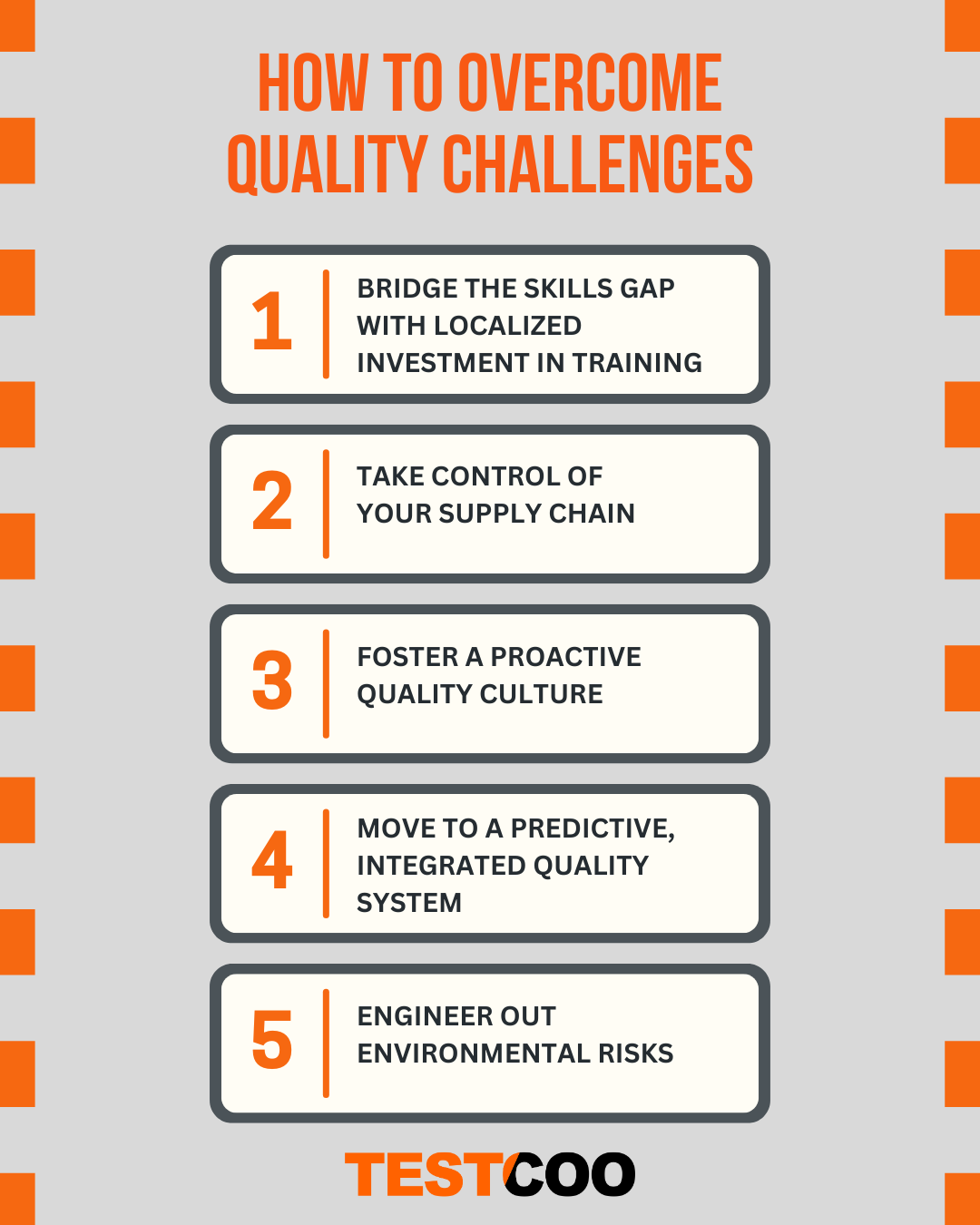
Strategy 1: Bridge the Skills Gap with Localized Investment in Training
Instead of just complaining about the skills shortage, successful companies invest in becoming the employer of choice.
- Actionable Steps:
- Establish a Certified In-House Training Academy: Develop structured training modules for critical skills from basic measurement techniques to advanced SPC. Use bilingual trainers and visual aids to overcome language barriers.
- Partner with Local Vocational Colleges: Create internship and co-op programs. By partnering with educational institutions, you can help shape the curriculum to meet your future needs and get first access to top talent.
- Upskill Your Current Workforce: Implement a continuous improvement program like Kaizen or 5S that empowers all employees to contribute ideas. Recognize and reward skill development to boost morale and retention.
Strategy 2: Take Control of Your Supply Chain
You cannot outsource quality responsibility. A proactive approach to supplier management is non-negotiable.
- Actionable Steps:
- Develop a Robust Supplier Qualification Program: Go beyond a simple audit checklist. Assess a supplier's process capability (Cp/Cpk), their financial stability and their commitment to continuous improvement.
- Co-develop Quality Plans: For key suppliers, create a Joint Quality Plan with clear, measurable goals. Offer your expertise to help them improve their processes. This collaborative approach builds stronger, more reliable partnerships than a purely punitive one.
- Leverage Technology for Visibility: Implement a Supplier Portal where suppliers can submit their Certificates of Analysis (CoA) and you can share performance scorecards. This creates transparency and accountability.
Strategy 3: Foster a Proactive Quality Culture
Changing a culture is a long-term endeavor, but it yields the highest return on investment.
- Actionable Steps:
- Leadership Must Walk the Talk: Senior managers must visibly champion quality. They should participate in Gemba walks (going to the actual place where work is done), celebrate employees who stop the line to fix a problem and openly discuss mistakes as learning opportunities.
- Simplify Problem-Solving Tools: Introduce user-friendly tools like the 5 Whys and simple Pareto charts. Train every employee, not just engineers, on how to use them. Make problem-solving a team activity, not a top-down directive.
- Communicate in a Culturally Sensitive Way: Frame quality issues as opportunities for the team to excel together, rather than as individual failures. This aligns with the collective nature of Thai society.
Strategy 4: Move from a Reactive QMS to a Predictive, Integrated System
Your Quality Management System should be a strategic asset, not a paperwork burden.
- Actionable Steps:
- Digitize Your QMS: Replace paper-based checklists and forms with a modern Electronic Quality Management System (eQMS). This makes data collection easier, analysis faster and ensures that everyone is working from the latest version of a procedure.
- Integrate Quality Data: Connect your eQMS with other systems like ERP (Enterprise Resource Planning) and MES (Manufacturing Execution System). This allows you to correlate quality data with production parameters (e.g., machine speed, temperature) to identify root causes more effectively.
- Embrace Data Analytics and AI: Use the data from your digital systems to move from detecting defects to predicting them. Machine learning algorithms can analyze historical data to identify patterns that precede a quality failure, allowing for pre-emptive intervention.
Strategy 5: Engineer Out Environmental Risks
Proactively design your processes and facilities to mitigate external risks.
- Actionable Steps:
- Invest in Environmental Controls: Ensure production and storage areas have adequate HVAC, humidity control and air filtration systems suitable for your product's requirements.
- Install Backup Systems: Uninterruptible Power Supplies (UPS) and backup generators are essential for protecting sensitive equipment and preventing data loss during power fluctuations.
- Conduct Failure Mode and Effects Analysis (FMEA): Systematically analyze potential failure modes caused by environmental and infrastructural factors and implement preventive controls.
Read more: The Rising Demand for Smartphone and EV Battery Testing in Vietnam and Thailand
Frequently Asked Questions (FAQ)
Q1: What is the biggest quality challenge for new manufacturers starting in Thailand?
A: The most immediate challenge is often the skilled labor shortage. Finding mid-level technicians and quality engineers with both technical expertise and language skills can be difficult. A robust, in-house training program is essential from day one to bridge this gap.
Q2: How can I effectively manage quality with local Thai suppliers who are not used to strict international standards?
A: Adopt a collaborative rather than a punitive approach. Offer to train their staff, co-develop quality plans and provide clear, simple-to-understand specifications with visual aids. Building a strong, trusting relationship is often more effective in the long run than simply imposing strict penalties.
Q3: Is ISO 9001 certification enough to ensure quality in Thailand?
A: While ISO 9001 certification is an excellent foundation, it is not a guarantee of quality. The critical factor is how deeply the principles of the Quality Management System are embedded in the daily culture and operations of the factory. Many companies have the certificate but lack the proactive quality culture to back it up.
Q4: What technology is most beneficial for improving quality control in Thailand?
A: Two technologies have an immediate impact:
- An Electronic Quality Management System (eQMS): It digitizes and streamlines processes like corrective actions, audits and document control.
- Real-time SPC Software: It connects to measurement equipment on the production line to monitor process stability and alert operators to deviations instantly, preventing the production of defective parts.
Q5: How can I encourage Thai employees to speak up about potential quality issues?
A: This requires cultural sensitivity. Leadership must actively encourage reporting by framing it positively—as "helping the team" or "protecting the company's reputation." Implement anonymous reporting channels and, most importantly, always respond to reported issues with gratitude and action, never blame. This builds psychological safety over time.
Quality as a Competitive Advantage in Thailand
The quality challenges in Thailand's manufacturing industry are real, but they are not insurmountable. By viewing these challenges through a strategic lens, companies can transform their quality operations from a cost center into a powerful source of competitive advantage.
The key is to shift from a reactive approach (fixing defects) to a proactive and predictive one (preventing defects). This requires a committed investment in your people, your processes and the right technology. By building a robust quality ecosystem that is respectful of the local culture yet unwavering in its standards, your manufacturing operations in Thailand can not only meet global expectations but exceed them, securing long-term growth and customer trust.
Partnering with Testcoo Makes All the Difference
Thailand’s manufacturing sector holds tremendous potential from automotive and electronics to textiles and consumer goods. Yet, the path to consistent quality isn’t without its challenges: skill gaps, supplier inconsistencies, raw material issues and fragmented quality systems can all threaten product integrity and brand reputation.
The key to overcoming these challenges lies in proactive quality control, supplier transparency and continuous improvement and that’s exactly where Testcoo adds value.
As a trusted third-party inspection and audit company, Testcoo supports global brands and local manufacturers in Thailand through:
- Comprehensive product inspections – to verify that every batch meets your specifications before shipment.
- Supplier audits – to evaluate a factory’s production capability, compliance and ethical standards.
- Lab testing coordination – to confirm product safety and compliance with international standards.
- Quality reporting and analytics – to help brands make data-driven sourcing and quality decisions.
By partnering with Testcoo, manufacturers and buyers can bridge the gap between production reality and product expectations ensuring reliability, compliance and long-term customer trust.
Quality begins with visibility. Whether you’re sourcing from Thailand or expanding your supplier base in Southeast Asia, Testcoo helps you build a supply chain you can rely on.
Learn more about our inspection and audit solutions in Thailand


Free Sample Report Performance Quality Control
Download a sample report to keep control of your supply chain!

Featured Articles
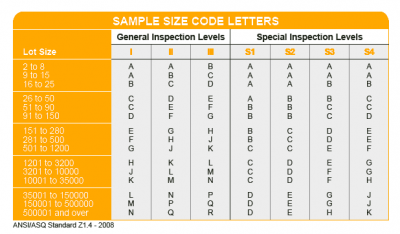 AQL Table | How to Read It
 TOP 10 Common Defects in Garments Quality Inspection
 Product Packaging and Shipment Label requirements for Amazon FBA
 What Is ASTM-F2413-18? Protective Footwear Standard
 How to Conduct Third-Party Quality Control Inspections for Electric Scooters
 SMETA Audit-What is SMETA Audit?
 TESTCOO Supplier Verification/Certification Service SLCP, Higg FEM, GRS, GOTS
 Quality Control Inspection Company in China
 What is Quality Inspection? A Complete Guide
 Guidelines for Product Inspection in India
Category
- Production Inspection Service
- Factory Audit
- Softline Inspection
- Hardline Inspection
- Electrics Inspection
- Certification
- Checklist
- Manufacturers
- Quality Assurance Basics
- Products Recall
- AQL
- Guidence and Standard
- News
- Supplier Management
- Amazon
- Protective Equipment
- e-commerce quality control
- Indian Manufacturing
- Soft Goods Quality Control
- Supply Chain Management
- Supply Chain Resilience
- E-Commerce Quality Control
- ISO 2859
- Supply Chain Optimization
- Garment Industry
- Higg Index