


Launching Your First Fashion Line? Your Essential Initial Production Check Checklist
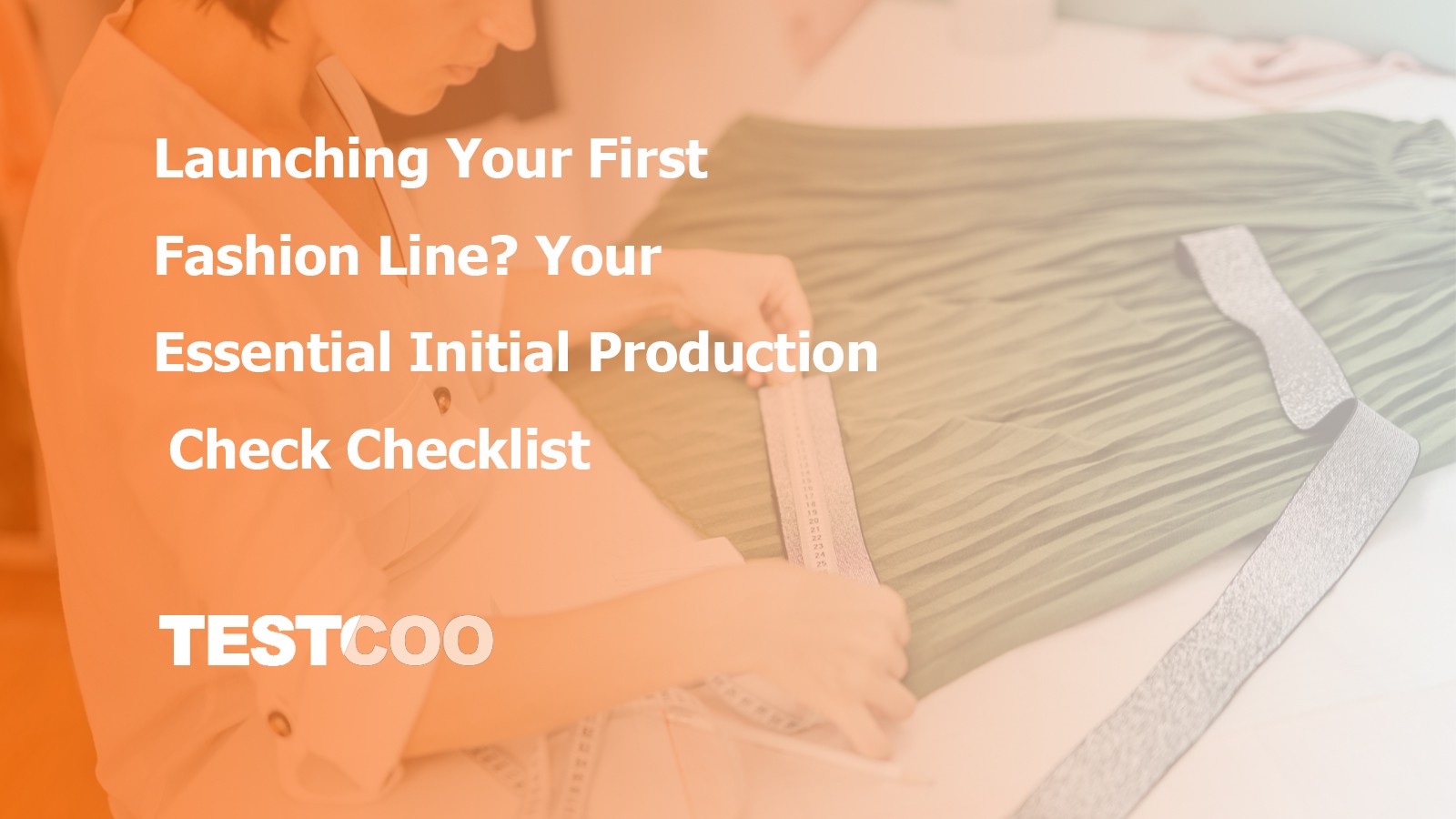
The dream is becoming reality. Your sketches are finalized, your brand vision is clear and you’re about to take the leap into manufacturing your first fashion line. The excitement is palpable, but beneath it lies a common, nagging fear for every first-time brand founder: “What if the final products don’t match my vision?”
This moment the bridge between your perfect prototype and the start of mass production is the most critical juncture for your new brand’s success, cash flow and reputation. A single oversight here can lead to thousands of dollars in wasted inventory, heartbreaking customer reviews and a launch that falters before it even begins.
This is where Initial Production Check (IPC) becomes your secret weapon. Unlike final inspections that check finished goods (when it’s often too late to fix major issues), IPC is a proactive, preventive quality control step. It happens before your bulk fabric is cut and sewn, ensuring every element is approved and production starts on the right foot.
For a new brand, IPC is a necessity. It’s your final quality gate to prevent catastrophic, budget-killing errors.
This guide provides you with an essential, actionable Initial Production Check Checklist, broken down into four key pillars. Use it as your roadmap to confidently approve production and launch with confidence.
Pillar 1: The Foundation – Fabric & Materials Inspection
Your garment is only as good as the fabric it’s made from. Bulk fabric can differ from the small swatch you approved. This step verifies that the heart of your product is perfect.
Your Fabric Inspection Checklist:
- Material Composition & Weight: Is the bulk fabric the exact blend (e.g., 95% Organic Cotton, 5% Elastane) and weight (GSM or Oz/yd²) you specified? A supplier substituting a cheaper, heavier or thinner fabric is a common issue.
- Color & Dyeing Quality:
- Shade Matching: Compare the bulk fabric against your approved lab dip or standard swatch under different lighting (daylight, indoor). Check for consistency across the entire roll.
- Colorfastness: Has the factory tested for crocking (rubbing), washing and perspiration? You don’t want a white t-shirt that turns a customer’s skin blue.
- Fabric Hand Feel & Drape: Does the bulk fabric have the correct stiffness, softness, stretch and drape you designed for? This is subjective but crucial to the garment’s look and feel.
- Fabric Width: Confirm the fabric is the width stipulated in your order. A narrower width can lead to material waste and higher costs.
- Visual Defects: Unroll multiple sections of the fabric roll to check for:
- Weaving/Knitting Defects: Slubs, holes, missing threads, loose threads.
- Dyeing/Printing Defects: Shading (color variations), dye streaks, misaligned or blurry prints, bleeding colors.
- Trims & Accessories: Check all zippers, buttons, snaps, drawcords, labels and hangtags against approved samples for:
- Material & Color: A plastic button instead of a mother-of-pearl one?
- Function: Do zippers glide smoothly? Do snap buttons fasten securely?
- Engraving/Printing: Is the logo on the button crisp and correct?
Pro Tip for New Brands: Never approve fabric based on a small cutting from the top of the roll. Ask to see checks from the beginning, middle and end of multiple rolls.
Pillar 2: The Blueprint – Approved Pre-Production Sample (PPS)
The Pre-Production Sample is the factory’s “test run” using your approved bulk fabric and trims. It’s the absolute last sample you approve before they make 500 copies of it. Scrutinize it as if you were a customer.
Your PPS Inspection Checklist:
- Overall Construction & Workmanship:
- Seams: Are they straight, secure and of the correct type (flatlock, overlock, French seam)?
- Stitching: Consistent stitch density (SPI), no skipped stitches, loose threads or broken stitches.
- Finishing: Clean inside, properly trimmed threads, no exposed raw edges where there shouldn’t be.
- Dimensions & Measurements: This is non-negotiable. Measure every critical point (chest, waist, hip, sleeve length, inseam, garment length) and compare them to your Tech Pack’s Grade Rule for the sample’s size.
- Tolerance: Are variations within the acceptable tolerance (e.g., ± ½ inch)? A “Medium” that measures like an “XL” will result in mass returns.
- Fit & Silhouette: Put the sample on a fit model or mannequin that matches your target size spec. Does it hang, drape and fit as intended? Is it too tight, too loose or pulling in strange areas? This is your last chance to catch a fit flaw.
- Functionality & Durability:
- Test all zippers, buttons and closures repeatedly.
- Check pocket placement, size and functionality.
- Gently stress seams (especially at armholes and crotch) to check for strength.
- Labeling & Packaging (Mock-Up): Are the care labels, size labels and brand labels correctly positioned, sewn securely and have accurate information (content, country of origin, care symbols)? Check the print/embroidery on the main label.
Pro Tip for New Brands: Wash and dry the PPS following the care instructions you plan to put on the label. Check for shrinkage, color bleeding, seam puckering or distortion. This “wash test” reveals problems that only appear after the first laundry.
Read more: What is Sample Checking in Quality Inspection?

↵
Pillar 3: The Instructions – Tech Pack & Specification Compliance
Your Tech Pack is the legal contract for your product. The Initial Production Check ensures the factory is fully equipped to execute it perfectly in bulk.
Your Tech Pack Compliance Checklist:
- Construction Details Verified: Does the PPS match every detail in the tech pack? Think seam types, pleat depths, topstitching width, specific stitch used on a hem.
- Approved Components On-Site: Verify that the factory has the exact bulk materials, trims, threads and labels (from Pillar 1) physically present and ready for production. No last-minute substitutions.
- Production Readiness: Are the correct sewing machines, attachments and equipment set up? (e.g., a coverstitch machine for knits, a bartacker for belt loops).
- Paperwork & Markers: Confirm that the factory’s cutting markers (the patterns laid out on fabric for cutting) are optimized to minimize waste and that they are using the latest, approved version of your graded spec.
Pillar 4: The Process – Factory Readiness & Communication
A smooth production run depends on more than just materials and samples. This final pillar assesses operational readiness.
Your Factory Readiness Checklist:
- Production Timeline Confirmation: Re-confirm the start date for cutting and the estimated daily/weekly output. Is the schedule still realistic?
- Quality Control Systems: Briefly discuss the factory’s own in-line QC process. Will they have checkers at key stages (e.g., after cutting, after sewing, before finishing)?
- Clear Communication Channels: Designate a single point of contact for urgent issues during production. Confirm how and when you’ll receive updates (e.g., weekly production reports with photos).
The Final Step: Your Official Approval
Once you have meticulously checked all four pillars:
- Document Everything: Take clear, well-lit photos of the bulk fabric, PPS and any issues. Keep a written record of all checks.
- Send Formal Approval: Send a clear, written email to the factory stating: “We approve the bulk fabric, trims and PPS for Style #XYZ. You are authorized to commence mass production as per the agreed timeline and specifications.”
- Do NOT Give Verbal Approval: Always have a paper trail.
Read more: The Ultimate Guide to Garment and Apparel Inspection: Ensuring Quality and Perfection
Why a Third-Party Inspector is Your Greatest Ally for IPC
As a new founder, you are an expert in design and brand vision, but you may lack the technical expertise, time or on-the-ground presence to conduct this intensive inspection. This is where a professional third-party inspection service becomes invaluable. An inspector:
- Is Your Technical Expert: They speak the language of factories and know every trick to uncover hidden defects.
- Provides Objective, Unbiased Verification: They work for you, not the factory, ensuring there’s no pressure to “overlook” an issue.
- Saves You Time & Stress: They handle the complex, on-site scrutiny while you focus on marketing and launch plans.
- Prevents Costly Mistakes: The fee for an IPC is a tiny fraction of the cost of rejecting or discounting an entire faulty production run.
Think of IPC not as an expense, but as the most cost-effective insurance policy for your launch.
Read more: The Importance of Third-Party Quality Inspection: Ensuring Excellence in Every Step

FAQs: Initial Production Check for Fashion Startups
1. What’s the difference between a Prototype (Proto Sample), a Fit Sample and an Pre-Production Sample?
- Prototype/Sample: The first sample, often made in similar fabric, to check the initial design and pattern.
- Fit Sample: Made in actual (or very close) fabric, used solely to perfect the fit and silhouette on a model. Multiple fit samples may be created.
- PPS: The final sample, made with approved bulk fabric and trims on the actual production line. This is the sample you approve to say “make all 500 units exactly like this.”
2. Is Initial Production Check really necessary if my factory seems trustworthy?
Absolutely. Even the best factories make mistakes and communication gaps are common. IPC is a systematic verification that aligns expectations and catches errors before they are replicated thousands of times. It protects both you and the factory from a disastrous production run.
3. When exactly should the Initial Production Check happen?
The ideal timing is after the factory has received all your approved bulk materials (fabric, trims, labels) and before they start cutting the fabric for bulk production. This is typically 1-2 weeks after fabric arrival.
4. Can I do an Initial Production Check remotely/virtually?
While you can review photos and videos of the PPS and fabric swatches, a remote inspection has significant limitations. You cannot physically feel the fabric, assess weight, check entire rolls for defects or thoroughly test construction strength. For your first order, an on-site inspection by you or a professional is highly recommended.
5. What happens if my Pre-Production Sample or bulk fabric fails the inspection?
This is precisely why you do it! A failure is a success in risk prevention. You then:
- Document the issues clearly with photos and notes.
- Hold a meeting with the factory to align on the exact problems.
- Request corrective action, this may mean re-sourcing fabric, correcting the pattern or making a new PPS.
- Do NOT authorize production until a new, correct PPS and materials are provided and re-inspected.
Read more: Garment Sampling Process: A Critical Step in Quality Assurance
Launch Your Fashion Line Right with Testcoo’s Professional Quality Control Services
Launching your first fashion line is a monumental achievement. By implementing a rigorous Initial Production Check using this checklist, you move from hopeful founder to confident brand owner. You replace fear with control and guesswork with certainty.
You’ve poured your passion into this collection. Now, let a disciplined process protect it. Invest in a perfect start and your launch will be one of celebration, not crisis management.
Ready to ensure your first production run is flawless? Contact us today to schedule a professional Initial Production Check and secure your brand’s foundation.

Free Sample Report Performance Quality Control
Download a sample report to keep control of your supply chain!

Featured Articles
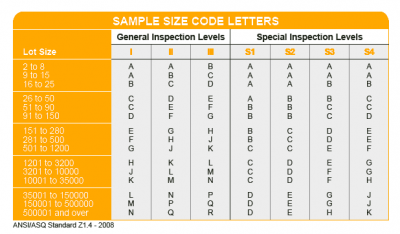 AQL Table | How to Read It
 TOP 10 Common Defects in Garments Quality Inspection
 Product Packaging and Shipment Label requirements for Amazon FBA
 What Is ASTM-F2413-18? Protective Footwear Standard
 How to Conduct Third-Party Quality Control Inspections for Electric Scooters
 SMETA Audit-What is SMETA Audit?
 TESTCOO Supplier Verification/Certification Service SLCP, Higg FEM, GRS, GOTS
 Quality Control Inspection Company in China
 What is Quality Inspection? A Complete Guide
 Guidelines for Product Inspection in India
Category
- Production Inspection Service
- Factory Audit
- Softline Inspection
- Hardline Inspection
- Electrics Inspection
- Certification
- Checklist
- Manufacturers
- Quality Assurance Basics
- Products Recall
- AQL
- Guidence and Standard
- News
- Supplier Management
- Amazon
- Protective Equipment
- e-commerce quality control
- Indian Manufacturing
- Soft Goods Quality Control
- Supply Chain Management
- Supply Chain Resilience
- E-Commerce Quality Control
- ISO 2859
- Supply Chain Optimization
- Garment Industry
- Higg Index